¡Acompáñanos a viajar por el mundo de los libros!
Añadir este libro a la estantería
Grey
Escribe un nuevo comentario Default profile 50px
Grey
Suscríbete para leer el libro completo o lee las primeras páginas gratis.
All characters reduced
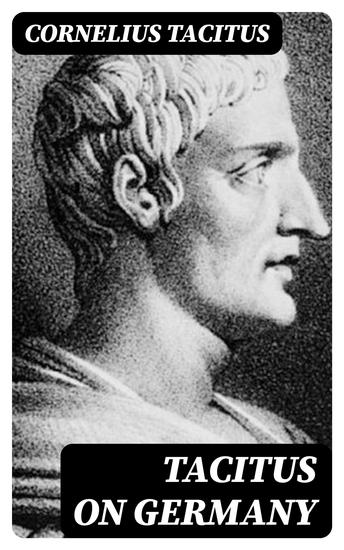
Tacitus on Germany - cover

Tacitus on Germany

Cornelius Tacitus

Traductor Thomas Gordon

Editorial: DigiCat

  • 0
  • 0
  • 0

Sinopsis

In "Tacitus on Germany," the Roman historian Cornelius Tacitus presents a profound ethnographic study of the Germanic tribes inhabiting the regions beyond the Rhine. Combining a meticulous narrative style with keen political insight, Tacitus delineates the customs, societal structures, and moral values of various tribes, juxtaposing them against the corrupted Roman culture of his time. His keen observations reflect a literary style that blends historical narrative with philosophical musing, allowing readers to appreciate not only the sociopolitical implications of his observations but also the inherent nostalgia for a purer way of life. Positioned within the context of Imperial Rome's expansionist endeavors, this work serves as both a record and a cautionary tale about cultural interaction and loss. Tacitus, born circa 56 AD, was a senator and a historian whose works remain crucial for understanding Roman history, society, and foreign cultures. His remarkable insight into human nature and governance likely stemmed from his experiences in the tumultuous political landscape of Rome. Tacitus's personal engagement with the conflicts of his time, coupled with his rigorous intellectual rigor, shaped his perspective on the juxtaposition of civilization and barbarism, ultimately informing his depiction of the Germanic peoples. Highly recommended for both students and enthusiasts of ancient history, "Tacitus on Germany" invites readers to reflect on the complexities of cultural identity and the consequential nature of historical narratives. This work not only enriches our understanding of the Germanic tribes but also encourages critical discourse on the implications of cultural imperialism, making it an essential addition to any scholarly library on Roman history.
Disponible desde: 28/05/2022.
Longitud de impresión: 32 páginas.

Otros libros que te pueden interesar

  • Math in Drag - cover

    Math in Drag

    Kyne Santos

    • 0
    • 0
    • 0
    Join sensational drag queen Kyne Santos on an extraordinary journey through the glamorous world of … math? 
     
    This sassy book is your VIP pass, taking you behind the scenes with a TikTok superstar who shatters stereotypes and proves that math can be fascinating and fun, even for people who think they aren’t good at it. 
     
    With her irreverent style and unique perspective, Kyne investigates mathematical mysteries while educating us about the art of drag. She explores surprising connections, such as the elegance of ballroom culture and the nature of infinity, the rebellious joys of Pride and dividing by zero, and the role of statistics in her own experience on Drag Race. Kyne gets personal while sharing her experiences as a queer person forging a path in STEM, overcoming obstacles to stay fierce, stay real, and thrive! She empowers readers of all skill levels to break school rules, question everything, and embrace math’s beauty. 
     
    In Math in Drag, numbers glitter, equations sashay through history, and inclusivity is a celebration. Read it to fire your excitement and unleash your inner math diva! 
     
    “This is a dazzling, joyful, and hard-hitting account of how math—and humans—cannot be confined to rigid boxes no matter how much some people try to box them in. Kyne’s irrepressible spirit shines through bravely and fabulously.”—Eugenia Cheng, author of Is Math Real? and How to Bake Pi
    Ver libro
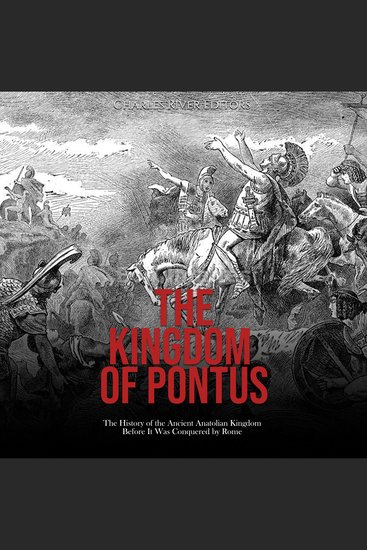
  • Kingdom of Pontus The: The History of the Ancient Anatolian Kingdom Before It Was Conquered by Rome - cover

    Kingdom of Pontus The: The...

    Editors Charles River

    • 0
    • 0
    • 0
    Rome faced many formidable enemies over the course of nearly 1,000 years, but perhaps none were as enigmatic and forgotten as King Mithridates VI of Pontus. Despite numerous ancient sources detailing the life of the foreign monarch and his wars with Rome, and despite being an interesting character who endured years as a fugitive in his youth, enjoyed a fascination with poisons, and held mercy and pragmatic ruthlessness in a delicate balance, very few scholarly books and works have been produced about the king. It may be that his largely unsuccessful military campaigns have contributed to his disappearance from active historical examination, but despite his poor record in engagements against the Romans, the Kingdom of Pontus dominated much of Asia Minor in the 1st century BCE, and the Romans themselves considered the kingdom one of its most dangerous enemies. According to Plutarch, when Mithridates died, the Roman soldiers felt that “in the person of Mithridates ten thousand enemies had died.” By then, it had required three of Rome’s most famous generals - Sulla, Lucullus, and Pompey - to finally subdue his kingdom.  
    	The early Pontic kings found themselves in the midst of the Diadochi Wars, quickly learning that the survival of their kingdom depended upon which Macedonian general to support and which ones to oppose. For the most part, the kings chose wisely and were able to not only stay independent but also to expand their kingdom’s borders. Somewhat fittingly, as the Pontic kings battled their neighbors for control of the Black Sea basin, they promoted a culture that grafted Greek, Persian, and local Anatolian traditions into a unique identity.  
    The Kingdom of Pontus’ power and prestige grew until it caught the attention of the Romans, whose upward trajectory coincided with Pontus’ in many ways. 
    Ver libro
  • New World Order The: The History of the World’s Most Notorious Global Conspiracy Theory - cover

    New World Order The: The History...

    Editors Charles River

    • 0
    • 0
    • 0
    Conspiracy theories, and particularly the belief that elements of the world are secretly controlled by individuals or groups, have been around for as long as people have lived in groups. Perhaps that’s inevitable - after all, those who are excluded from power are very likely to be inclined to see their position not as an outcome of their own choices or situation but because of the secret machinations of shadowy groups. One of the most widely discussed conspiracy theories concerns what has become known as the New World Order, a secret cabal that is said to have ambitions to become a form of World Government. 
    Part of the problem with trying to look objectively at any conspiracy theory and at the notion of the New World Order in particular is that some secret conspiracies do exist, and history tells us that these are often specifically intended to acquire power and wealth. But some conspiracy theories embrace extreme ideas such as the notion that the world is secretly ruled by reptilian creatures from another dimension, that certain minority groups have outsized power, and other farfetched concepts that have no basis in reality. Naturally, conspiracy theories work in part because it is now quite difficult to distinguish between what may be real conspiracies and downright bizarre notions. 
    Virtually universal access to the Internet in the 21st century has led to the widespread dissemination of strange theories that would previously have been known by only a handful of people. Some of the most widely discussed of these understandably seem crazy to many people. What does this say about the world in which we live? And where exactly did people get the idea that the planet is actually ruled by a secret cabal? In reality, the New World Order conspiracy has its roots in a much longer and more complex history than many people might immediately expect.
    Ver libro
  • Gangster's Paradise - The much anticipated follow-up to the bestseller that exposed the escalation of organised crime in New Zealand - cover

    Gangster's Paradise - The much...

    Jared Savage

    • 0
    • 0
    • 0
    The much anticipated follow-up to the bestseller that exposed the escalation of organised crime in New Zealand. 
      
    Gangster's Paradise is about drugs, guns, gangs and money. Lots of money. 
    A gang which took over a small rural town. A police officer shot and killed in a routine traffic stop. A port-worker who helped a gang whisk a shipping container off a wharf in the middle of the night. A crew of corrupt baggage handlers smuggling meth into the country during Covid lockdowns. A shooting inside a 5-star hotel in broad daylight. Turf wars, retaliation, and retribution: new gangs like the Mongols and Comancheros have brought with them better connections with international syndicates, challenging the established gangs like the Head Hunters - so dominant for many years - who have had to up their game in response.  
    Jared Savage's bestselling book Gangland was about the evolution of gangs in New Zealand. Gangster's Paradise is about the deadly escalation.   
    HarperCollins Australia 2023
    Ver libro
  • Obsessive Intrusive Magical Thinking - cover

    Obsessive Intrusive Magical...

    Marianne Eloise

    • 0
    • 1
    • 0
    'I FELT RECOGNISED ON EVERY PAGE, LEARNT SO MANY NEW THINGS, AND LAUGHED SO HARD I CHOKED ON MY WATER. READ THIS!!!' NAOISE DOLAN, AUTHOR OF EXCITING TIMES
    
    'CANDID, WITTY ... A BRAVE BOOK THAT PUTS VULNERABILITY FULLY ON SHOW'  INDEPENDENT
    
    
    Obsessive was, still is, my natural state, and I never wondered why. I didn't mind, didn't know that other people could feel at peace. I always felt like a raw nerve, but then, I thought that everyone did.
    
    Writer and journalist Marianne Eloise was born obsessive. What that means changes day to day, depending on what her brain latches onto: fixations with certain topics, intrusive violent thoughts, looping phrases. Some obsessions have lasted a lifetime, while others will be intense but only last a week or two.
    Obsessive, Intrusive, Magical Thinking is a culmination of a life spend obsessing, offering a glimpse into Marianne's brain, but also an insight into the lives of others like her. From death to Medusa, to Disneyland to fire, to LA to her dog, the essays explore the intersection of neurodivergence, fixation and disorder, telling the story of one life underpinned and ultimately made whole by obsession.
    Ver libro
  • The Brama Samhita - Brama's Prayers To Govinda - cover

    The Brama Samhita - Brama's...

    Bhaktisiddhanta Sarasvati Thakura

    • 0
    • 0
    • 0
    Lord Brahma saw Krsna directly and composed a prayer based on his realizations – a striking prayer by one who has seen the truth. 
      
    Krsna revealed himself to Brama, along with his spiritual planets. Overwhelmed by this transcendental revelation, Brama spoke these words glorifying Krsna. Brama’s awe and love permeate the text and reveal the workings of the cosmic creation. 
      
    The Brama Samhita teaches that transcendence, truth, and ultimate reality can be apprehended only by the mercy of the supreme transcendent entity, the Absolute Truth Himself, and that perception of ultimate reality is a function not of speculative reason but of direct spiritual cognition through divine revelation. This collection is taken from the fifth chapter of the Hymns of Brama, and includes verses 1 to 29.. There were 100 chapters in the Brama Samhita. This 5th chapter of the Brama Samhita was discovered by Lord Chaitanya. The other chapters have not yet been revealed. 
     
    The Brama-samhita clearly describes Brahman. Kṛṣṇa is the Supreme Brahman because of His unlimited knowledge, unlimited potencies, unlimited strength, unlimited influence, unlimited beauty, and unlimited renunciation. Ultimately, therefore, the word Brahman can be applied to Kṛṣṇa only.  
      
    Because the impersonal Brahman is the effulgence emanating as rays of Kṛṣṇa’s transcendental body, Kṛṣṇa is the Parabrahman. Everything rests on Brahman, but Brahman rests upon Kṛṣṇa. The material elements are accepted as the inferior energy of Kṛṣṇa. By their interaction, the cosmic manifestation takes place, rests on Kṛṣṇa, and after dissolution again enters into the body of Kṛṣṇa as His subtle energy. Kṛṣṇa is therefore the cause of both manifestation and dissolution. 
     
    Translator and commentator Bhaktisiddhanta Sarasvati was a Gaudīya Vaisnava Hindu guru, ācārya, and revivalist in early 20th century India. 
    Ver libro