Join us on a literary world trip!
Add this book to bookshelf
Grey
Write a new comment Default profile 50px
Grey
Subscribe to read the full book or read the first pages for free!
All characters reduced
An Essay towards Fixing the True Standards of Wit Humour Railery Satire and Ridicule (1744) - cover

We are sorry! The publisher (or author) gave us the instruction to take down this book from our catalog. But please don't worry, you still have more than 500,000 other books you can enjoy!

An Essay towards Fixing the True Standards of Wit Humour Railery Satire and Ridicule (1744)

Corbyn Morris

Publisher: DigiCat

  • 0
  • 0
  • 0

Summary

In 'An Essay towards Fixing the True Standards of Wit, Humour, Railery, Satire, and Ridicule', Corbyn Morris embarks on a rigorous intellectual quest to delineate the contours of comedic literature. With precision, Morris navigates through the contributions of his contemporaries and predecessors, including John Dryden, John Locke, and Joseph Addison, engaging with their insights to articulate a coherent standard of wit. The essay adopts an analytical literary style, infused with Morris' own interpretations, while existing in dialogue with the dramatic works of William Shakespeare and the comedic prowess of characters like John Falstaff. It is a text deeply rooted in the 18th-century literary context, examining the high forms of comedy through the lens of notable intellectuals of the era.

Corbyn Morris, whose intellect and enthusiasm for satire and humor is evident in this work, draws from a wealth of literary criticism and philosophical thought. This backdrop of academic enhusiasm, combined with Morris' personal aesthetic judgment, culminates in his probing analysis of humor. His endeavor to define 'humour' showcases the author's desire to clarify a concept that resists simple articulation, reflecting a profound respect for the subtlety and complexity of comic literature.

'The Essay' is a compelling read for scholars and aficionados of literature alike, particularly those intrigued by the nuanced mechanics of wit and comedy. Morris serves up a discourse both rich in historical insight and thought-provoking in its exploration of literary aesthetics. His work, precise yet conversational, invites readers to delve into the philosophical depths of humor and wit, challenging them to consider the standards by which we judge comedic art. For anyone interested in the intellectual framework behind humor, Morris's essay remains a vital and enlightening text.
Available since: 09/15/2022.
Print length: 58 pages.

Other books that might interest you

  • On the Future of Our Educational Institutions - cover

    On the Future of Our Educational...

    Friedrich Nietzsche

    • 0
    • 0
    • 0
    In 1869, at the age of twenty-five, the precociously brilliant Friedrich Nietzsche was appointed to a professorship of classical philology at the University of Basel. He seemed marked for a successful and conventional academic career. Then the philosophy of Schopenhauer and the music of Wagner transformed his sense of purpose. The genius of such thinkers and makers—like the genius of the ancient Greeks—was the only touchstone for true understanding. How then was education to answer to such genius? Something more than sturdy scholarship was called for. A new way of teaching and questioning, a new philosophy...What that new way might be was the question Nietzsche broached in five vivid, popular public lectures in Basel in 1872. Composed in emulation (and to some degree as a satire) of a Platonic dialogue, Anti-Education presents a provocative and timely reckoning with what remains one of the great problems of modern societies.
    Show book
  • Becoming Eisenhower - How Ike Rose from Obscurity to Supreme Allied Commander - cover

    Becoming Eisenhower - How Ike...

    Michael Lee Lanning

    • 0
    • 0
    • 0
    When Dwight Eisenhower graduated from West Point in 1915, few would have predicted he was destined for greatness. Yet the young officer made the most of the opportunities he was given, made a lasting impression on superiors, and eventually gained a reputation as an excellent staff officer. 


    Fifty-nine graduates became generals during World War II, but none of that was clear at the time, especially not for the young Dwight Eisenhower, who graduated sixty-first in a class of 164. 


    During the 1920s into the early 1930s Eisenhower started to catch the eye of superiors and earned positions under the U.S. Army's leading lights. 


    Eisenhower joined the General Staff in Washington, DC, where he helped develop war plans and eventually became deputy chief of staff under George Marshall. When the time came to appoint a commander to execute the plans, Marshall knew Eisenhower was the man for the job. 


    Becoming Eisenhower is the story of a young man who first pursued the army for its free education, the story of an officer who was initially overlooked, the story of how General Eisenhower carried these experiences not only into Supreme Command but also the presidency.
    Show book
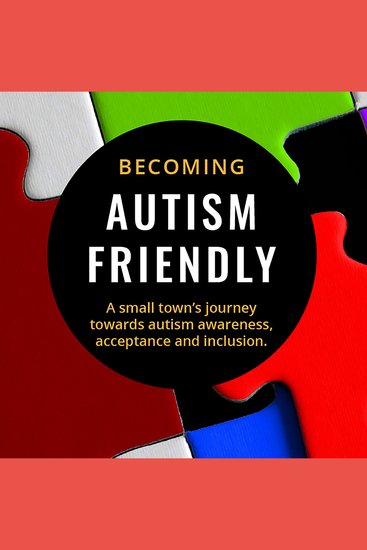
  • Becoming Autism Friendly - A small town's journey towards autism awareness acceptance and inclusion - cover

    Becoming Autism Friendly - A...

    Rosalyn Roy

    • 0
    • 0
    • 0
    In an obscure town on the edge of the North Atlantic, two women formed a community group that developed simple, practical changes to make sports, education and medical care more inclusive and accessible for children with autism and other sensory disorders. Initially envisioned as a small support group for families and caregivers, Autism Involves Me (AIM) slowly transformed the entire Southwest coast of Newfoundland and Labrador. Its volunteers raised autism awareness, launched Canada's first autism-friendly hotel, developed strategic small business partnerships, and taught schools and even a local hospital how to better meet the every day needs of people on the autism spectrum or living with other sensory issues. 
    Because of their pioneering efforts, AIM has become a world leader in adaption and inclusion, and prompted media recognition of Channel-Port aux Basques as the most autism-friendly town in Canada. AIM's work is not only inspiring, it also serves as a practical community model for others to follow. 
    This guidebook recounts the experiences of volunteers and families, and also offers practical advice and key insights that prove including people with disabilities does not have to be difficult or expensive.
    Show book
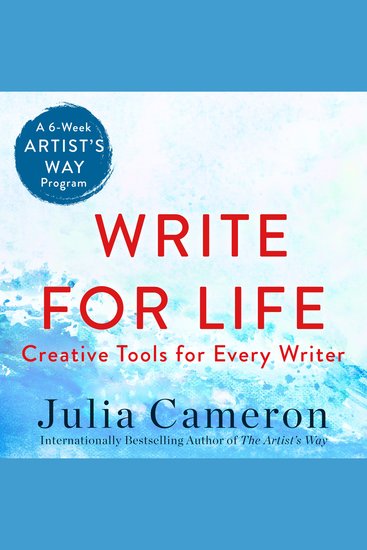
  • Write for Life - Creative Tools for Every Writer (A 6-Week Artist's Way Program) - cover

    Write for Life - Creative Tools...

    Julia Cameron

    • 0
    • 0
    • 0
    A 6-Week Artist’s Way ProgramJulia Cameron has been teaching the world about creativity since her seminal book, The Artist’s Way, first broke open the conversation around art. Now, in Write for Life, she turns to one of the subjects closest to her heart: the art and practice of writing.Over the course of six weeks, Cameron carefully guides listeners step by step through the creative process. This latest guide in the Artist’s Way Series:- Introduces a new tool and expands on powerful tried and true methods.  - Gently guides readers through many common creative issues — from procrastinating and getting started, to dealing with doubt, deadlines, and “crazymakers.”- Will help you reach your goals, whether your project is a novel, poetry, screenplay, standup, or songwriting.With the learned experience of a lifetime of writing, Cameron gives listeners practical tools to start, pursue, and finish their writing project. Write for Life is an essential listen for writers who have completed The Artist’s Way and are looking to continue their creative journey or new writers who are just putting pen to paper.A Macmillan Audio production from St. Martin’s Essentials.
    Show book
  • The Great Retreat - How Political Parties Should Behave and Why They Don't - cover

    The Great Retreat - How...

    Didi Kuo

    • 0
    • 0
    • 0
    Once a centralizing force of the democratic process, political parties have eroded over the past fifty years. Parties now rank among the most unpopular institutions in society—less trusted than business, the police, and the media. Identification with parties has plummeted, and even those who are loyal to a party report feeling that parties care more about special interests than about regular citizens. What does a "good" political party look like? Why do we urgently need them? And how do we get them? 


    The Great Retreat explores the development of political parties as democracy expanded across the West in the nineteenth century. It focuses in particular on mass parties, and the ways they served as intermediaries that fostered ties between citizens and governments. 


    For democracy to adapt to a new era of global capitalism, Kuo makes the case that we need strong intermediaries like mass parties—socially embedded institutions with deep connections to communities and citizens. Parties are essential to long-term democratic stability and economic growth, while the breakdown of party systems, on the other hand, has historically led to democratic collapse. As trust in political parties has plummeted, The Great Retreat provides a powerful defense of political parties—for without parties, democratic representation is impossible.
    Show book
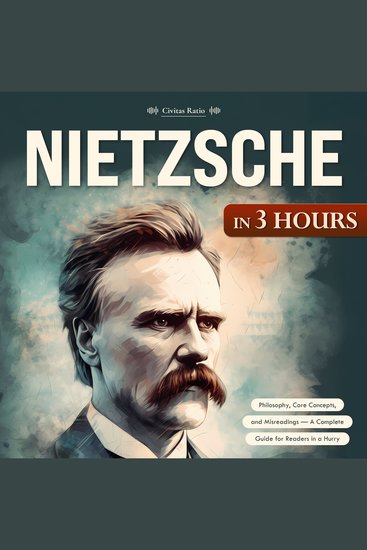
  • Nietzsche in 3 Hours - Philosophy Core Concepts and Misreadings — A Complete Guide for Readers in a Hurry - cover

    Nietzsche in 3 Hours -...

    Civitas Ratio

    • 0
    • 0
    • 0
    Pressed for time—but want to finally understand Nietzsche? 
    Want to sound sharp in conversation—without dropping random quotes? 
    Got an exam coming up—but no time to wade through five dense volumes? 
    This book was made for you. 
    Nietzsche in 3 Hours delivers the essentials of one of modernity’s most radical—and most misinterpreted—thinkers. No shortcuts, no empty simplifications. Just the real Nietzsche: sharp, provocative, ruthless toward lazy thinking and moral complacency. 
    What you’ll find inside: 
    – A clear, structured overview of his most important works 
    – Key concepts explained: will to power, eternal return, Übermensch, nihilism 
    – Authentic quotes, not distorted clichés from the internet 
    – A guided path through his shifting ideas and writing phases 
    – Common misreadings exposed—from nationalist myths to self-help distortions 
    – His impact on modern thought, from psychoanalysis to postmodernism 
    – A tight, rigorous format designed for real understanding—even under time pressure 
    This book is for you if: 
    – You’re studying and need clarity, fast 
    – You want to understand, not just name-drop 
    – You’re tired of vague takes and butchered quotes 
    – You’re short on time but serious about getting it right 
    You don’t need years to get Nietzsche. 
    Just the right guide—and three hours that count.
    Show book