Unisciti a noi in un viaggio nel mondo dei libri!
Aggiungi questo libro allo scaffale
Grey
Scrivi un nuovo commento Default profile 50px
Grey
Iscriviti per leggere l'intero libro o leggi le prime pagine gratuitamente!
All characters reduced
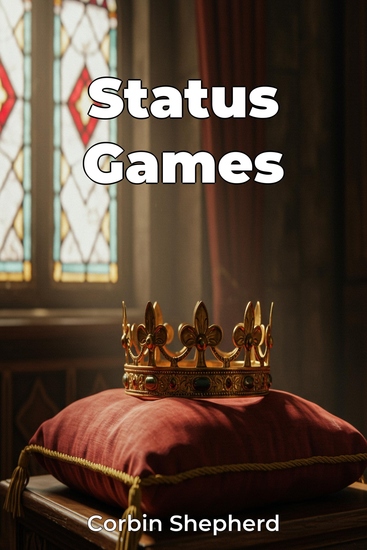
Status Games - cover

Status Games

Corbin Shepherd

Traduttore A AI

Casa editrice: Publifye

  • 0
  • 0
  • 0

Sinossi

"Status Games" explores the pervasive influence of social status on human behavior, revealing how the pursuit of prestige shapes our societies, economies, and political landscapes. Delving into the unspoken rules that govern social hierarchies, the book highlights that much of what we do, from conspicuous consumption to professional achievements, is often driven by a desire to gain or maintain social standing. Interestingly, status hierarchies, while often viewed negatively, can incentivize innovation and cooperation.

 
The book begins by establishing a foundational understanding of status, tracing its roots from evolutionary biology to contemporary social psychology. It examines how status hierarchies operate in diverse cultural contexts, comparing strategies and values that determine social standing across different societies. Through historical analyses, ethnographic studies, and quantitative data, "Status Games" illustrates the multifaceted nature of status. The approach combines theoretical analysis with practical examples, making it accessible to a broad audience.

 
Progressing across chapters, the book first introduces the concept of status games and their psychological underpinnings. It then examines how these hierarchies function in different cultures before exploring their economic and political implications, such as consumer behavior and political polarization.
Disponibile da: 02/05/2025.
Lunghezza di stampa: 64 pagine.

Altri libri che potrebbero interessarti

  • Kofun Period - The Mysterious Tomb Builders and the Roots of Imperial Japan - cover

    Kofun Period - The Mysterious...

    Rolf Hedger

    • 0
    • 0
    • 0
    The Kofun Period, which lasted from approximately 250 to 600 AD, marks a significant era in early Japanese history. This period is named after the distinct burial mounds, or "kofun," that were constructed during this time. These mounds vary in size and shape but are most commonly recognized for their keyhole-like design. The Kofun Period is pivotal as it represents a time of political consolidation, the development of social structures, and the emergence of a powerful ruling elite that would lay the foundation for the imperial system in Japan. 
    The beginning of the Kofun Period is closely tied to the formation of more complex societies in the Japanese archipelago. By this time, a system of chiefdoms had developed, and the early Yamato state began to emerge as a dominant political force. The period sees the consolidation of power under a centralized leadership, which eventually paved the way for the establishment of the imperial family that still exists today. During the Kofun Period, society transitioned from small, localized groups to more organized and hierarchical structures, a shift that was reflected in the elaborate tombs built for the elites. 
    The most notable characteristic of the Kofun Period is the construction of large burial mounds for the ruling class. These tombs were not only elaborate final resting places for powerful individuals but also symbolized the political power and religious authority of the deceased. The kofun mounds varied in size, with some measuring several hundred meters in length. These tombs were often surrounded by moats and would contain a wealth of grave goods, such as weapons, jewelry, and pottery, which reflected both the material culture of the time and the importance of the individual being buried.
    Mostra libro
  • Empire of Laws An - Legal Pluralism in British Colonial Policy - cover

    Empire of Laws An - Legal...

    Christian R. Burset

    • 0
    • 0
    • 0
    For many years, Britain tried to impose its own laws on the peoples it conquered, and English common law usually followed the Union Jack. But the common law became less common after Britain emerged from the Seven Years' War as the world's most powerful empire. At that point, imperial policymakers adopted a strategy of legal pluralism: some colonies remained under English law, while others retained much of their previous legal regimes. 


    As legal historian Christian R. Burset argues, determining how much English law a colony received depended on what kind of colony Britain wanted to create. Policymakers thought English law could turn any territory into an anglicized, commercial colony; legal pluralism, in contrast, would ensure a colony's economic and political subordination. Britain's turn to legal pluralism thus reflected the victory of a new vision of empire—authoritarian, extractive, and tolerant—over more assimilationist and egalitarian alternatives. Among other implications, this helps explain American colonists' reverence for the common law: it expressed and preserved their equal status in the empire. This book, the first empire-wide overview of law as an instrument of policy in the eighteenth-century British Empire, offers an imaginative rethinking of the relationship between tolerance and empire.
    Mostra libro
  • Russia - What Everyone Needs to Know - cover

    Russia - What Everyone Needs to...

    Timothy J. Colton

    • 0
    • 0
    • 0
    Today's Russia, also known as the Russian Federation, is often viewed as less powerful than the Soviet Union of the past. When stacked against other major nations in the present, however, the new Russia is a formidable if flawed player. 


    Russia: What Everyone Needs to Know provides fundamental information about the origins, evolution, and current affairs of the Russian state and society. The story begins with Russia's geographic endowment, proceeds through its experiences as a kingdom and empire, and continues through the USSR's three-quarters of a century, and finally the shocking breakup of that regime a generation ago. Chapters on the failed attempt to reform Communism under Mikhail Gorbachev, the halting steps toward democratization under Boris Yeltsin, and the entrenchment of central controls under Vladimir Putin bring the listener into the contemporary scene and to headline-grabbing events such as Russia's annexation of the Crimean Peninsula from Ukraine and its military intervention in Syria. Drawing on trends within Russia and on ratings and rankings compiled by international organizations, Colton discusses the challenges facing the country—ranging from economic recession to demographic stress, political stagnation, and overextension in foreign policy—and to the realistic options for coping with them.
    Mostra libro
  • The Great Upshift - Humanity's Coming Advance Toward Peace and Harmony on the Planet - cover

    The Great Upshift - Humanity's...

    David Lorimer, Ervin Laszlo

    • 0
    • 0
    • 0
    This vital book leads us beyond today's crisis—and conflict-prone world to a higher stage of our evolution. We have reached a historic turning point—a "point of bifurcation"—at which we must find new ways to upshift our individual and collective consciousness to ensure the desired resolution of these crises. 


    Ervin Laszlo and David Lorimer, drawing on their holistic expertise and global network, have assembled a stellar cast of contributors who decode the big picture to offer exactly what we need now. The world-renowned scientists and visionaries who contribute to this book illuminate where are we today and where we can go from here. They focus on the most burning question of all: how can we upshift ourselves—our ways of healing, of thinking and feeling, and even of intuiting—to respond to the pressing requirements of our time? 


    Their visions empower us to "be the change" we want to see in the world—to help others be a positive and critical part of the great upshift that has already started. This will be our salvation. This compendium of insights into solutions for our world troubled by climate change, conflict, and unsustainable conditions calls for the conscious participation of all of us to implement the verities within.
    Mostra libro
  • Inner Revolution Poetry 6 - Key to Harmony - cover

    Inner Revolution Poetry 6 - Key...

    Yashomatinandana Dāsa

    • 0
    • 0
    • 0
    Inner Revolution Poetry: 108 Poems of Spiritual Change is a heartfelt collection of devotional poetry by Yaśomatīnandana Dāsa (Jan Wolter), disciple of His Holiness Kadamba Kanana Swami. Spanning a decade of spiritual journeys across Europe, India, the Middle East, Africa, and beyond, these poems weave together personal reflections, Vedic wisdom, and the transformative power of Bhakti-yoga. 
    Structured in six parts—from Mayavada to Prabhupada, Time for Surrender, and Devotional Service to Beyond Birth & Death—the work traces a seeker’s path from questioning and searching to surrender, service, and divine love. Each poem is accompanied by contemplations that ground mystical experiences in the teachings of the Bhagavad-Gītā and Śrīmad-Bhāgavatam. 
    This is not merely poetry but a spiritual companion—an invitation to join a journey of awakening, to reflect, chant, and live with greater simplicity, humility, and joy. Whether you are new to Bhakti or already walking the path, these verses open a window into the eternal quest for truth, love, and harmony. 
    Perfect for readers of spiritual literature, yoga practitioners, seekers of inner peace, and lovers of devotional poetry.
    Mostra libro
  • Who Really Owns Ireland - How we became tenants in our own land - and what we can do about it - cover

    Who Really Owns Ireland - How we...

    Matt Cooper

    • 0
    • 0
    • 0
    Through centuries of oppression, we were tenants in our own land.
    Today, despite our independence and new-found affluence, we are in the midst of a crisis.
    The question of who owns Ireland is once again taking on a sense of urgency. Is the land of Ireland still for the people of Ireland?
    In a deep and far-reaching investigation, journalist, broadcaster and No. 1 bestselling author Matt Cooper examines the power wielded by those who control the land where we live, work and play. Who are they, how did they acquire so much and what does it mean for ordinary citizens when the ownership of key resources like shopping centres, wind farms, forestry and data centres comes from outside?
    This is a story about how power and money influence and control the present and the future of Ireland … sometimes for good and sometimes for bad. Filled with riveting detail, this compelling story of who really owns Ireland is an essential account of the issues that affect every single one of us living on this island.
    Mostra libro