Join us on a literary world trip!
Add this book to bookshelf
Grey
Write a new comment Default profile 50px
Grey
Subscribe to read the full book or read the first pages for free!
All characters reduced
Presidential Shifts - cover

Presidential Shifts

Corbin Shepherd

Translator A AI

Publisher: Publifye

  • 0
  • 0
  • 0

Summary

Presidential Shifts explores how changes in presidential administrations have fundamentally reshaped American politics and policy. It examines pivotal moments when transitions in leadership led to significant shifts in governance, societal norms, and America's global role. The book analyzes the anatomy of power transfer, the evolution of policy paradigms under different presidential styles, and the lasting impacts of these shifts, offering insights into American political history.

 
The book's structure unfolds in three parts, starting with the theoretical framework for understanding presidential power and policy change. It then presents case studies, such as the shift from Hoover to Roosevelt during the Great Depression and Reagan succeeding Carter amid economic stagnation. These examples highlight how new presidents often bring distinct policy priorities that dramatically affect society.

 
The book uses diverse sources, including presidential archives and statistical analyses, to quantify the impact of presidential policies. Ultimately, Presidential Shifts provides a comparative analysis of presidential shifts across historical periods, offering a fresh perspective by focusing on the discontinuities in American political history. It bridges political science, history, and economics, making it valuable for anyone interested in American politics and its leadership transitions.
Available since: 05/06/2025.
Print length: 66 pages.
Other books that might interest you

  • Norse Mythology: The History of the Norse Pantheon and the Most Famous Myths - cover

    Norse Mythology: The History of...

    Editors Charles River, Andrew Scott

    • 0
    • 0
    • 0
    Much of what is known of the Norse myths comes from the 10th century onwards. Until this time and, indeed, for centuries afterwards, Norse culture (particularly that of Iceland, where the myths were eventually transcribed) was an oral culture. In fact, in all Scandinavian countries well into the 13th century laws were memorized by officials known as “Lawspeakers” who recited them at the “Thing.” The Thing was the legislative assembly in Scandinavia “held for judicial purposes.” 
    One of the most famous of these Lawspeakers was the Icelander Snorri Sturluson, a masterful writer who wrote the Prose Edda in the thirteenth century. There are other sources for the Norse myths, namely the later “Poetic Edda,” a collection of poems and prose work, and other sagas but the Snorri’s Prose Edda is the most complete work whose attribution is known to modern scholars. 
    The Prose Edda is a collection of Norse Myths split into three sections, the Gylfaginning (the Deluding of Gylfi), the Skáldskaparmál (the Language of Poetry) and the Háttatal (the Enumeration of Meters). The first has a frame story that entails a Swedish King, Gylfi, disguising himself as an old man, Gangleri, when he journeys to Asgard to meet the gods. When he arrives, he meets three men - “High One, Just-As-High, and Third” - who reveal to him stories of the world and the gods. The second section contains a warning for Christians not to believe in the Norse gods, specifically the two families, the Aesir and the Vanir, but also refutes the notion that they were demons, which was a common supposition among some Christians at the time. The Prose Edda begins in this line of thought with a euhemeristic prologue, which traces the history of the Norse Gods as human heroes of Troy, making Thor one of King Priam’s sons.
    Show book
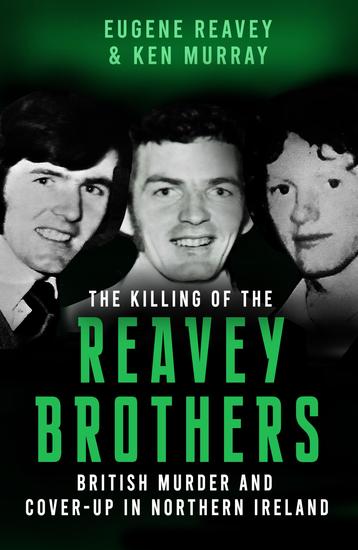
  • The Killing of The Reavey Brothers - British Murder and Cover-Up in Northern Ireland - cover

    The Killing of The Reavey...

    Ken Murray, Eugene Reavey

    • 0
    • 0
    • 0
    In this gripping memoir, Eugene Reavey takes readers on a harrowing journey through the darkest chapter of his life during the Northern Ireland Troubles. Reavey relives the tragic night in 1976 when his three brothers—John Martin, Anthony, and Brian—were brutally murdered in their family home in Whitecross, South Armagh.
    As Reavey grapples with profound loss and an unrelenting quest for justice, he uncovers a web of treachery and collusion that shakes the very foundations of Northern Ireland's past.Through meticulous research and firsthand testimony, Reavey exposes the alarming truths behind the covert protection afforded to the notorious Glenanne Gang, a loyalist paramilitary group, by key institutions. He navigates a sinister labyrinth of threats and schemes orchestrated by the feared Ulster Defence Association (UDA) enforcer, Jimmy Craig, and confronts the shocking false allegations made by Democratic Unionist Party (DUP) Leader Ian Paisley in the House of Commons, which were challenged but never retracted.
    Perhaps the most chilling revelation is the Reavey family's accidental discovery of a staggering 84-year embargo on the release of crucial British files related to the murders. This startling find raises the question: why the silence?
    Reavey's compelling narrative captures the intrigue, drama, and profound human cost of the Troubles. It serves as a powerful testament to the lengths people will go to uncover the truth and the devastating impact of sectarian violence on families and communities. It is a searing chronicle of a society fractured by conflict and a family's unwavering determination to find answers in the face of unimaginable tragedy.
    This book is a must-read for readers of true crime, Northern Ireland history and stories of injustice and resilience. It is also perfect for fans of Patrick Radden Keefe's 'Say Nothing', Henry Hemmings 'Four Shots in the Night', and similar works that explore the human impact of The Troubles.
    Show book
  • Thinking Life Through - cover

    Thinking Life Through

    Archbishop Fulton J. Sheen

    • 0
    • 0
    • 0
    In the face of a world crisis, which is manifestly deeper than one can imagine, many are inclined to ask: “Has Christianity failed?” Fulton Sheen’s Thinking Life Through seeks to answer this critical question. The conclusions the author proposes are far-reaching and touch upon subjects as diverse as the truth and meaning of human sexuality, the purpose of life, discordant marriages, angels, alcoholism, the vocation of the soldier, materialism, parenting, and even the question of spanking children.  
    On the critical subject of freedom, Sheen writes, “The true definition of freedom is the right to do whatever one ought, and oughtness implies law, goals, purposes, and perfection. Freedom is a moral power and not a physical one. It revolves around what man is rather than what man does. We are more free within the law than outside of it.” 
    Thinking Life Through also addresses the world’s political climate, something that in many ways mirrors the present political discourse. Focusing on the tragic decline of post-Christian society, Sheen gives special attention to both the threat of communism and the dangers of socialism. Sheen also gives clarity to the role of the individual and the family while living in a time of moral and political uncertainty. Finally, Sheen addresses good manners and politeness as he states in his quintessential style, “Another effect of materialism is to be seen in the decline of courtesy. There is politeness and decorum and a desire to please others when it is generally recognized that every person bears within himself an image of the Divine.” For anyone seeking to grow in wisdom, Thinking Life Through will be your guide.
    Show book
  • Japanese Mythology for Beginners - Amaterasu Susanoo and the Kami of Shinto Legend - cover

    Japanese Mythology for Beginners...

    Johnny Nelson

    • 0
    • 0
    • 0
    Embark on a captivating journey into the heart of Japanese mythology with Japanese Mythology for Beginners: Amaterasu, Susanoo, and the Kami of Shinto Legend. This audiobook offers an accessible and engaging exploration of Japan's rich mythological tapestry, delving into the stories and deities that have shaped its cultural and spiritual landscape for centuries. 
    Discover the radiant Amaterasu, the sun goddess whose emergence from a cave brought light back to the world, and her tempestuous brother Susanoo, the storm god known for his rebellious exploits and eventual redemption. Meet Tsukuyomi, the enigmatic moon god, and explore the intricate relationships among these celestial siblings. 
    Beyond the major deities, this audiobook introduces listeners to a pantheon of kami—spiritual beings that inhabit all aspects of the natural world in Shinto belief. From the sacred mountains and ancient forests to the flowing rivers and everyday objects, the presence of kami reflects a profound respect for nature and the interconnectedness of all things. 
    Through engaging narratives and insightful commentary, Japanese Mythology for Beginners delves into the foundational myths found in ancient texts like the Kojiki and Nihon Shoki, illuminating the origins of Japan's imperial lineage and the cultural values embedded within these tales. 
    Ideal for enthusiasts of mythology, religion, and Japanese culture, this audiobook serves as a comprehensive introduction to Shinto legends and their enduring influence on Japanese society. Whether you're a student, traveler, or curious listener, you'll gain a deeper appreciation for the stories that continue to inspire art, literature, and spiritual practices in Japan today. 
    With its blend of storytelling and scholarly insight, Japanese Mythology for Beginners invites you to explore a world where the divine and the natural coexist harmoniously, offering timeless wisdom and a unique perspective on the human experience.
    Show book
  • Tutankhamen's Curse - The Legend of the Pharaoh's Deadly Tomb - cover

    Tutankhamen's Curse - The Legend...

    John Harpoon

    • 0
    • 0
    • 0
    The discovery of Tutankhamen's tomb in 1922 remains one of the most significant archaeological events in history, but it also brought with it a mysterious and terrifying legend—the Curse of the Pharaoh. For centuries, the tomb of the young Egyptian king, who ruled during the 18th dynasty, lay hidden beneath the sands of the Valley of the Kings. It wasn’t until British archaeologist Howard Carter and his financial backer, Lord Carnarvon, unearthed the tomb that the world was introduced to the wonder and mystique surrounding King Tutankhamen’s final resting place. 
    Tutankhamen, who ascended to the throne as a child, died young under uncertain circumstances, leaving behind a legacy that has fascinated historians, archaeologists, and the public alike. His tomb, filled with precious artifacts, murals, and the famous golden mask, was unlike anything ever discovered in ancient Egyptian tombs. Yet, the treasures would be overshadowed by an eerie series of deaths, leading many to believe in a curse linked to the tomb. 
    The first death tied to the curse was that of Lord Carnarvon, who financed the excavation. His sudden death just months after entering the tomb in 1923 shocked the world, and rumors of a deadly curse spread rapidly. Over the next few years, several individuals connected to the tomb’s discovery met untimely and mysterious deaths, fueling the belief that the wrath of Tutankhamen had been unleashed upon those who dared to disturb his resting place.
    Show book
  • Predator - A Memoir a Movie an Obsession - cover

    Predator - A Memoir a Movie an...

    Ander Monson

    • 0
    • 0
    • 0
    In his first memoir, Ander Monson guides listeners through a scene-by-scene exploration of the 1987 film Predator, which he has watched 146 times. Some fighters might not have time to bleed, but Monson has the patience to consider their adventure, one frame at a time. He turns his obsession into a lens through which he poignantly examines his own life, formed by mainstream, white, male American culture. Between scenes, Monson delves deeply into his adolescence in Michigan's Upper Peninsula and Riyadh, his role as a father and the loss of his own mother, and his friendships with men bound by the troubled camaraderie depicted in action and sci-fi blockbusters. Along with excursions into the conflicted pleasures of cosplay and first-person shooters, he imagines himself beside the poet and memoirist Paul Monette, who wrote the novelization of the movie while his partner was dying of AIDS. 


    A sincere and playful book that lovingly dissects the film, Predator also offers questions and critiques of masculinity, fandom, and their interrelation with acts of mass violence. In a stirring reversal, one chapter exposes Monson through the Predator's heat-seeking vision, asking him, "What do you know about the workings of the hidden world?" As Monson brings us into the brilliant depths of the film and its universe, the hunt begins.
    Show book