¡Acompáñanos a viajar por el mundo de los libros!
Añadir este libro a la estantería
Grey
Escribe un nuevo comentario Default profile 50px
Grey
Suscríbete para leer el libro completo o lee las primeras páginas gratis.
All characters reduced
Legal Name Changes - cover

Legal Name Changes

Corbin Shepherd

Traductor A AI

Editorial: Publifye

  • 0
  • 0
  • 0

Sinopsis

Legal Name Changes explores the intricate processes LGBTQ individuals undertake to align their legal identities with their true selves, focusing on the often-challenging journey of name and gender marker changes. This book highlights how seemingly simple legal procedures can be fraught with emotional and bureaucratic hurdles.

 
The legal landscape governing these changes is far from uniform, varying significantly across jurisdictions and reflecting shifting societal attitudes. One key insight is the potential for discrimination in employment, healthcare, and housing faced by those without accurate documentation.

 
The book argues that the legal system often inadequately addresses the needs of LGBTQ individuals seeking identity affirmation. It demonstrates how seemingly neutral legal processes can perpetuate systemic inequalities and emotional distress.

 
The approach taken combines legal scholarship, sociological studies, and personal narratives to provide a comprehensive understanding. The book progresses by first outlining the legal concepts, then exploring lived experiences, and finally analyzing connections to healthcare, employment, and family law, along with offering policy recommendations for a more affirming legal environment.
Disponible desde: 07/04/2025.
Longitud de impresión: 85 páginas.

Otros libros que te pueden interesar

  • Empire of Normality - Neurodiversity and Capitalism - cover

    Empire of Normality -...

    Robert Chapman

    • 0
    • 0
    • 0
    'Groundbreaking . . . [provides] a deep history of the invention of the "normal" mind as one of the most damaging and oppressive tools of capitalism. To read it is to see the world more clearly' Steve Silberman, author of NeuroTribes 


    Neurodiversity is on the rise. Awareness and diagnoses have exploded in recent years, but we are still missing a wider understanding of how we got here and why. Beyond simplistic narratives of normativity and difference, this groundbreaking book exposes the very myth of the 'normal' brain as a product of intensified capitalism. 


    Exploring the rich histories of the neurodiversity and disability movements, Robert Chapman shows how the rise of capitalism created an 'empire of normality' that transformed our understanding of the body into that of a productivity machine. Neurodivergent liberation is possible—but only by challenging the deepest logics of capitalism. Empire of Normality is an essential guide to understanding the systems that shape our bodies, minds, and deepest selves—and how we can undo them.
    Ver libro
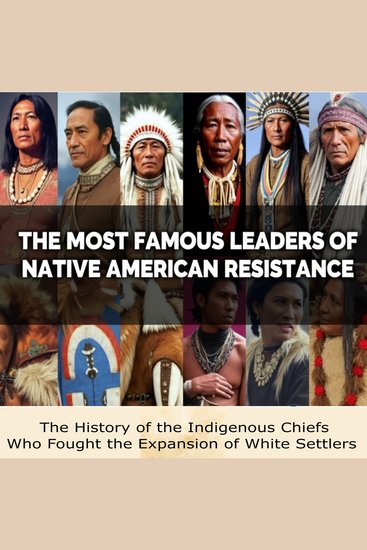
  • Most Famous Leaders of Native American Resistance The: The History of the Indigenous Chiefs Who Fought the Expansion of White Settlers - cover

    Most Famous Leaders of Native...

    Editors Charles River

    • 0
    • 0
    • 0
    Throughout history, there have been men of war and men of peace, but few have actually had a war named after them. One of them was Pontiac, also known as Obwandiyag, an Odawa chief who left his mark on history by continuing the battle against the British after their official triumph during the French and Indian War.  
    	The new United States was faced with a fundamental problem: to expand, it had to settle lands to the west of the Appalachian Mountains, ceded to it by the British. However, the mountains were occupied by Native American groups who had no desire to make way for white settlers. The treaty had created a vast frontier for the fledgling nation, and any American settlers pushing west along it were bound to encounter hostile natives.  
    	For the most part, the conflicts that followed consisted mostly of the Native Americans suffering defeat in the face of a better-equipped adversary, interspersed with binding treaties, which, on the side of the federal government, proved not very binding at all. Occasionally, however, there arose a Native American leader of such ability that such defeats were temporarily reversed, and Little Turtle, the war chief of the Miami tribe, was one such man. Under his leadership, a confederation of Miami and other tribes inflicted the worst defeat ever suffered by an American army in the newly independent nation. Almost a quarter of the Army’s total strength was lost in a single battle, but while later Native American leaders such as Sitting Bull and Crazy Horse have become legends, Little Turtle is not as well-remembered. This is particularly odd, given that he actually defeated the American military and helped shape the development of the nascent United States and its military.
    Ver libro
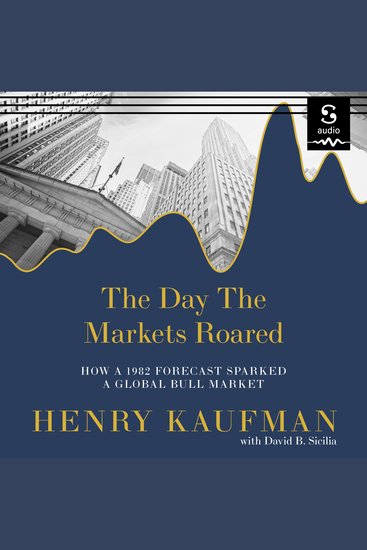
  • The Day the Markets Roared - How a 1982 Forecast Sparked a Global Bull Market - cover

    The Day the Markets Roared - How...

    Henry Kaufman, David B. Sicilia

    • 0
    • 0
    • 0
    Legendary economist Dr. Henry Kaufman shares a classic Wall Street story that has never been fully told: a firsthand account of the day in August 1982 that would define US economics for decadesDr. Henry Kaufman is the most famous economist Wall Street has ever seen, renowned well beyond the financial industry. He was the subject of New Yorker cartoons, had cameos in drama productions and two seminal literary works of the 1980s, was subject to death threats, and enjoyed the nickname "Dr. Doom." His pinnacle of influence arrived on August 17, 1982.That single day turned out to be the beginning of the world that we now live in. At the time, after painful years of high interest rates and the inflation of the late 1960s and 1970s, consumers were paying 17 percent and higher to borrow money. But by the end of one summer day almost 40 years ago, the stock market had undergone its second-biggest rally since WWII, while bond prices soared and interest rates plunged. Dr. Kaufman himself had written a memo that sparked this tremendous boom-and it set the global markets on fire, marking the start of almost four decades of US economic growth.The Day the Markets Roared answers the questions: • Why did Dr. Kaufman break with his longstanding bearish views to make a momentous prediction that spurred blaring headlines everywhere from Brazil to Beijing? • How could a private individual exercise such profound influence over global financial markets? • How did we get to today's rock-bottom and even negative rates? And what is their continuing impact on the economy, our financial markets and our livelihoods?The Day the Markets Roared is a firsthand, minute-by-minute account of one remarkable day in financial and economic history, with a rich cast of characters, from Salomon's John Gutfreund to interest rate guru Sydney Homer, to Dr. Kaufman's longtime friend, Fed Chairman Paul Volcker. Dr. Kaufman reflects on the lessons of the historic August 1982 episode, harkening back to a more optimistic moment in American history, and offering inspiration for better times ahead.  
    Ver libro
  • No Place for Mercy - Sexual Violence and Propaganda in Ancient Rome - cover

    No Place for Mercy - Sexual...

    Davis Truman

    • 0
    • 0
    • 0
    This audiobook is narrated by an AI Voice.  
    Where empire rose, mercy fell. 
    In No Place for Mercy, ancient Rome is unmasked—not as the marble-clad cradle of civilization, but as a brutal stage where sex, violence, and power played their most calculated roles. With a piercing lens, this provocative and deeply researched work reveals how sexual violence was not only a consequence of conquest but a deliberate tool of political manipulation and imperial propaganda. 
    From the mythologized Rape of the Sabine Women to the whispered scandals of imperial courts, No Place for Mercy exposes how Rome’s leaders wielded control over bodies as a means to control the narrative, transforming victims into symbols and violence into a spectacle. 
    Drawing from primary sources, inscriptions, and visual art, this groundbreaking book explores how Roman elites exploited sexual violence to define citizenship, masculinity, and moral order. It challenges romanticized visions of antiquity and forces us to confront the uncomfortable truths beneath Rome’s glorious facade. 
    Bold, unflinching, and urgently relevant, this is history that speaks to today’s conversations about power, gender, and the weaponization of sexuality. For scholars, students, and anyone who dares to ask what lies beneath the empire’s polished stone, No Place for Mercy is an essential and unforgettable read.
    Ver libro
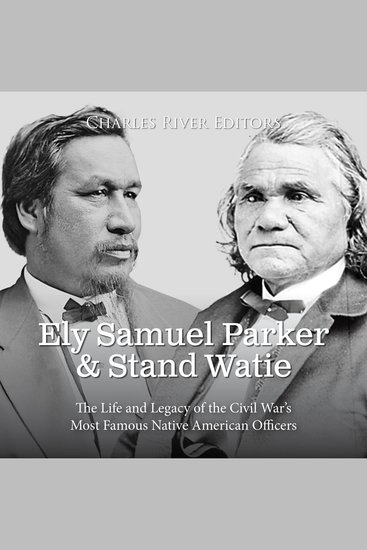
  • Ely Samuel Parker and Stand Watie: The Life and Legacy of the Civil War’s Most Famous Native American Officers - cover

    Ely Samuel Parker and Stand...

    Editors Charles River

    • 0
    • 0
    • 0
    One of the best known of the six nations is the Seneca, and arguably the most famous Seneca chief was Ely Samuel Parker. Over the course of his life, he was a Seneca chief, a civil engineer, a close friend and adjutant to General Ulysses S. Grant, an advocate for the Indian peoples, and the first Native American Commissioner of the Department of Indian Affairs. His marriage to a much younger socialite scandalized Washington, and he made a fortune on Wall Street and lost it all. He ended his life in genteel poverty, working for nearly 20 years in an obscure position for the New York City Police Department. Parker was a largely self-taught engineer, who worked on various canal projects, and was hired by the Department of the Treasury to supervise the construction of several buildings in Galena, Illinois, where he met a shy salesclerk named Ulysses S. Grant. At the age of 18, he dined with President Polk, later talked with President Lincoln, and had the commanding general of the U.S. Army as the best man at his wedding.  
    Stand Watie’s life connects the traditional Cherokee homeland in Tennessee and Georgia, the fight within the tribe over leaving for the West or staying on their homeland and trying to resist, and the Trail of Tears. At the same time, his life also includes the ongoing split between mixed-blood and full-blood Cherokee in the Cherokee Nation, and the chaos of Indian Territory during the Civil War. Like the country as a whole, the Cherokee Nation was split over the question of slavery, and with an estimated 100 slaves owned, Watie was the biggest native slaveholder in the region. At the start of the war, Watie was commissioned as a colonel in Confederate service and later as a brigadier general. His 1st Cherokee Mounted Rifles Regiment fought more engagements than any other Confederate unit west of the Mississippi River. As a result, Watie is perhaps the most famous figure of a widely overlooked aspect of the Civil War.
    Ver libro
  • The Hoyt-Wallis Murder Mystery in Herkimer County - cover

    The Hoyt-Wallis Murder Mystery...

    James M. Greiner

    • 0
    • 0
    • 0
    Warren township in the southern portion of Herkimer County has been the scene of more than one gruesome event.  In January 1885, locals reeled in horror when disgruntled wife Roxalana Druse shot her husband and dismembered his corpse to incinerate it in a farm house stove. Her trial and hanging was followed up in May of 1901 with two murders in yet another farm house kitchen. John C. Wallis had allowed his ex-wife Arvilla to return home, one year after running off with hired farm hand Ben Hoyt. Wallis then rehired Hoyt and within months both Ben Hoyt and Arvilla Wallis were dead. Did Ben Hoyt murder Arvilla in cold blood or did John C. Wallis kill both of them?  Author James M. Greiner investigates a mysterious case of marriage, infidelity and multiple murders in turn of the century Herkimer County.
    Ver libro