Join us on a literary world trip!
Add this book to bookshelf
Grey
Write a new comment Default profile 50px
Grey
Subscribe to read the full book or read the first pages for free!
All characters reduced
Disability Policy Timeline - cover

Disability Policy Timeline

Corbin Shepherd

Translator A AI

Publisher: Publifye

  • 0
  • 0
  • 0

Summary

Disability Policy Timeline explores the evolution of disability policy, charting its course from early reforms to modern accessibility laws and international charters. It examines the historical shifts in societal attitudes towards disability, highlighting the transition from exclusion to the rise of the independent living movement. The book analyzes crucial legal frameworks, including the Americans with Disabilities Act (ADA) and the UN Convention on the Rights of Persons with Disabilities, showcasing their impact on promoting equality and inclusion for individuals with disabilities.

 
The book progresses chronologically, beginning with early reforms and the eugenics movement, then focusing on the mid-20th century and the rise of key legislation. It delves into 21st-century implementations, providing detailed case studies and legal analyses.

 
The book underscores the complex interplay of advocacy, legal challenges, and societal reforms, reflecting a gradual shift toward recognizing the inherent dignity and rights of people with disabilities in the context of social policy and human rights law.
Available since: 05/05/2025.
Print length: 79 pages.

Other books that might interest you

  • My Soul Look Back in Wonder - Memories from a Life of Study Struggle and Doin Battle in the Language Wars - cover

    My Soul Look Back in Wonder -...

    Geneva Napoleon Smitherman

    • 0
    • 0
    • 0
    This is the story of Dr. Geneva Smitherman, aka "Dr. G," the pioneering linguist often referred to as the "Queen of Black Language." In a series of narrative essays, Dr. G writes eloquently and powerfully about the role of language in social transformation and the academic, intellectual, linguistic, and societal debates that shaped her groundbreaking work as a Black Studies O.G. and a Womanist scholar-activist of African American Language. 


    These eleven essays narrate the development of Dr. G's race, gender, class, and linguistic consciousness as a member of the Black Power Generation of the 1960s and 70s. In My Soul Look Back In Wonder, Dr. G links the personal to the professional and the political, situating the struggles, and successes, of a Black woman in the Academy within the historical experiences and development of her people. 


    As Dr. G enters her eighth decade, in this Black Lives Matter historical moment, she seeks to share the meaning and purpose of a life of study and struggle and its significance for all those who seek racial and social justice today.
    Show book
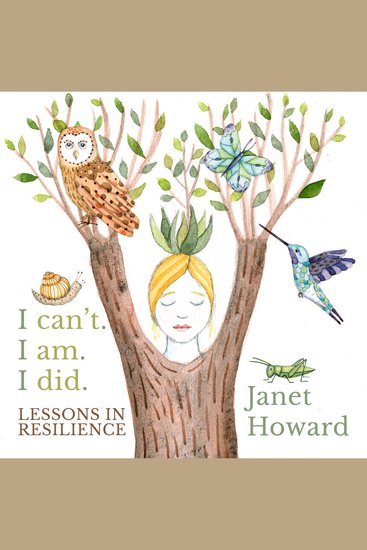
  • I can't I am I did Lessons in Resilience - Healing stories songs and poems — inviting you to reclaim your voice and your truth - cover

    I can't I am I did Lessons in...

    Janet Howard

    • 0
    • 0
    • 0
    Janet Howard walks a healing path guided by intuition, the natural world, and the quiet wisdom of those who walk with her — seen and unseen. Her love for the planet has always been at the forefront, but it’s through reconnecting with her younger self that she reclaims the silenced parts of her story — her voice, creativity, and truth. In releasing what no longer serves and honoring the resilience she carries, she offers her work as both remembrance and invitation: to live more freely, more wholly, and in tune with the sacred. 
    Learn more at www.rosehip26.com/resilience or follow on Instagram @rosehip26.
    Show book
  • Reading for the Love of God - How to Read as a Spiritual Practice - cover

    Reading for the Love of God -...

    Jessica Hooten Wilson

    • 0
    • 0
    • 0
    What if we viewed reading as not just a personal hobby or a pleasurable indulgence but a spiritual practice that deepens our faith? 


    In Reading for the Love of God, award-winning author Jessica Hooten Wilson does just that—and then shows listeners how to reap the spiritual benefits of reading. She argues that the simple act of reading can help us learn to pray well, love our neighbor, be contemplative, practice humility, and disentangle ourselves from contemporary idols. 


    Accessible and engaging, this guide outlines several ways Christian thinkers—including Augustine, Julian of Norwich, Frederick Douglass, and Dorothy L. Sayers—approached the act of reading. It also includes useful special features such as suggested reading lists, guided practices to approaching texts, and tips for meditating on specific texts or Bible passages. By learning to read for the love of God, listeners will discover not only a renewed love of reading but also a new, vital spiritual practice to deepen their walk with God.
    Show book
  • Soviet Union - cover

    Soviet Union

    Kelly Mass

    • 0
    • 0
    • 0
    From 1922 till 1991, the Soviet Union, officially the Union of Soviet Socialist Republics (USSR), was a socialist state that covered Europe and Asia. It was in theory a federal union of different sovereign republics; but, till its closing years, its administration and economy were highly centralized.The Bolsheviks, led by Vladimir Lenin, ousted the Provisional Federal government that had formerly toppled the Russian Empire's Romanov family in the October Revolution of 1917, bring to life the Soviet Union. They established the Russian Soviet Republic, the world's first socialist state with a constitution. Stress between the Bolshevik Red Army and some anti-Bolshevik forces across the previous Empire emerged into a civil war, with the White Guard being the most effective faction. The White Horror was a period of violent anti-communist repression by the White Defend Against the Bolsheviks and believed worker and peasant Bolsheviks. Through Red Horror, the Red Army extended and helped regional Bolsheviks in acquiring power, building soviets, and penalizing political challengers and defiant peasants. By 1922, the power balance had moved, and the Bolsheviks had thrived, unifying the Russian, Transcaucasian, Ukrainian, and Byelorussian republics to form the Soviet Union. After the civil war ended, Lenin's administration carried out The New Economic Policy, which led to a partial return of the free enterprise and personal property, and also a period of financial healing.Joseph Stalin rose to power after Lenin's death in the year 1924. Within the Communist Party, Stalin got rid of any political resistance to his rule and developed a command economy. As a consequence, the nation went through a period of quick industrialization and pushed collectivization, which led to great financial development but also a manufactured starvation in the year 1932-- 1933 and the growth of the Gulag labor camp system.
    Show book
  • Nuclear Revolution - Powering the Next Generation - cover

    Nuclear Revolution - Powering...

    Jack Spencer

    • 0
    • 0
    • 0
    “Jack Spencer tells it the way it is and needs to be to make nuclear energy an affordable choice for America. Read this thoughtful and provocative book written by one of America’s great conservative thinkers.” — William Martin, Former Deputy Energy Secretary; Chair, Nuclear Energy Advisory Committee
    		 
    Skyrocketing energy prices are placing downward pressure on economic growth throughout the world. There seems to be no relief in sight, with hundreds of millions without access to reliable energy and with global energy consumption expected to grow by 50 percent over the next 30 years. Some would impose energy rationing―or in other words, slow human progress. But with nearly 46 percent of the world’s population living on less than $5.50 per day, slowing human progress is unacceptable. The only solution is more energy and lots of it.
    		 
    Jack Spencer, in his upcoming book, Nuclear Revolution: Powering the Next Generation, argues that nuclear energy offers real answers to power our homes and industries, clean our air and water, and maybe even take us to Mars. However, we have been getting nuclear power wrong for decades.
    		 
    Skeptics say that nuclear energy is too expensive and threatens the world with the proliferation of nuclear weapons material and radioactive waste. Proponents say that nuclear power needs and deserves the support of the state and the taxpayer, cradle to grave. The time has come, Spencer argues, to think big nuclear energy and pull it out of the time capsule that pop culture, environmental activists, lobbyists, peaceniks, and policymakers are all too content to leave nuclear in.
    		 
    Spencer writes that while the government-industry partnership that defined the early years of America’s commercial nuclear rise was essential to the nation’s security, reluctance to modernize that relationship has prevented the American nuclear industry from reaching its full potential. In its place, Spencer offers an alternative that shatters how we think about nuclear energy policy and realigns the responsibilities of government and industry with the incentives that will drive America to success.
    		 
    Nuclear Revolution describes why government intervention in the nuclear industry is a problem, how to move from the status quo to something new, and why such reforms will kick off an era of nuclear entrepreneurship and innovation. Over 70 years ago, nuclear energy entered the scene with great promise. Now more than ever, the world needs that promise delivered, and America can lead the way.
    Show book
  • England Under the Normans: The Turbulent History of Normandy’s Attempts to Maintain the English Throne - cover

    England Under the Normans: The...

    Charles River Editors

    • 0
    • 0
    • 0
    William the Conqueror’s conquest of Britain arguably made him the most important figure in shaping the course of English history, but modern caricatures of this vitally important medieval figure are largely based on ignorance. William is a fascinating and complex figure, in many ways the quintessential warrior king of this period. Inheriting the Duchy of Normandy while still an infant and forced to fight for his domain almost ceaselessly during his early years, William went on to conquer and rule England, five times larger and three times wealthier. In doing so, he demonstrated sophisticated political and diplomatic skill, military prowess and administrative acumen. Although he lived by the sword, he was a devout man who had only one wife, to whom he remained faithful.  
    	William is one of history’s most famous conquerors, but the efforts to consolidate his rule in England were complicated from the start, both due to external enemies and those jockeying for his position while he was still alive. William ultimately decided to split Normandy and England. His son Robert, still in open revolt, would nonetheless inherit Normandy, while the next in line, his second son William, would rule England. The two states that William left behind were hardly united or at peace. Soon after his death, Odo conspired with Robert to oust his brother from the English throne and re-establish a united state, but the revolt failed, and King William “Rufus” II would rule England until his suspicious death in 1100. His younger brother Henry inherited the throne, and in 1106 he imprisoned Robert after their sibling battle at Tinchebray had achieved unity once more, but any political unity would not last long.  
    	This bloody era provides a fascinating glimpse into the lives, characters, and power struggles of the Norman-French nobility who had conquered England less than 100 years prior. 
    Show book