Join us on a literary world trip!
Add this book to bookshelf
Grey
Write a new comment Default profile 50px
Grey
Subscribe to read the full book or read the first pages for free!
All characters reduced
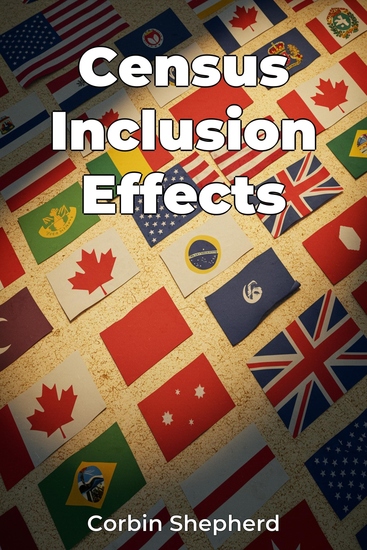
Census Inclusion Effects - cover

Census Inclusion Effects

Corbin Shepherd

Translator A AI

Publisher: Publifye

  • 0
  • 0
  • 0

Summary

Census Inclusion Effects explores the implications of incorporating sexual orientation and gender identity (SOGI) questions into national census forms. Focusing on the United States, the United Kingdom, and Canada, the book delves into both the statistical and socio-political ramifications of collecting SOGI data. A key insight is that while such data is invaluable for addressing inequalities affecting marginalized communities and allocating resources effectively, it also raises significant concerns about data privacy and the potential for misuse.

 
The book examines the historical context of census taking and the evolution of demographic data collection. It highlights debates surrounding SOGI data collection, weighing the benefits of informed social policy against the risks to individual privacy. For example, while Canada includes SOGI questions, generating data for policy, the US has seen limited inclusion in specific surveys. By comparing these approaches, the book identifies best practices for responsible and effective SOGI data collection.

 
Structured to provide a comprehensive understanding, the book first introduces a theoretical framework, then analyzes methodologies, and finally offers policy recommendations. Drawing from government reports, statistical datasets, and interviews, it uniquely combines quantitative analysis with qualitative insights, making it a valuable resource for policymakers, researchers, and LGBTQ+ advocates alike.
Available since: 04/07/2025.
Print length: 92 pages.

Other books that might interest you

  • Start of the Crusades The: The Origins of the World’s Most Famous Religious Wars - cover

    Start of the Crusades The: The...

    Charles River Editors

    • 0
    • 0
    • 0
    Though it went largely unremarked in the Islamic world at the time, the First Crusade has since become a contentious symbol of European imperialism in the Middle East. Debate over whether the Crusades can truly be perceived as an early example of European colonialism continues in medieval historiography, though the evidence for this is thin. The territory taken by the Franks from the Turks had previously belonged to Eastern Christians and had only recently been seized by the Turks themselves. The Crusader States were relatively small and weak, and they were reconquered centuries before modern European colonialism began. The Crusaders themselves saw it as a holy war of reclamation of previously lost (albeit almost-mythical) territory. To them, the Muslims were the first aggressors, and they were somewhat bolstered in this view by the support that they largely held from local Christians.   
    	The Crusader States were relatively small and weak, and while they tried to be a bulwark of Christianity in the Holy Land, the Crusader States were reconquered centuries before modern European colonialism began. Nonetheless, the Crusades and the Crusader States galvanized the Christians of Western Europe to expand their world. While it remains unclear how much that world expanded in practical terms such as trade, or how it affected later attitudes during the expansion to the New World and other regions, it definitely engaged the European mind in both positive and negative ways. As such, the crusades soon achieved near-mythic status in the European literature and remain among the most important events of the Middle Ages.  
    At the same time, the Crusader States were not one homogenized region but actually several distinct territories that had their own unique histories and interests. In fact, many of them were founded a century apart.
    Show book
  • War on the Waves - The Naval Battles That Defined World War II's Maritime Struggle - cover

    War on the Waves - The Naval...

    Sage Winters

    • 0
    • 0
    • 0
    The naval power wielded by the world’s great nations during World War II shaped not only the outcome of the conflict but also the geopolitical landscape for decades to come. Control of the seas became a decisive factor in determining the success or failure of military strategies and the fate of nations. This maritime struggle, fought on vast oceans and distant shores, was as much a war of technology, tactics, and intelligence as it was of sheer naval might. 
      
    The importance of naval dominance cannot be overstated. For the Allies, particularly the United States and Great Britain, securing control of the seas was vital for maintaining supply lines, especially in the Atlantic, where the threat of German U-boats could sever critical routes for war materials and reinforcements. In the Pacific, the Japanese Empire’s early victories left much of Southeast Asia and the Pacific Ocean under its control, presenting a formidable challenge. The battle for these waters would evolve into a series of iconic naval engagements that would shape the course of the war. 
      
    From the early days of the conflict, when the British Royal Navy faced off against the mighty Kriegsmarine of Nazi Germany, to the far-reaching campaigns of the Pacific theater, naval warfare introduced new technologies and strategies. The use of aircraft carriers, submarines, radar, and sonar reshaped traditional naval combat and rendered earlier tactics obsolete. The role of intelligence, particularly the breaking of the Enigma code, became a pivotal advantage, enabling the Allies to counter the Axis powers’ naval threats.
    Show book
  • Teaching Primary Programming with Scratch Pupil Book Year 4 - cover

    Teaching Primary Programming...

    Phil Bagge

    • 0
    • 0
    • 0
    Scratch teaching and learning made easy thanks to up-to-date, classroom-tested methodologies. Draws on the expertise of Code-IT and HIAS.
    Show book
  • Mr Horniman's Walrus - Legacies of a Remarkable Victorian Family - cover

    Mr Horniman's Walrus - Legacies...

    Clare Paterson

    • 0
    • 0
    • 0
    Mr Horniman's Walrus tells the story of the rise and fall of three generations of a remarkable and dysfunctional Victorian family - the Hornimans - exploring the lives and loves behind their extraordinary and varied legacies. 
     
    Family patriarch John Horniman established the tea company that bore his name in 1826, which went on to become one of the best-known brands of nineteenth-century Britain. His son Frederick created the eclectic and wonderful Horniman Museum in London, and his granddaughter Annie was a theatrical impresario responsible for founding Ireland's national theatre, the Abbey. Across more than a century, the family embodied changing middle-class attitudes from patriarchy to the new spirit of modernity; and their progress mirrored the high point of Victorian entrepreneurialism and the changes ushered in by the Edwardian age. 
     
    Drawing on her years of research and unfettered access to the family archive, Clare Paterson has written a riveting tale of trade, collecting, the stage, sex and politics in Victorian Britain. For the first time, Mr Horniman's Walrus unpicks the lives of this fascinating family, including their slips from grace as well as their astounding achievements. It's a story of capital and culture, philanthropy and empire, but also bankruptcy, betrayal, intrigue, lunacy and deep involvement in the esoterica of the occult.
    Show book
  • Nahum - The World English Bible Book 34 (Unabridged) - cover

    Nahum - The World English Bible...

    Various Authors

    • 0
    • 0
    • 0
    The Book of Nahum is the seventh book of the 12 minor prophets of the Hebrew Bible. It is attributed to the prophet Nahum, and was probably written in Jerusalem in the 7th century BC.
    Show book
  • Civics Test The - Study Guide With 100 Questions & Answers - For Naturalization & US Citizenship - cover

    Civics Test The - Study Guide...

    Raffles Education

    • 0
    • 0
    • 0
    Are you aware that you have only TWO opportunities to pass the U.S. naturalization test? 
    That’s why preparing thoroughly for the civics test is absolutely essential... 
    This audiobook provides the latest set of 100 questions and answers for the civics test, ensuring you're studying accurate and up-to-date material. We've also included a chapter with expert tips & guidance on the citizenship process. 
    Here are a few examples of the types of questions you’ll hear inside:Which ocean is on the West Coast of the United States?Name one state that borders Mexico?When was the Constitution written?There were 13 original states. Name three?Why does the flag have 13 stripes?Why does the flag have 50 stars?What are two rights of everyone living in the United States?When is the last day you can send in federal income tax forms? 
    If you weren’t able to instantly recall the correct answers to these questions, it’s time to strengthen your knowledge. 
    With THIS AUDIOBOOK, you can approach your oral test with confidence, knowing you're prepared to achieve the required score of 6 out of 10. 
    Step toward your U.S. citizenship — listen to this CIVICS TEST audiobook today!
    Show book