Join us on a literary world trip!
Add this book to bookshelf
Grey
Write a new comment Default profile 50px
Grey
Subscribe to read the full book or read the first pages for free!
All characters reduced
Crump folk going home - cover

Crump folk going home

Constance Holme

Publisher: Good Press

  • 0
  • 0
  • 0

Summary

In "Crump Folk Going Home," Constance Holme masterfully weaves a narrative that intricately explores the lives and struggles of a rural community grappling with the encroachment of modernity. Set against the backdrop of a changing England, the novel employs a lyrical yet grounded literary style that evokes both the beauty and grit of rustic life. Holme's vivid descriptions and rich characterizations bring to life the complexities of familial bonds, loyalty, and the yearning for a sense of place in an ever-evolving world. The novel's themes resonate strongly with the social realities of the early 20th century, reflecting the anxieties of a society in transition. Constance Holme, an author known for her deep connection to the English countryside, draws from her personal experiences and profound observations of rural life. Growing up in a small village, Holme's intimate understanding of local customs and traditions adds authenticity to the narrative. Her previous works have often highlighted the tension between tradition and progress, making "Crump Folk Going Home" a culmination of her literary journey, deeply rooted in her affinity for the communities she depicts. I highly recommend "Crump Folk Going Home" to readers seeking an evocative portrayal of country life and its challenges. Holme's insightful reflections invite readers to reconsider their relationship with their own roots, making it a compelling work for those passionate about social history and the nuances of human connection.
Available since: 04/24/2025.
Print length: 200 pages.
Other books that might interest you

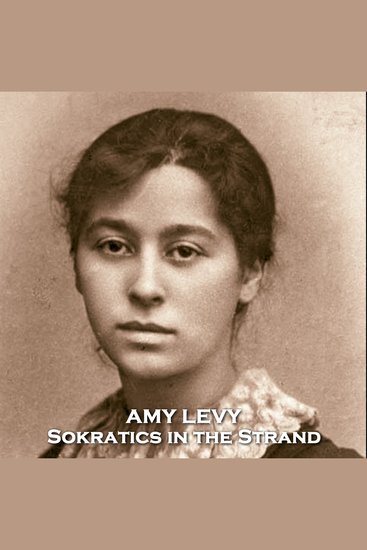
  • Sokratics in the Strand - From their pens to your ears genius in every story - cover

    Sokratics in the Strand - From...

    Amy Levy

    • 0
    • 0
    • 0
    Amy Levy was born in London, England in 1861, the second of seven in a fairly wealthy Anglo-Jewish family. The children read and participated in secular literary activities and became firmly integrated into Victorian life. 
    Her education was at Brighton High School, Brighton, before studies at Newnham College, Cambridge; she was the first Jewish student when she arrived in 1879, but left after four terms. 
    Amy’s writing career began early; her poem ‘Ida Grey’ appeared when she was only fourteen. Her acclaimed short stories ‘Cohen of Trinity’ and ‘Wise in Their Generation,’ were published by Oscar Wilde in his magazine ‘Women's World’. 
    Her poetic writings reveal feminist concerns; ‘Xantippe and Other Verses’, from 1881 includes a poem in the voice of Socrates's wife. ‘A Minor Poet and Other Verse’ from 1884 comprises of dramatic monologues and lyric poems. 
    In 1886, Amy began a series of essays on Jewish culture and literature for the Jewish Chronicle, including ‘The Ghetto at Florence’, ‘The Jew in Fiction’, ‘Jewish Humour’ and ‘Jewish Children’. 
    That same year while travelling in Florence she met the writer Vernon Lee. It is generally assumed they fell in love and this inspired the poem ‘To Vernon Lee’. 
    Her first novel ‘Romance of a Shop’, written in 1888 is based on four sisters who experience the pleasures and hardships of running a London business during the 1880s. This was followed by Reuben Sachs (also 1888) and concerned with Jewish identity and mores in the England of her time and was somewhat controversial. 
    Her final book of poems, ‘A London Plane-Tree’ from 1889, shows the beginnings of the influence of French symbolism. 
    Despite many friendships and an active life, Amy suffered for many years with serious depressions and this, together with her growing deafness, led her to commit suicide by inhaling carbon monoxide on September 10th, 1889. She was 27.
    Show book
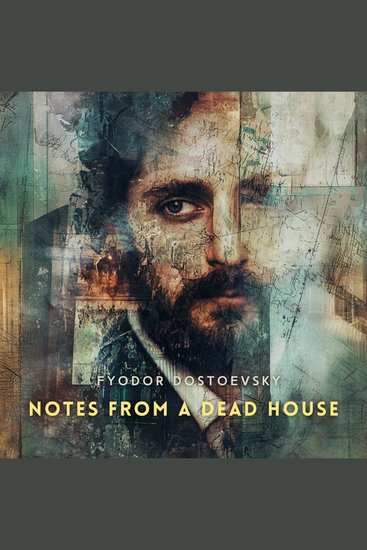
  • Notes from a Dead House - cover

    Notes from a Dead House

    Fyodor Dostoevsky

    • 0
    • 0
    • 0
    Dostoevsky draws on his own imprisonment to depict life in a Siberian labor camp. Through vivid detail and poignant reflection, he explores the harsh realities of incarceration—the brutality, monotony, and small moments of humanity among prisoners. Dostoevsky delves into the psychological and spiritual resilience of individuals stripped of freedom, highlighting their diverse backgrounds and shared suffering. The work transcends memoir, offering a profound meditation on justice, redemption, and the enduring strength of the human spirit. With compassion and insight, Dostoevsky reveals the capacity for dignity and hope even in the darkest circumstances.
    Show book
  • Letter to Sukhdev Regarding Suicide - cover

    Letter to Sukhdev Regarding Suicide

    Bhagat Singh

    • 0
    • 0
    • 0
    Letter to Sukhdev Regarding Suicide by Bhagat Singh is offered here in a clean English digital edition prepared for fluent ebook reading. The work stands within classics and gives modern readers direct access to a public-domain classic with navigable structure and a restrained typographic presentation. The opening pages establish the book's atmosphere with this first movement: In reply to Sukhdev's letter to Bhagat Singh that in case he (Sukhdev) is convicted for life imprisonment and not death sentence, he will commit suicide, Bhagat Singh wrote this letter. This edition is suited to readers who want a reliable, uncluttered version of the text for study, rediscovery, and sustained reading.
    Show book
  • A Changed Man and Other Tales - Wessex Stories of Soldiers and Townsfolk - cover

    A Changed Man and Other Tales -...

    Thomas Hardy

    • 0
    • 0
    • 0
    Twelve Wessex tales, including the one about a captain who becomes a curate and the wife who cannot forgive it, and Alicia's Diary, and the Waterloo veteran's story. Hardy trained as an architect and restored churches; these are the late gleanings, and several of them are as good as the novels — the title story turns on cholera, and he does not flinch at it.
    Show book
  • The Crystal Stopper - cover

    The Crystal Stopper

    Maurice Leblanc

    • 0
    • 0
    • 0
    A tiny object hides a devastating secret—and powerful people will do almost anything to possess it.
    
    In The Crystal Stopper, Arsène Lupin becomes entangled in a dangerous struggle involving crime, political influence, blackmail, hidden evidence, and an adversary capable of matching his cunning.
    
    What begins as a carefully planned operation rapidly develops into something far more complicated. Lupin must rely on his intelligence, disguises, courage, and extraordinary ability to improvise as the stakes rise and every apparent solution reveals another layer of danger.
    
    Maurice Leblanc delivers a fast-moving mystery packed with reversals, secret identities, psychological battles, and the sophisticated intrigue that defines the Arsène Lupin series.
    
    Enter a world of deception and danger where one small object may determine everything.
    Show book
  • Mr Crewe's Career - cover

    Mr Crewe's Career

    Winston Churchill

    • 0
    • 0
    • 0
    A rich man decides New Hampshire needs him as governor, and finds the state is already owned — by the railroad, whose lawyers select the legislature the way a man picks a suit. Churchill, the American novelist so often confused with the British statesman that the two agreed the Englishman would sign himself Winston S. Churchill, wrote this in 1908 out of his own run for office, and it reads as reportage with the names changed.
    Show book