Join us on a literary world trip!
Add this book to bookshelf
Grey
Write a new comment Default profile 50px
Grey
Subscribe to read the full book or read the first pages for free!
All characters reduced
Shih King - The Book of Poetry - cover

Shih King - The Book of Poetry

Confucius

Translator James Legge

Publisher: Musaicum Books

  • 0
  • 0
  • 0

Summary

Confucius's 'Shih King' is a collection of ancient Chinese poetry, providing insight into the values and morals of early Chinese society. The book is written in a highly structured and symbolic style, reflecting Confucius's belief in the importance of harmony and order in both literature and society. The poems cover a range of topics, from personal reflections to political commentary, all with the underlying message of fostering virtue and self-improvement in the reader. 'Shih King' is a cornerstone of Chinese literature, showcasing the richness and complexity of ancient Chinese culture. Confucius's meticulous attention to detail and sophistication in language make this book a timeless masterpiece, still relevant and influential today. Confucius, a revered Chinese philosopher and teacher, drew on his own experiences, observations, and teachings to compile this collection of poetry. His deep understanding of human nature and society is evident throughout the work, providing readers with valuable insights into the moral and ethical principles he advocated. I highly recommend 'Shih King' to those interested in classical Chinese literature, philosophy, and history, as it offers a profound glimpse into the intellectual world of one of China's most renowned thinkers.
Available since: 01/04/2022.
Print length: 252 pages.
Other books that might interest you

  • A Rare Recording of Isaac Asimov - cover

    A Rare Recording of Isaac Asimov

    Isaac Asimov

    • 0
    • 0
    • 0
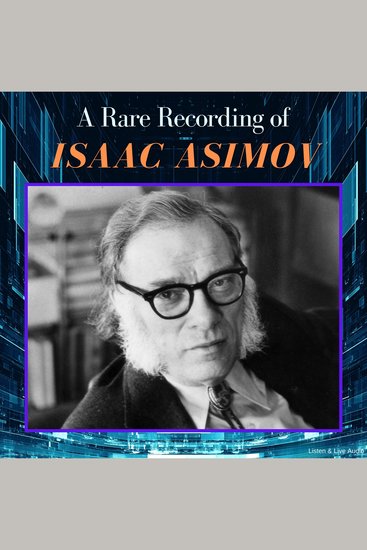
    Isaac Asimov (January 2, 1920 - April 6, 1992) was an American writer and professor of biochemistry at Boston University. During his lifetime, Asimov was considered one of the "Big Three" science fiction writers, along with Robert A. Heinlein and Arthur C. Clarke. Asimov also wrote mysteries and fantasy, as well as popular science and other non-fiction.
    Show book
  • Poems From The Chinese - A Selection of Waley's Best Translations - cover

    Poems From The Chinese - A...

    Arthur Waley

    • 0
    • 0
    • 0
    These are called ''' Poems from the Chinese"" and we have Mr. Waley's assurance that there are in existence Oriental originals. But if it be so (and, of course it is) then we have here a literary miracle. It is a platitude that translation of poetry is either bad verse or bad translation. But Mr. Waley, translating not merely from one language into another, but almost from one planet into another, has produced a body of living poetry, in which there is every reason to believe he re-creates, without distorting, the Chinese poets. This is an unparalleled feat. But as we are, with about six exceptions in the whole of Great Britain, incapable of comparing the English and the Chinese, we must address ourselves to these poems as though they had been written by an Englishman of the twentieth century, and judge them on that basis. It is a severe test to apply to translations, but Mr. Waley emerges from it serenely victorious. Indeed, serenity is the keynote of all this work—the serenity of assured mastery in a difficult medium but still more of outlook. The beauty with which these poems are. inlaid is fundamentally a wise beauty and the wisdom is as much in the shape of Mr. Waley's mind as in that of China. There is no need to hurry here. Wisdom goes at an even pace, and has time between her penetrations of the stars to observe the smallest things of life. Her leisurely glance sweeps over them with patient gold, and they settle, almost without a sigh, into decoration and into pattern. We have lost {and the Chinese have lost) the secret of their enamels of the great periods. But Mr. Waley has private access to them, and his poems, varnished with just that cool and even certainty of paint and texture, achieve one filial translation— the translation of colour into speech. -- Humbert Wolfe.
    Show book
  • Al Unser Jr: A Checkered Past - cover

    Al Unser Jr: A Checkered Past

    Al Unser Jr.

    • 0
    • 0
    • 0
    Winning came naturally to Al Unser Jr. Born into a racing family, he had a gift for finding the fast line on the track. By the time he was nine years old, he could draw the quickest way through the corner on paper and intuitively apply his sketch while on the go kart track. By his teen years, the innate sense for the fast way made him unstoppably quick when he was racing through the woods on a snowmobile. 
    As his career progressed from the kart track victories to following in the footsteps of his famed uncle, Bobby, and father, Al, the wins grew in stature from junior titles to the very top echelon of his sport. Two Indy 500 victories. An IndyCar championship. Sportsman of the Year. 
    In addition, Unser was not just a winning driver—he also possessed a boisterous and lovable personality. The fans and the press adored him. 
    Al Unser Jr. was on the top of world. 
     A Checkered Past tells that story—but it doesn’t stop there. 
    His gifts as a driver and his easy affability were the public persona. Behind the scenes, his appetite for drugs and alcohol were destroying his private life. Spurred on by his spiraling substance abuse problem, his marriage turned volatile. When he retired as a driver, the trouble amplified. Domestic violence arrests. Multiple DUIs. Repeated visits to rehab centers. Divorce. Financial ruin. A dark dive into depression and isolation that led to a suicide attempt. 
    Unser’s battle to climb out of that cave is one of the great stories in motorsports. A Checkered Past is an unblinking look at how even our most celebrated sports heroes struggle with human frailty. 
    Turn the page, and you’ll discover an inspirational story of triumph, tragedy, and the road to recovery.
    Show book
  • Radio Head Gal - a memoir of hearing loss and self-worth - cover

    Radio Head Gal - a memoir of...

    Rebecca Knill

    • 0
    • 0
    • 0
    “I never wanted to be hearing. I said this out loud in my TED talk, and the audience went bug-eyed, struggling to process this heresy. How could anyone not want to be hearing? I wasn’t anti-hearing. I just felt my life would be simpler if everyone else were deaf.” So begins the compelling story of acclaimed TED speaker Rebecca Knill as she guides us through a life shaped by hearing loss. Throughout, Knill offers eye-opening insights into disability and celebrates the power of technology to level the playing field.A provocative memoir, Radio Head Gal challenges the notion that a deaf existence is inferior, advocating instead for hearing loss to be recognized as an aspect of physical diversity similar to race or gender identity. The memoir delves into themes of adaptation, discrimination, faith, mother/daughter dysfunction, and the quest for belonging in a world that remains largely inaccessible to the d/Deaf.Growing up before accommodation laws or smart technology, Knill reflects on her life pre- and post-cochlear implant ― a surgical procedure in which computer chips replaced her sense of hearing, cyborg-style ― and the birth of her alter ego, Radio Head Gal. The book's subject is timely: hearing loss now affects 1 in 5 young people, a 30% increase since the 1990s. By 2050, hearing loss is expected to swell to 1 in 4 across all age groups worldwide. As younger generations face this reality, technological innovation must follow.With humor and insight, Knill explores themes of self-worth, communication, and the pivotal role technology plays in promoting inclusion. Recognized as a Top 25 Talk of 2020 by the TED Editors,  Radio Head Gal is a vital resource to support those with hearing loss, providing intimate revelations and enlightening perspectives that cut through emotional barriers. Dive into this empowering narrative that challenges perceptions and advocates for an inclusive, technology-driven future, regardless of ability differences.
    Show book
  • The Essential Writings of Ralph Waldo Emerson - Nature Self-Reliance Compensation The American Scholar and other essays - cover

    The Essential Writings of Ralph...

    Ralph Waldo Emerson

    • 0
    • 0
    • 0
    Emerson's enduring reputation, however, is as a philosopher, an aphoristic writer (like Friedrich Nietzsche) and a quintessentially American thinker whose championing of the American Transcendental movement and influence on Walt Whitman, Henry David Thoreau, William James, and others would alone secure him a prominent place in American cultural history. Emerson is often characterized as an idealist philosopher and indeed used the term himself of his philosophy, explaining it simply as a recognition that plan always precedes action. Contents:HistorySelf-RelianceCompensationSpiritual LawsLoveFriendshipPrudenceHeroismThe Over-SoulCirclesIntellectArtNature   American Scholar
    Show book
  • We Tell Ourselves Stories - Joan Didion and the American Dream Machine - cover

    We Tell Ourselves Stories - Joan...

    Alissa Wilkinson

    • 0
    • 0
    • 0
    In this riveting cultural biography, New York Times film critic Alissa Wilkinson examines Joan Didion's influence through the lens of American mythmaking. As a young girl, Didion was infatuated with John Wayne and his on-screen bravado, and was fascinated by her California pioneer ancestry and the infamous Donner Party. The mythos that preoccupied her early years continued to influence her work as a magazine writer and film critic in New York, offering glimmers of the many stories Didion told herself that would come to unravel over the course of her career. But out west, show business beckoned. 


    We Tell Ourselves Stories eloquently traces Didion's journey from New York to her arrival in Hollywood as a screenwriter at the twilight of the old studio system. She spent much of her adult life deeply embroiled in the glitz and glamour of the Los Angeles elite, where she acutely observed—and denounced—how the nation's fears and dreams were sensationalized on screen. Meanwhile, she paid the bills writing movie scripts like A Star Is Born, while her books propelled her to celestial heights of fame. 


    Peering through a scrim of celluloid, Wilkinson incisively dissects the cinematic motifs and machinations that informed Didion's writing—and how her writing, ultimately, demonstrated Hollywood's addictive grasp on the American imagination.
    Show book