

Unisciti a noi in un viaggio nel mondo dei libri!
Aggiungi questo libro allo scaffale
Grey
Scrivi un nuovo commento Default profile 50px
Grey
Iscriviti per leggere l'intero libro o leggi le prime pagine gratuitamente!
All characters reduced
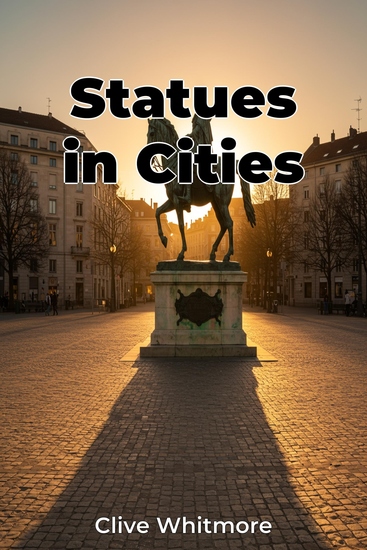
Statues in Cities - cover

Statues in Cities

Clive Whitmore

Traduttore A AI

Casa editrice: Publifye

  • 0
  • 0
  • 0

Sinossi

Statues in Cities explores the profound connection between urban sculptures and the identity of cities. It examines how these works of public art contribute to a city's historical narrative and collective memory, acting as more than mere decorations.

 
The book argues that statues embody a city's values and power structures, prompting ongoing conversations about commemoration and evolving identity. For instance, the book will discuss how some statues, initially erected to celebrate historical figures, have become focal points of controversy, sparking debates about historical accuracy and representation.

 
The book progresses logically, beginning with foundational concepts of art history and urban planning, before delving into case studies that analyze the historical, social, and artistic contexts of statues in various cities. It investigates the political use of statues and the contemporary debates surrounding their presence.

 
By understanding how these urban sculptures shape cultural landscapes and influence public perception, readers can gain a deeper appreciation for the complex layers of urban history. This fresh perspective treats statues as active agents in shaping urban life, offering valuable insights for city planners, policymakers, and anyone interested in the cultural landscape.
Disponibile da: 26/02/2025.
Lunghezza di stampa: 63 pagine.

Altri libri che potrebbero interessarti

  • The Public Purpose of Art - cover

    The Public Purpose of Art

    Arlene Goldbard

    • 0
    • 0
    • 0
    We’re on the cusp of a paradigm shift, a radical change in worldview that will thrust art and culture onto center stage. What does that mean? How will the world be different? What is the rising spirit of the times and how is it being expressed in art? Arlene Goldbard says, “I have this overwhelming image of energy gathering force and taking shape.” She likens this force to a wave and says, “No one masterminds a wave, ordering all the drops of water into line. Many independent forces operate simultaneously – wind, gravity, disturbances of all kinds – and somehow, the wave mounts.” In this dialogue we explore this mounting force and what’s opposing this rolling tide. (hosted by Justine Willis Toms)
    Mostra libro
  • Bon: The Last Highway - The Untold Story of Bon Scott and AC DC’s Back In Black Updated Edition of the Definitive Biography - cover

    Bon: The Last Highway - The...

    Jesse Fink

    • 0
    • 0
    • 0
    An affectionate, honest tribute now updated with new revelations about the rock and roll icon who helped make AC/DC an international sensation 
    		 
    The second edition of Bon: The Last Highway includes a brand new 16-page introduction. Fink examines…
    		
    		New information from French media that changes what we know about who was with Bon Scott the night he died
    		The London drug-dealing connections of the late Alistair Kinnear
    		A possible heroin link involving the late Yes bassist Chris Squire
    		Revised theories on how Bon died
    		
    		 
    With unprecedented access to Bon’s lovers and newly unearthed documents, this updated edition contains a new introduction and more revelations about the singer’s death, dispelling once and for all the idea that Scott succumbed to acute alcohol poisoning on February 19, 1980.
    		 
    Meticulously researched and packed with fresh information, Bon: The Last Highway is an affectionate, honest tribute to a titan of rock music.
    Mostra libro
  • The History Trees - cover

    The History Trees

    Colin Salter

    • 0
    • 0
    • 0
    The ultimate photographic collection of the most historic trees on the planet. 
    Uncover remarkable trees from around the world, many of which have borne witness to key moments in history or reached a scale and age that have allowed them to become a part of history themselves. 
    “[A] rich history … it contains some of the most extraordinary tales of trees through time” — The Sunday Post 
    First meet 'Methuselah’, a bristlecone pine in the White Mountains of New Hampshire, believed to be 4,900 years old. Learn about trees which have inspired great events, such as the Isaac Newton apple tree in Lincolnshire, where the famous scientist observed an apple falling from a tree (which still stands in the family garden). Other flora has withstood historic events such as in Japan, where the Hibaku jumoku still grows as a survivor tree from the Hiroshima bombing and the 9/11 Survivor Tree in New York City. 
    Many trees continue to inspire our world today including the long avenue of beech trees in Northern Ireland known as the Dark Hedges which Game of Thrones fans will instantly recognise as the road to Kings Landing, the Robin Hood’s oak in the Sherwood Forest or the J. R. R. Tolkien trees in Avebury, which inspired the Ents in The Lord of the Rings. 
    Rest a while beside the oldest trunks and witness the enthralling stories nestled within the branches of these gentle giants. 
    For fans of Gene Stone (Animalkind), Scott Christianson (Fatal Airs), Valentina D'Efilippo (The Brain), Simon Sebag Montefiore (Stalin), and Nigel Farndale (Haw-Haw).
    Mostra libro
  • Piano Scales FOR KIDS - Tips and Tricks to Learn and Play Your Favorite Songs - cover

    Piano Scales FOR KIDS - Tips and...

    Jessica Gilbert

    • 0
    • 0
    • 0
    Learning to play the piano, especially piano scales, is an essential part of becoming a professional pianist, and as a parent, teacher, or piano instructor, you may have been wondering about the best ways to help your child or student learn and play scales with ease. 
    Luckily for you, there are many tips and tricks that you can use to teach the piano to your child or student and make the learning experience an enjoyable one for them. 
    In this book, we’ll explore different techniques and topics that’ll help your child learn and play piano effectively and in real-time, including musical notation, musical theory, and chord progressions, to mention a few. 
    But it’s not just about scales and playing the piano! 
    This book will also show you how to apply what your child learns to play their favorite songs. We’ll cover chords, arpeggios, and other techniques that will help your child easily play their favorite tunes. 
    We’ll also discuss tips on how to develop speed and accuracy, as well as the importance of collaboration with other musicians and the necessary supplies needed for learning the piano. 
    By the end of this book, you’ll have the knowledge and tools necessary to help your child master piano scales and begin playing their favorite songs, and with our step-by-step approach, your child will soon be playing piano like a pro.
    Mostra libro
  • Stranger Things Psychology - Life Upside Down - cover

    Stranger Things Psychology -...

    Travis Langley

    • 0
    • 0
    • 0
    Monsters of the Upside Down, beware! Travis Langley (author of the acclaimed Batman and Psychology) returns with a group of expert contributors to explore these and other questions to shine a light on true human nature through the Netflix series and cultural phenomenon Stranger Things. When do feelings of grief, guilt, depression, fear, and isolation tear us down, and how do we transform them into hope, inspiration, forgiveness, acceptance, and motivation to do what's right? Growing up is hard enough without metaphors for the dangers that lurk in life's shadows springing to life in the form of monsters, villains, conspiracies, and enemy soldiers. Stranger Things Psychology: Life Upside Down descends into the dark side of adolescence to find the light on the other side of the ultimate coming-of-age story.
    Mostra libro
  • The Yamato Period - The Dawn of Japan's Imperial Line and Cultural Foundations - cover

    The Yamato Period - The Dawn of...

    Rolf Hedger

    • 0
    • 0
    • 0
    The Yamato period, spanning from roughly the 3rd to the 7th century, marks the emergence of Japan’s first centralized political power. At the heart of this transformation was the Yamato clan, a dominant force that laid the foundation for Japan’s imperial lineage. While early Japan was fragmented into numerous rival clans, the Yamato rulers gradually asserted their dominance, forging alliances, engaging in warfare, and adopting foreign influences to solidify their authority. 
    One of the key factors behind the Yamato clan’s rise was its strategic control over fertile land in the Kinki region, an area well-suited for agriculture. This economic advantage allowed them to amass resources necessary to support a growing military force. By subjugating neighboring clans or bringing them under their influence through political marriages and alliances, the Yamato rulers expanded their reach across central and western Japan. The development of a hierarchical system of governance helped them maintain order, as powerful regional chieftains were brought into a centralized network of control under the Yamato court. 
    Military strength played a significant role in the Yamato clan’s dominance. Archaeological evidence from kofun, or large burial mounds, reveals that these early rulers possessed advanced weaponry, including iron swords and armor, likely influenced by interactions with Korea and China. These military advantages enabled them to assert control over rival clans and protect their growing territory from external threats. The construction of these elaborate burial sites also served as a demonstration of power and legitimacy, reinforcing the Yamato rulers’ status as semi-divine figures.
    Mostra libro
