Join us on a literary world trip!
Add this book to bookshelf
Grey
Write a new comment Default profile 50px
Grey
Subscribe to read the full book or read the first pages for free!
All characters reduced
About the Jomon and Yayoi Periods - Read Listen and Learn with Japanese Essays - cover

About the Jomon and Yayoi Periods - Read Listen and Learn with Japanese Essays

Clay Boutwell, Yumi Boutwell

Publisher: Kotoba Inc

  • 0
  • 0
  • 0

Summary

Discover Ancient Japan While Learning Japanese!
 
Japan’s Jidai Series Volume 1: Jōmon & Yayoi Periods
 
Step back in time—long before samurai roamed the land or castles touched the sky. "Japan’s Jidai: Jōmon & Yayoi Periods" invites you on a journey to explore Japan's earliest civilizations while leveling up your Japanese skills!
 
What's Inside?
 
Historical Insights: Discover the Jōmon people, known for their intricate pottery and harmonious lifestyles, and learn how the Yayoi period brought revolutionary changes, like rice cultivation and advanced technology, shaping Japan’s early society.
 
Perfect for Upper Beginners: This reader is crafted specifically for Japanese learners who want to deepen their understanding of Japanese history while expanding their language skills.
 
Line-by-Line Format: Each line of Japanese text is paired with a detailed vocabulary breakdown and grammar explanations, ensuring you understand every nuance.
 
Audio Support: Practice listening and pronunciation with sound files—easily accessible through QR codes.
 
Interactive Learning: Reinforce vocabulary with an included Anki flashcard deck, perfect for studying on the go.
 
Furigana & English Translations: Once comfortable, challenge yourself with the full Japanese text, equipped with furigana for easy reading. Need a little extra help? English translations are available at the end.
 
Why You'll Love It:This isn’t just a history lesson—it's an immersive language learning experience! By reading about ancient Japan, you’re not only expanding your vocabulary but also connecting deeply with Japanese culture.
 
Ready to Travel Back in Time?Embark on this adventure and master Japanese while uncovering the mysteries of the Jōmon and Yayoi periods. Perfect for upper beginners eager to learn more about Japan’s cultural roots!
 
Order now and start your journey into Japan’s ancient past!
Available since: 02/27/2025.
Print length: 109 pages.

Other books that might interest you

  • The Day Nina Simone Stopped Singing - cover

    The Day Nina Simone Stopped Singing

    Darina Al Joundi, Mohamed Kacimi

    • 0
    • 1
    • 0
    The Homeland actress’s “recollections of her unconventional youth in war-torn Beirut are heartbreaking yet humorous . . . in this unique” memoir (Publishers Weekly).   Raised in 1970s Lebanon on Charles Baudelaire, A Clockwork Orange, and fine Bordeaux, Darina Al-Joundi was encouraged by her unconventional father to defy all taboos. She spent her adolescence defying death in Beirut nightclubs as bombs fell across the city. The more oppressive the country became, the more drugs and anonymous sex she had, fueling the resentment directed at her daily by the same men who would spend the night with her.   As the war dies down, she begins to incur the consequences of her lifestyle. On his deathbed, her father’s last wish is for his favorite song, “Sinnerman” by Nina Simone, to be played at his funeral instead of the traditional suras of the Koran. When she does just that, the final act of defiance elicits a catastrophic response from her surviving family members.   In this dramatic true story, Darina Al-Joundi is defiantly passionate about living her life as a liberated woman, even if it means leaving everyone and everything behind in this “beautifully taut and relentlessly unemotional” memoir (Kirkus).
    Show book
  • The Rise and Fall of the Roman Empire - A Comprehensive History - cover

    The Rise and Fall of the Roman...

    Rogan Fish

    • 0
    • 0
    • 0
    The founding of Rome is one of the most famous legends in history, blending myth and reality to shape the origins of one of the greatest civilizations of the ancient world. According to Roman tradition, the city was established in 753 BCE by Romulus, the first king of Rome, after he and his twin brother, Remus, were rescued and raised by a she-wolf. This tale, passed down through generations, symbolized Rome’s strength, resilience, and divine favor. While the legend is deeply ingrained in Roman identity, historians believe the city’s origins were more complex, involving the gradual unification of Latin and Etruscan tribes. 
    The early formation of Rome was influenced by its strategic location along the Tiber River. The site provided access to trade routes, fresh water, and natural defenses, making it an ideal settlement for early inhabitants. Archaeological evidence suggests that small villages existed in the area long before Rome’s legendary founding, with early settlers engaging in agriculture, trade, and warfare. These early communities gradually coalesced, forming a unified society under a monarchical system. The first rulers of Rome were part of the Roman Kingdom, a period that saw the development of political institutions, religious practices, and military organization that would shape the city’s future. 
    Roman society during its early years was structured around family and clan-based systems, with the patricians, or aristocratic families, holding the majority of political power. The king was the central authority, responsible for religious duties, military leadership, and lawmaking. However, his rule was supported by a council of elders known as the Senate, which played an advisory role. Over time, tensions arose between the patricians and the common people, or plebeians, who sought greater political representation. These early power struggles foreshadowed the later conflicts that would lead to the transition from monarchy to a republic.
    Show book
  • Social and Political Philosophy - Investigating the Philosophy of Society Justice and Gender (2 in 1) - cover

    Social and Political Philosophy...

    Hector Davidson

    • 0
    • 0
    • 0
    This book contains these philosophical topics: 
    - Feminist Philosophy: Feminist philosophy has emerged as a critical lens for understanding and deconstructing gender roles, power structures, and the ways in which societal norms shape individual identities. At its core, feminist philosophy challenges traditional, patriarchal systems that often position women and marginalized genders as secondary to men. It is not merely a critique of these systems but an exploration of alternative ways of thinking about power, justice, and equality. Feminist philosophers have sought to unravel the deep-rooted assumptions about gender, questioning how these assumptions limit the full potential of individuals and societies. 
    - Political Philosophy: Political philosophy plays a central role in the development of societies, offering profound insights into the principles and ideas that shape governance and human relations. At its core, political philosophy seeks to understand the fundamental questions of power, authority, justice, and the rights of individuals within a collective. By examining these issues, political philosophy provides a framework for interpreting and evaluating the structures that govern our lives, from the most intimate social arrangements to the global political order. It is through political philosophy that we come to grips with the nature of justice, equality, freedom, and the role of the state in promoting the common good.
    Show book
  • The Concentration of Power - Institutionalization Hierarchy & Hegemony - cover

    The Concentration of Power -...

    Anders Corr

    • 0
    • 1
    • 0
    Since the beginning of organized societies, power and leadership have operated in human hierarchies, which are concentrating power in an accelerating manner, according to the comprehensive analysis of Dr. Anders Corr in his book The Concentration of Power: Institutionalization, Hierarchy & Hegemony.
    		 
    “This sweeping study belongs next to Niall Ferguson and Jared Diamond in our understanding of how the world works and how it can work better.” — James Kraska, Harvard Law School
    		 
    “A must-read for legislators, military strategists, leading academics, regulators, and anyone interested in the existential threat that the concentration of economic, political, and informational power in an illiberal country like China creates for the leading democracies of the world.” - Kyle Bass, Billionaire investor
    		 
    “…erudite and realistic appraisal of 21st century power politics.” — Alex Gray, former Chief of Staff, White House National Security Council
    		 
    From The Book:
    		 
    “China’s influence in US politics has coincided with the industrialization of China, at the expense of a deindustrializing US. Global corporations, to which US politicians answer, fled high wages and environmental regulations  in the US for low wages and lax environmental standards in China. Now, the US is paying the price and might not recover sufficiently to defend itself against China’s growing military. The strategic ambitions of one nation can and have upset the United Nations and the balance between powers. Now the Western world must understand the imminent threats from the hegemonic ambitions of China.”
    		 
    Hierarchy is the  “institutionalization of power,” according to Dr. Corr’s The Concentration of Power, an institutionalization that is concentrating and accelerating over historical time, from prehistory to the present. Corr develops twelve historical theories and applies them to the greatest conflicts of the past and present, including during the age of empires, the present competition between superpowers such as the United States and China, as well as conflicts between the nation-state and emerging supranational powers such as the European Union and United Nations. Corr’s theories apply to domestic politics as well, as illustrated by the evolution of conflicts between communism, fascism, and liberal democracy. 
    		 
    Corr argues that the concentration of power acts as a ratchet. It concentrates when conditions are ripe, and force is applied. Due to mechanisms like subsidies, transfers, and corruption, however, power does not easily return to an unconcentrated state when conditions are not ripe. This dynamic dynamic of the ratchet drives international and domestic concentration of power, with no apparent end other than a global illiberal hegemon at some point in the future. 
    		 
    In sum, The Concentration of Power is a short history of the world, from the beginning to what the evidence indicates should be its logical conclusion. From politics to unions, associations, corporations, and the military, Dr. Corr analyzes them and provides readers with a sense of what the world could face if we allow hierarchy to continue its historical development toward global and illiberal hegemony. Be it in China, the United States, or the European Union, all are vying for global influence and the utilization of the structure of the United Nations to promote either the principles of human rights and democracy, or in the case of Beijing, the exact opposite. This clash between democracy and autocracy on a global level could turn into a final war of world proportions.
    		 
    No greater stakes have ever existed in world history.
    Show book
  • CJBAT Florida Review - Criminal Justice Basic Abilities Test Mastery 2024-2025: Ace the Exam with Confidence on Your First Attempt - cover

    CJBAT Florida Review - Criminal...

    Gareth Holloway

    • 0
    • 0
    • 0
    CJBAT Florida Review 
    ⭐⭐ Simplified Guide & Explanations Included⭐⭐ 
    Are you aiming to advance your career and enhance your knowledge by successfully passing the Criminal Justice Basic Abilities Test? 
    In search of a comprehensive guide that offers all the essential components to ace the CJBAT? 
    Your search ends here! 
    This guide is your ultimate companion for deepening your understanding, honing your skills, and engaging in practical exercises. With this resource, you're set for success. 
    Updated for the CJBAT 2024-2025 Exam Structure. 
    Key features of this enriched guide: 
    - In-depth insights about the CJBAT Certification 
    - Detailed explanation of the Criminal Justice Basic Abilities Test (CJBAT) 
    - Effective strategies for exam preparation and tackling 
    Our guide stands out through comprehensive coverage, essential for acing your exam. Concepts are not merely touched upon; they are explored in detail with precision. 
    Designed with a clear structure and easy-to-understand language, our CJBAT Guide 2024-2025 ensures smooth transitions between topics. Say goodbye to dense jargon and welcome clear, precise, and technically accurate content. 
    So, why wait? Click the BUY NOW button, secure your guide, and commence your journey to CJBAT success!
    Show book
  • The American Operations in WW2: Normandy - 6 June–24 July 1944 - cover

    The American Operations in WW2:...

    U.S. Army Center of Military...

    • 0
    • 0
    • 0
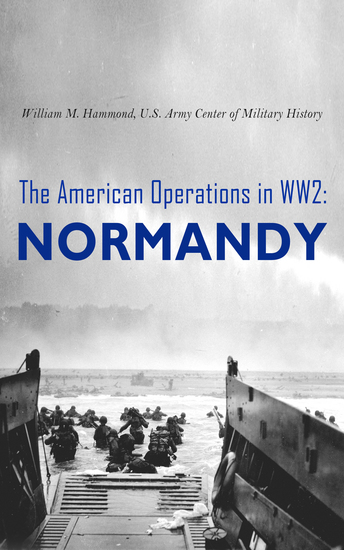
    World War II was the largest and most violent armed conflict in the history of mankind. Highly relevant today, World War II has much to teach us, not only about the profession of arms, but also about military preparedness, global strategy, and combined operations in the coalition war against fascism. This book follows military operations of the US Army in Normandy from 6 June to 24 July 1944. 
    A great invasion force stood off the Normandy coast of France as dawn broke on 6 June 1944: 9 battleships, 23 cruisers, 104 destroyers, and 71 large landing craft of various descriptions as well as troop transports, minesweepers, and merchantmen—in all, nearly 5,000 ships of every type. The naval bombardment that began at 0550 that morning detonated large minefields along the shoreline and destroyed a number of the enemy's defensive positions. To one correspondent, reporting from the deck of the cruiser HMS Hillary, it sounded like "the rhythmic beating of a gigantic drum" all along the coast. In the hours following the bombardment, more than 100,000 fighting men swept ashore to begin one of the epic assaults of history, a "mighty endeavor," as President Franklin D. Roosevelt described it to the American people, "to preserve . . . our civilization and to set free a suffering humanity."
    The attack had been long in coming. From the moment British forces had been forced to withdraw from France in 1940 in the face of an overwhelming German onslaught, planners had plotted a return to the Continent. Only in that way would the Allies be able to confront the enemy's power on the ground, liberate northwestern Europe, and put an end to the Nazi regime...
    Show book