Join us on a literary world trip!
Add this book to bookshelf
Grey
Write a new comment Default profile 50px
Grey
Subscribe to read the full book or read the first pages for free!
All characters reduced
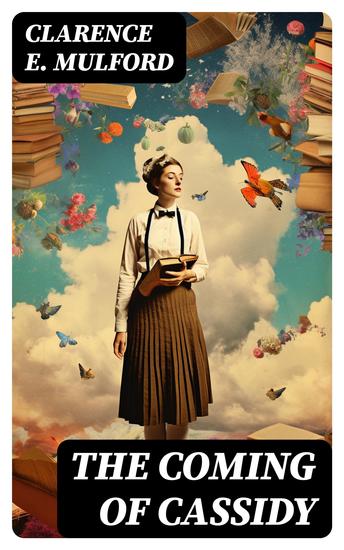
The Coming of Cassidy - cover

The Coming of Cassidy

Clarence E. Mulford

Publisher: DigiCat

  • 0
  • 0
  • 0

Summary

In "The Coming of Cassidy," Clarence E. Mulford masterfully intertwines the rugged ethos of the American West with the intricacies of character development, crafting a suspenseful yet reflective narrative that paints a vivid picture of frontier life. The book exemplifies a blend of traditional Western tropes and moral complexity, charting the rise of the enigmatic cowboy hero, Hopalong Cassidy. Through rich, evocative prose and a keen eye for dialogue, Mulford captures the harsh realities of both the physical landscape and the emotional terrain that defines his characters, illustrating their struggles and triumphs in a world held captive by violence and moral ambiguity. Clarence E. Mulford was a pivotal figure in Western literature, influenced by the vibrant and often tumultuous culture of the early 20th century. His background as a writer of adventure stories and knowledge of the American frontier informed his portrayal of the iconic Cassidy, creating a character who embodies both the heroic and the flawed. Mulford's keen observations of human nature and societal norms of his time propelled him to explore themes of justice and redemption amidst the lawlessness of the West. This book is highly recommended for readers seeking both entertainment and insight into the complexities of heroism and morality in the folklore of the American West. "The Coming of Cassidy" is not just a tale of action and adventure; it is a thoughtful exploration of the human condition, making it a worthwhile addition to any literary collection.
Available since: 11/17/2023.
Print length: 185 pages.

Other books that might interest you

  • Fireside Reading of The Wonderful Wizard of Oz - cover

    Fireside Reading of The...

    L. Frank Baum

    • 0
    • 0
    • 0
    Experiencing a story read out loud is one of the oldest forms of entertainment there is.  
    
    Fireside Reading is a way to slow down, reconnect with the timeless wisdom of great books and rediscover the simple pleasure of being read to.
    
    Join Gildart Jackson in front of a cozy fire as he reads The Wonderful Wizard of Oz by L. Frank Baum to you and your family from beginning to end.
    Show book
  • Great State The (Unabridged) - cover

    Great State The (Unabridged)

    H. G. Wells

    • 0
    • 0
    • 0
    Herbert George Wells (21 September 1866 - 13 August 1946) was an English writer. Prolific in many genres, he wrote dozens of novels, short stories, and works of social commentary, history, satire, biography and autobiography. His work also included two books on recreational war games. Wells is now best remembered for his science fiction novels and is often called the "father of science fiction", along with Jules Verne and the publisher Hugo Gernsback.
    THE GREAT STATE: For many years now I have taken a part in the discussion of Socialism. During that time Socialism has become a more and more ambiguous term.
    Show book
  • Selected works of TS Eliot - The Love Song of J Alfred Prufrock The Waste Land - cover

    Selected works of TS Eliot - The...

    T. S. Eliot

    • 0
    • 0
    • 0
    Thomas Stearns Eliot OM (26 Sept 1888 – 4 Jan 1965) was a poet, essayist, publisher, playwright, and literary and social critic. Born in St. Louis, Missouri, to a prominent Boston Brahmin family, he moved to England in 1914 at the age of 25 and went on to settle, work and marry there. He became a British subject in 1927 at the age of 39, subsequently renouncing his American citizenship. Considered one of the twentieth century's major poets, Eliot attracted widespread attention for his poem "The Love Song of J. Alfred Prufrock" (1915), which was seen as a masterpiece of the Modernist movement. It was followed by some of the best-known poems in the English language, including The Waste Land (1922), "The Hollow Men" (1925), "Ash Wednesday" (1930), and Four Quartets (1943). He was also known for his seven plays, particularly Murder in the Cathedral (1935) and The Cocktail Party (1949). He was awarded the Nobel Prize in Literature in 1948, "for his outstanding, pioneer contribution to present-day poetry".
    This collection includes the works of T. S. Eliot: 
    The Love Song of J. Alfred Prufrock
    The Waste Land
    Show book
  • The Red Flower - This deep psychological story about mental illness is based on the authors own life who sadly suffered greatly from mental illnesses himself - cover

    The Red Flower - This deep...

    Vsevelod Garshin

    • 0
    • 0
    • 0
    Vsevolod Mikhailovich Garshin was born on 14th February 1855 in what is now Dnipro in the Ukraine, but then part of the Russian Empire. 
     
    After attending secondary school he studied at the Saint Petersburg Mining Institute.  
     
    Wars between and on behalf of Empires were a regular feature of the decades then.  Garshin volunteered to serve in the Russian army at the beginning of the Russo-Turkish War in 1877.  
     
    He began as a private in the Balkans campaign and was wounded in action.  By the end of the war, in 1878, he had been promoted to officer rank.  
     
    By now Garshin, having previously published some articles and reviews in newspapers, wished to devote himself to a literary career.  The decision made he resigned his army commission. 
     
    His time as a soldier provided rich experiences for his early stories. His first ‘Four Days’ was related as the interior monologue of a wounded soldier left for dead on the battlefield for four days, face to face with the corpse of a Turkish soldier he had killed, gained him early admiration as an author of note.  
     
    He wrote perhaps only 20 stories, but their influence was immense, although in these more modern times he is barely remembered and lives in the more prolific shadows of others.  His characters are superbly worked into stories that come alive in the intensity and reality of his prose.   
     
    Garshin’s most well-known story is ‘The Red Flower’, also known as ‘Scarlet Blossom’ and is easily amongst the first rank of stories dealing with mental health issues. 
      
    Despite early literary success, he himself experienced periodical bouts of mental illness.   
     
    In one such bout Garshin attempted to commit suicide by throwing himself down the stone stairs leading into his apartment building.  Although not immediately fatal, Vsevolod Garshin died as a result of his injuries in a St Petersburg hospital on 5th April 1888.  He was 33. 
     
    In this captivating story a man is placed into an insane asylum.  Life may be grim within its walls but he has a plan to remove evil from the world.  All it takes is further sacrifice from himself.
    Show book
  • After the Race - From their pens to your ears genius in every story - cover

    After the Race - From their pens...

    James Joyce

    • 0
    • 0
    • 0
    James Augustine Aloysius Joyce was born on the 2nd February 1882 in Dublin into a middle-class family, and the eldest of ten surviving siblings 
    Admired as a brilliant student he briefly attended the Christian Brothers-run O'Connell School before excelling at the Jesuit schools of Clongowes and Belvedere.  From there he went on to attend University College Dublin from 1898, studying English, French and Italian 
    In 1902, Joyce was now in his early twenties, and went to Paris to study Medicine but soon abandoned his teachings.  Back in Dublin to attend to his dying Mother he met Nora Barnacle. They bonded immediately into a life-long match. Together they decided to emigrate to Europe.  The couple lived in Trieste, Rome, Paris, and finally Zürich where Joyce pursued a variety of jobs and ventures to supplement his literary pursuits but none of these paid off.  
    After publishing a poetry volume, ‘Chamber Music’, in 1907, his short story collection ‘The Dubliners’, in 1914, helped establish his talent in the rapidly changing world.  
    Although far from home Joyce’s literary heart and works were set in his recollections of Dublin.  Characters are close resemblances of family and friends and indeed enemies.  His landmark work ‘Ulysses’, published in 1922, is set in the streets and alleyways of the city as it parallels Homer’s Odyssey in a variety of styles including its famed stream of consciousness. 
    His pen continued to produce classics of the order of ‘A Portrait of the Artist as A Young Man’ and ‘Finnegan’s Wake’ together with several volumes of poetry and a play ‘The Exiles, in 1918.   
    On the 11th January 1941, Joyce underwent surgery in Zürich for a perforated duodenal ulcer. The next day he fell into a coma. On the 13th after a brief period of lucidity in which he called for his wife and son he passed.  He was 58.
    Show book
  • How Watson Learnt the Trick - cover

    How Watson Learnt the Trick

    Arthur Conan Doyle

    • 0
    • 0
    • 0
    How Watson Learnt the Trick is a Sherlock Holmes parody written by Arthur Conan Doyle in 1924. It concerns Doctor Watson attempting to demonstrate to Holmes how he has learned the latter's "superficial trick" of logical deduction by giving a summary of Holmes' current state of mind and plans for the day ahead, only for Holmes to then reveal that every single one of Watson's deductions is incorrect.Conan Doyle was one of several authors commissioned to provide books for the library of Queen Mary's Dolls' House; others included J. M. Barrie, Thomas Hardy, Rudyard Kipling and W. Somerset Maugham. Conan Doyle was provided with a book approximately 1.5" x 1.25" (3.75 cm x 3.15 cm) into which he wrote the 503-word story of How Watson Learned the Trick by hand, taking up 34 pages. The original manuscript is still part of the Dolls' House library.
    Show book