Join us on a literary world trip!
Add this book to bookshelf
Grey
Write a new comment Default profile 50px
Grey
Subscribe to read the full book or read the first pages for free!
All characters reduced
ITIL® 4 Create Deliver and Support (CDS) - Your companion to the ITIL 4 Managing Professional CDS certification - cover

ITIL® 4 Create Deliver and Support (CDS) - Your companion to the ITIL 4 Managing Professional CDS certification

Claire Agutter

Publisher: Packt Publishing

  • 0
  • 0
  • 0

Summary

This book offers a thorough guide to ITIL® 4’s Create, Deliver, and Support (CDS) module, covering key concepts and practices for IT service management. It begins with foundational aspects of the service value system (SVS), highlighting organizational structures, roles, and collaborative cultures essential for successful service delivery. The early chapters focus on adopting a shift-left approach to resource management, helping teams prioritize efficiency and proactive problem-solving.

As the book progresses, it explores the strategic planning and management of resources within the SVS, stressing the importance of continual improvement and leveraging technology to optimize service management. It also provides insight into managing value streams for new services, guiding readers on how to create, manage, and measure service value chains for improved service delivery and innovation.

The later chapters address specific ITIL practices, such as service design, incident management, problem management, and knowledge management. The book concludes with exam preparation for ITIL® 4 CDS, offering practical case studies and real-world scenarios.

By the end, readers will be equipped to enhance service management processes and ensure the delivery of high-quality IT services aligned with business objectives.
Available since: 07/21/2025.
Print length: 201 pages.

Other books that might interest you

  • Social and Cultural Dynamics - The People Who Make the City (3 in 1) - cover

    Social and Cultural Dynamics -...

    Lyric Vale

    • 0
    • 0
    • 0
    Cities are living, breathing organisms composed not of concrete and steel, but of human stories, interactions, relationships, and collective dreams. Beyond their physical infrastructure, urban environments are complex social ecosystems where diverse human experiences intersect, collide, and transform—creating a dynamic tapestry of cultural expression, social negotiation, and collective identity. This comprehensive exploration delves into the intricate social and cultural landscapes that breathe life into urban spaces, examining how human connections, cultural practices, and sociological patterns shape the very essence of metropolitan experience. 
    The narrative of urban social dynamics is a profound journey through the human experience of collective living, where individual stories weave together to create the rich, complex fabric of city life. By exploring the social structures, cultural interactions, and sociological mechanisms that define urban environments, this book uncovers the nuanced ways in which people create meaning, build communities, and negotiate identities within the dense, diverse landscapes of modern cities. Readers will traverse the intricate terrain of urban sociology, discovering how social networks, cultural practices, economic dynamics, and human relationships transform physical spaces into living, evolving communities—revealing cities not as static geographical locations, but as dynamic, ever-changing repositories of human potential, conflict, creativity, and collective aspiration.
    Show book
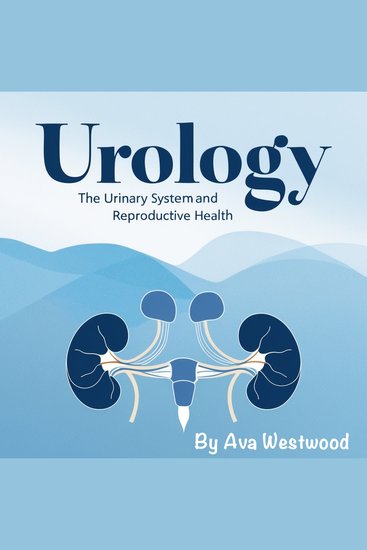
  • Urology - The Urinary System and Reproductive Health - cover

    Urology - The Urinary System and...

    Ava Westwood

    • 0
    • 0
    • 0
    Urology is a specialized branch of medicine that focuses on the diagnosis, treatment, and management of diseases and disorders affecting the urinary system and male reproductive organs. This field encompasses a wide range of conditions, from common urinary tract infections (UTIs) to complex kidney diseases, bladder dysfunction, and cancers of the urinary and reproductive systems. Urologists are trained medical professionals who employ both medical and surgical techniques to address these conditions, ensuring optimal urinary and reproductive health for their patients. 
    The history of urology dates back to ancient civilizations, where early physicians recognized the importance of urinary function and attempted to treat urinary ailments with rudimentary tools and herbal remedies. Over time, the field has evolved significantly, with groundbreaking discoveries in anatomy, physiology, and medical technology. The development of endoscopic procedures, minimally invasive surgeries, and robotic-assisted techniques has revolutionized the way urological diseases are diagnosed and treated, improving patient outcomes and reducing recovery times. 
    A fundamental aspect of urology is understanding the intricate structure and function of the urinary system. This system comprises the kidneys, ureters, bladder, and urethra, all working together to filter waste from the blood, regulate fluid balance, and expel urine from the body. In addition to the urinary system, urology also involves the male reproductive system, which includes the testes, prostate gland, seminal vesicles, and associated structures responsible for sperm production and hormone regulation. Given the close relationship between urinary and reproductive health, urologists play a crucial role in addressing conditions such as male infertility, erectile dysfunction, and prostate disorders.
    Show book
  • Fog Computing - Navigating the Haze of IoT and Real-time Data Processing - cover

    Fog Computing - Navigating the...

    Daniel Garfield

    • 0
    • 0
    • 0
    Step into the exciting realm of Fog Computing and embark on a transformative journey where the boundaries between the physical and digital worlds blur, and the possibilities for innovation and connectivity are boundless. In "Fog Computing: Navigating the Haze of IoT and Real-time Data Processing" you'll discover a comprehensive exploration of this cutting-edge technology, its real-world applications, and its profound impact on the way we interact with data and devices in the age of the Internet of Things (IoT). 
    Fog Computing, the younger sibling of Cloud Computing, offers a decentralized approach to data processing, bringing the power of the cloud closer to the edge. This book takes you on a captivating odyssey through the fog, revealing its origins, core principles, and architectural components. You'll learn how Fog Computing is poised to revolutionize IoT, enabling real-time analytics, reducing latency, and empowering a plethora of innovative applications. 
    Dive deep into the synergy between Fog Computing and IoT, explore its transformative role in healthcare, manufacturing, and smart cities, and witness its impact on autonomous systems. You'll uncover how Fog Computing is redefining the way we manage data and security, addressing challenges, and opening doors to unparalleled insights. 
    Whether you're an industry professional, a technology enthusiast, or simply curious about the future of computing, this book will illuminate the path ahead. Get ready to embark on an illuminating journey through the world of Fog Computing, where the cloud meets the edge and possibilities are endless.
    Show book
  • General history of industry - cover

    General history of industry

    Albert Bleunard

    • 0
    • 0
    • 0
    From ancient forges to modern assembly lines, General History of Industry brings to life humanity’s epic journey of ingenuity and transformation. This audiobook unveils pivotal technological shifts, daring pioneers, and silent revolutions that have shaped the ways we produce, trade, and live. Blending vivid storytelling, economic insights, and surprising anecdotes, it traces the birth of factories, the rise of energy, standardization, globalization, and the digital era. An immersive panorama that reveals how industry reflects, at its core, the ambition, risks, and imagination of societies. Listen to understand the past, illuminate the present, and glimpse the future.
    Show book
  • After the Flood: Humanity’s Fight to Reclaim a Drowned World - cover

    After the Flood: Humanity’s...

    Alex Southwick

    • 0
    • 0
    • 0
    The water is rising — and it’s not just the coasts that are changing. Entire nations are sinking, rivers are shifting course, and millions are already on the move. But amid the devastation, extraordinary stories of resilience are emerging. 
    After the Flood takes readers to the front lines of the planet’s most pressing crisis: the global struggle to live with water in an era of unstoppable change. From the engineers building floating cities in the Netherlands to the farmers in Bangladesh reinventing agriculture on flooded land, and the Pacific Islanders fighting to preserve their homelands from beneath the waves — this is a story of ingenuity, defiance, and hope. 
    Blending investigative reporting with deeply human storytelling, Alex Southwick reveals how rising seas are not only redrawing maps, but reshaping what it means to belong, to adapt, and to survive. 
    After the Flood is a haunting and inspiring portrait of a world transformed by water — and the people determined to rise with it.
    Show book
  • Toxicology - The Science of Poisons Venoms Vaccines and Hidden Chemicals - cover

    Toxicology - The Science of...

    Kevin Thorley

    • 0
    • 0
    • 0
    Toxicology is the scientific study of the adverse effects of chemical substances on living organisms. It encompasses a broad range of disciplines, including biology, chemistry, pharmacology, and environmental science, and is essential for understanding the impact of toxins on human health and the environment. The origins of toxicology can be traced back to ancient civilizations, where herbal remedies and poisons were used in medicine and warfare. Over the centuries, this field has evolved significantly, particularly with advancements in analytical techniques and a greater understanding of biological systems. 
      
    The fundamental principle of toxicology is that the effect of a substance depends not only on its inherent toxicity but also on the dose, duration of exposure, and the route by which it enters the body. This is often summarized by the phrase "the dose makes the poison," attributed to the Swiss physician Paracelsus in the 16th century. Paracelsus emphasized that even substances considered beneficial can be harmful in excessive amounts, highlighting the importance of understanding dosage in toxicological assessments.
    Show book