Join us on a literary world trip!
Add this book to bookshelf
Grey
Write a new comment Default profile 50px
Grey
Subscribe to read the full book or read the first pages for free!
All characters reduced
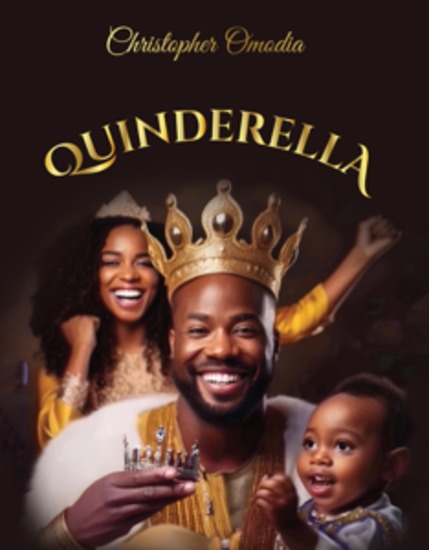
Quinderella - cover

Quinderella

Christopher Omodia

Publisher: Spines

  • 0
  • 0
  • 0

Summary

Six daughters from four wives, King Omah passionately desires a male-child successor.

A SINGLE SEED OF ALLIGATOR PEPPER from the Sun God priest, mixed in porridge, will make the LUCKY WIFE who eats it to bear the male heir of Ijezah Kingdom.

Selfish queen mother Heziah, fears losing her influence should any of the king's wives, other than her cousin-favorite, beget the heir, and she plots against that. 

Quinderella (the unwelcome fourth wife) is blocked from freely eating the porridge. She eats the spillovers on the floor and luckily eats the SEED.

Heziah plots and renders Quinderella unconscious during labor, swaps the baby boy heir with a girl child, and abandons him (Omalinjo) by the riverbank.

Rescued, nursed, and nurtured by the hermit of Mother Earth for nearly three years, determining Omalinjo's true mother becomes a task that must be done.


Christopher and his family from Delta State, Nigeria, currently live in the United States.

He read Agricultural Education in college, retired as a Merit Grade School Principal, but has a passion for writing. He edited school magazines and has many articles published in several Nigerian newspapers.

A last borne brought up by an aging mother, Amaechi, fondly called, loves tales “by moonlight” and “by the bed,” and QUINDERELLA derives from these.
Available since: 04/04/2024.

Other books that might interest you

  • Much Ado About Nothing - cover

    Much Ado About Nothing

    William Shakespeare

    • 0
    • 0
    • 0
    Shakespeare wrote Much Ado About Nothing towards the middle of his career, sometime between 1598 and 1599. It was first published in quarto in 1600 and later collected into Mr. William Shakespeare's Comedies, Histories, and Tragedies in 1623. The earliest recorded performance of Much Ado About Nothing was performed for the newly-married Princess Elizabeth and Frederick the Fifth, Elector Palatine in 1613.
    Shakespeare's sources of inspiration for this play can be found in Italian culture and popular texts published in the sixteenth century. Gossip involving lovers deceived into believing each other false was often spread throughout Northern Italy. Works like Ludovico Ariosto's Orlando Furioso and Edmund Spencer's Fearie Queene also feature tricked lovers like Claudio and Hero. Besides these similarities, the idea of tricking a couple like Benedick and Beatrice into falling in love was an original and unusual idea at the time.
    The play focuses on two couples: upon the noblemen's return to Messina, Claudio and Hero quickly fall in love and wish to marry in a week; on the contrary, Benedick and Beatrice resume their verbal war, exchanging insults with each other. To pass the time prior to the marriage a plot to trick Benedick and Beatrice into falling in love has been set in motion. Unbeknownst to both our couples, a fouler plot to crush the love and happiness between Hero and Claudio has also begun to unfold.
    Show book
  • Shout - cover

    Shout

    Alexis Zegerman

    • 0
    • 0
    • 0
    'I want to connect. I want to be able to laugh and love, and be loved back... I want to be able to speak, without throwing up.'
    In a world full of words, how can Dana be herself when she can't speak? Dana has selective mutism, but that doesn't stem her vivid imagination. Because it's not just the noise you make that makes you who you are.
    Alexis Zegerman's play Shout is a funny, moving drama about anxiety, celebrating difference, and finding your voice. It wonders what exactly it takes to overcome anxiety and cope with mental health issues when you're a teenager.
    Written specifically for young people, the play formed part of the 2024 National Theatre Connections Festival and was premiered by youth theatres across the UK, including a performance at the National Theatre, London. It offers opportunities for a flexible cast of any size and mix of genders.
    Show book
  • Short Story Press Presents Monkey Freckles - cover

    Short Story Press Presents...

    Short Story Press, Sarah Zachary

    • 0
    • 0
    • 0
    Liam grew up thinking he wanted to be a zookeeper. He practically lived in the zoo as a child, and his brother is wild enough to be an animal, so it seems perfect. But no one told him he had to go through so much higher education. No one told him he needed practical experience. As an unhappy volunteer who works at the zoo after high school each day, he’s beginning to wonder if it’s worth it. Suddenly, he’s faced with a mysterious visitor, a girl who: sits in front of his gibbon exhibit, refuses to talk to him, and writes all day, every day, without cease. 
    When she finally says more than two words to him, leaving him speechless, she also accidently leaves behind something else- her journal she’s been writing in constantly every day. Taking it home with him instead of returning it, Liam decides to take a tiny peek, after all, what harm could it do? As he reads, Liam finds himself unexpectedly thrown into the life of this stranger he’s nicknamed monkey freckles and the reasons behind her strange actions begin to come to light. As he faces her once more, he has to come to grips with helping monkey freckles and facing his own unspoken past, before it’s too late. 
    Short Story Press publishes short stories written by everyday writers.
    Show book
  • Things I Would Like to Do with You - A collection of Loneliness & Love - cover

    Things I Would Like to Do with...

    Waylon H. Lewis

    • 0
    • 0
    • 0
    Things I Would Like to Do with You is about love. A love for a new generation. A love that includes room for independence, change, humor...even loneliness. Poetically searching through four seasons, this is a sweet book to curl up next to a fire and listen to.   
    About the author: Waylon Lewis likes to think he snowshoes hut-to-hut and builds nailless tiny houses in trees while drinking wild-crafted teas from herbs he has gathered in the woods beside his faithful half-hound, Redford. In reality, he founded Elephant Journal.    
    Excerpt from the book: 
    "Love is about finding one's match, which means we shall touch our minds and hearts together at once, and never condescend or aim for any goal between us but the truth."       
    "I do not want my idea of you. That is too easy, and it is not real. I want you, faults and all. And I want you to want me, faults and all, not any ideas you have about love."
    Show book
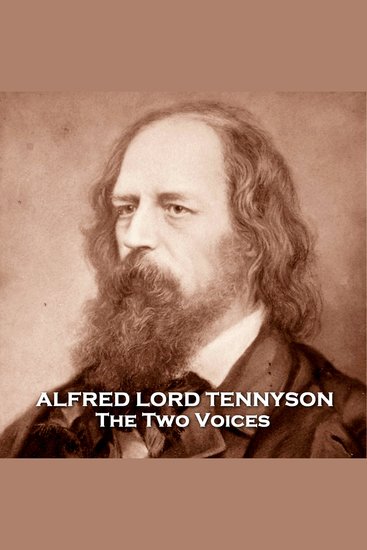
  • The Two Voices - An autobiographical poem written by Tennyson after his friend committed suicide - cover

    The Two Voices - An...

    Alfred Lord Tennyson

    • 0
    • 0
    • 0
    Alfred Tennyson was born on August 6th, 1809, in Somersby, Lincolnshire, the fourth of twelve children. 
    Most of Tennyson's early education was under the direction of his father, although he did spend four unhappy years at a nearby grammar school.  He also showed an early and burgeoning talent for writing; by the age of twelve he had written a 6,000-line epic poem.  
    In the 1820s, however, Tennyson’s father began to suffer frequent mental breakdowns exacerbated by his alcoholism. One brother had frequent violent quarrels with his father, a second would be confined to an insane asylum, and another was later an opium addict. 
    Tennyson left home in 1827 to join his brothers at Trinity College, Cambridge and with it escape from Somersby. At Trinity he was those who knew little of the problems that clouded his life. Although shy he was keen to make new friends; he was handsome, intelligent, humorous, and a gifted impersonator. 
    That same year, he and his brother Charles published Poems by Two Brothers. It attracted the attention of the “Apostles," a select undergraduate literary club led by Arthur Hallam. They provided friendship and confidence. Hallam and Tennyson became the best of friends. 
    The pair, in the summer of 1830, were involved in a ridiculous jaunt to take money and secret messages to revolutionaries plotting to overthrow the Spanish king. Tennyson's political enthusiasm was marginal compared to Hallam's, but he was glad to make his first trip abroad.  
    The landscape and atmosphere of the Pyrenees generated such wonderful poems as "Oenone," "The Lotus-Eaters;" inspired by a waterfall in the mountains; and "The Eagle;" invoked from the sight of the great hunters circling above them. The small village of Cauteretz and the surrounding valley became a location Tennyson would return to many times over the next sixty years. 
    In 1830, he published Poems, ‘Chiefly Lyrical’ and in 1832 a volume entitled ‘Poems’.  Tennyson, stung by the harshness of several reviews, would not publish again for nine years.  
    In the autumn of 1833, in what was meant as a gesture of gratitude and reconciliation to his father, Hallam accompanied him to the Continent. In Vienna Hallam died suddenly of apoplexy as a result of a congenital malformation of the brain.  
    Hallam’s death, together with that of his father and a myriad of anxieties, stem-ming mainly from the belief that his family were grimly attached to poverty, and fears that he might become a victim of epilepsy, madness, alcohol, and drugs, as others in his family had, or that he might die like Hallam, conspired to upset the delicate balance of Tennyson's emotions.  
    In 1836, he became engaged to Emily Sellwood. From their correspondence it is clear that she was very much in love with him. He seems to excessively worry about not having the financial means to marry.  He was also falling into trances, which he thought were connected with the epilepsy from which other family members suffered. To marry, he thought, would mean passing on the disease to any children he might father. He broke off the engagement. 
    During these years he used the dark feelings and events to write many of his finest works; "Ulysses," "Morte d'Arthur," "Tithonus," "Tiresias," and "Break, break, break."  
    In 1842 Tennyson’s Poems (in two volumes) was a tremendous critical and popular success.  
    In 1845 he was granted a government pension of £200 a year in recognition of his poetic achievements and his financial need.  Despite this financial support his doubts persisted.  
    Life for Tennyson was becoming increasingly productive and more lucrative.  By 1849 ‘The Princess’ had been published. He was now offered a large advance if he would assemble his elegies on Hallam into one complete poem.  
    Tennyson had now also resumed his relationship with Emily Sellwood and by the following year was talking again of marrying her. 
    In the Spring of 1850 the Poet Laureate William Wordsworth died and a new Laureate was
    Show book

  • The Invisible World - Celtic prayers blessings and teachings that honor the sacred unknown - cover

    The Invisible World - Celtic...

    John O'Donohue

    • 0
    • 0
    • 0
    For the Celtic people of ancient Ireland, the natural world was a continuous prayer. Each mountain held a soul; each river, a heart. This “Eucharist of nature” was living evidence of a divine worldview to which each Celt, as part of the “Great Circle,” belonged. Like the fierce and loving people who beheld it, this sacred vision vanished with the coming of Christianity in the 5th century. Or did it? With The Invisible World, poet and philosopher John O'Donohue recovers Celtic spirituality's original mysteries, sharing practices and beliefs that enrich Ireland and its people to this day.For the Celts, all life was sacred, yet they reserved their greatest reverence not for what they could see but for what they could not. Around them they sensed an “invisible world,” the great unknown from which they came and the source of eternal wonder in their lives. Through prayer, O'Donohue teaches, we may enter directly into this secret immensity and escape the psychological prisons we create for ourselves.Alive with loving insights and interwoven with prayers and poetry in the Celtic tradition, The Invisible World is an invitation to find freedom from your negativity and return your soul to the grace that is waiting unseen around you at this very moment.
    Show book