


Join us on a literary world trip!
Add this book to bookshelf
Grey
Write a new comment Default profile 50px
Grey
Subscribe to read the full book or read the first pages for free!
All characters reduced
Mobile Game Addiction - cover

Mobile Game Addiction

Christopher Miller

Translator A AI

Publisher: Publifye

  • 0
  • 0
  • 0

Summary

Mobile game addiction is a growing concern, and "Mobile Game Addiction" explores the underlying psychological mechanisms that make these games so captivating. It examines how game design leverages psychological principles like variable reward schedules to keep players engaged, sometimes to a detrimental extent. The book highlights the ethical implications of in-app purchases and loot boxes, revealing how cognitive biases are exploited to encourage spending. 

 
The book's approach is to dissect mobile game design, focusing on elements like push notifications and daily rewards. It then delves into the psychology behind spending, examining how scarcity and framing influence player behavior. It uses academic research, industry reports, and case studies to analyze the long-term effects of mobile game overuse, including potential impacts on mental health and relationships.

 
The book progresses from a historical overview of mobile gaming to an exploration of addictive behaviors, and finally, strategies for promoting healthier gaming habits. It aims to empower readers with the knowledge to understand and navigate the world of mobile gaming responsibly, addressing concerns about gaming disorder and promoting a balanced approach to digital entertainment.
Available since: 03/31/2025.
Print length: 86 pages.
Other books that might interest you

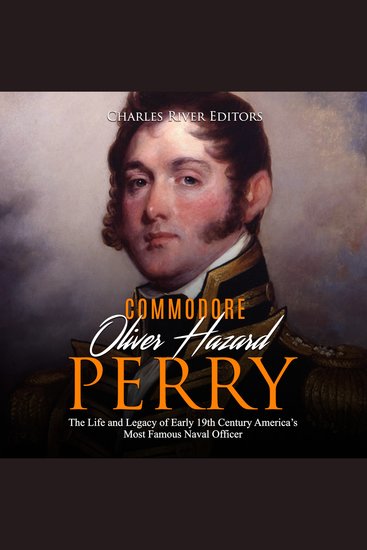
  • Oliver Hazard Perry: The Life and Legacy of the Commodore Who Became the War of 1812’s Most Famous Naval Officer - cover

    Oliver Hazard Perry: The Life...

    Charles River Editors

    • 0
    • 0
    • 0
    "We have met the enemy and they are ours.” – Oliver Hazard Perry 
    Americans had few things to celebrate during the War of 1812, and fighting on the frontier against the British and their native allies didn’t go any better than the conflict did in other theaters, but one of the only major victories the Americans won came at the Battle of Lake Erie in September 1813. That action made Oliver Hazard Perry, a veteran of the Barbary Wars and commander of the USS Lawrence, a legend whose name has endured for over 200 years. Perry was so instrumental in the victory that British historian C.S. Forester noted “it was as fortunate for the Americans that the Lawrence still possessed a boat that would float, as it was that Perry was not hit." As one of the biggest naval battles of the war, the results meant that America maintained control of Lake Erie, an important location from which they could recover Detroit and be better positioned to confront the British and Shawnee leader Tecumseh’s confederacy. For his part, Perry would forever be remembered as the “Hero of Lake Erie,” even as he and compatriot Captain Jesse Elliot would feud over their respective actions during the battle for the rest of Perry’s life. 
    Perry received a Congressional Gold Medal and the Thanks of Congress for compelling the surrender of the entire British squadron, the first time that had ever happened, but he wouldn’t have much time to enjoy it. He fought in the Second Barbary War in 1815 but died of yellow fever while on a mission in Venezuela in 1819. Despite being just 34 at the time of his death, he was one of the most famous military heroes in the young nation’s history, and he has been commemorated with countless monuments across America ever since.
    Show book
  • The History of the Peloponnesian War Volume 1 - cover

    The History of the Peloponnesian...

    Thucydides

    • 0
    • 0
    • 0
    The History of the Peloponnesian War by Thucydides is a foundational work of historical and political writing, chronicling the 5th-century BCE conflict between Athens and Sparta. Renowned for its objectivity, analytical depth, and realism, Thucydides examines the causes, events, and consequences of the war, emphasizing human nature, power dynamics, and the fragility of democracy. He dissects pivotal moments like the Plague of Athens, the Sicilian Expedition, and the Melian Dialogue, revealing how fear, honor, and interest drive nations to war. A timeless exploration of politics, ethics, and the costs of imperial ambition.
    Show book
  • The Lion of Round Top - The Life and Military Service of Brigadier General Strong Vincent in the American Civil War - cover

    The Lion of Round Top - The Life...

    H.G. Myers, Dr. Frank P. Varney

    • 0
    • 0
    • 0
    The story of the true savior of Little Round Top at Gettysburg—a twenty-six-year-old Harvard-educated lawyer, who paid with his life to defend that hill. 


    Citizen-soldier Strong Vincent was many things: Harvard graduate, lawyer, political speaker, descendant of pilgrims and religious refugees, husband, father, brother. But his greatest contribution to history is as the savior of the Federal left on the second day at Gettysburg, when he and his men held Little Round Top against overwhelming Confederate numbers. Forgotten by history in favor of his subordinate, Joshua Lawrence Chamberlain, Vincent has faded into relative obscurity in the decades since his death. 


    This book restores Vincent to his rightful place among the heroes of the battle of Gettysburg: presenting his life story using new, never-before-published sources and archival material to bring the story of one of the most forgotten officers of the American Civil War back to the attention of listeners and historians.
    Show book
  • Meditations by Marcus Aurelius - A soothing reading for relaxation and sleep - cover

    Meditations by Marcus Aurelius -...

    Marcus Aurelius

    • 0
    • 0
    • 0
    Dive into the ancient stoic wisdom of "Meditations" by Marcus Aurelius, narrated to promote relaxation and a restful night's sleep, presented by Slumber Studios with the calming voice of Andrew Bond. 
    "Meditations" was originally written during Aurelius' time as Roman Emperor from 161 to 180 AD. Aurelius wrote private notes to himself detailing his philosophies and personal reflections, which were later collected and published as this book. "Meditations" is one of the most popular personal development and stoic philosophy writings of all time. 
    It's the perfect book to help you relax and fall asleep. Whether you suffer from insomnia, general restlessness, or simply enjoy a calming narration to accompany you at night, our audiobooks are crafted to guide you into a deep, peaceful slumber. 
    So settle in, relax, and let Andrew Bond's tranquil narration introduce you to the profound reflections of Emperor Marcus Aurelius. Through his philosophical insights, you'll explore themes of virtue, resilience, and personal ethics that resonate as much today as they did in ancient Rome. 
    Our audiobooks are designed with your peace in mind, featuring a slower narration pace and soothing background music to ensure a smooth transition into sleep. 
    If you’re looking for a serene way to end your day and enrich your mind, you've found the perfect audiobook. Just press play, get comfortable, and let Andrew's gentle voice transport you through the timeless meditations of one of history’s greatest philosophers. Awake in the morning feeling refreshed and inspired.
    Show book
  • Becoming the Best Version of You - How to Elevate Every Part of Your Life - cover

    Becoming the Best Version of You...

    Vitoria David

    • 0
    • 0
    • 0
    Are you ready to unlock your fullest potential and craft a life that truly thrives? In a world constantly pushing us towards mediocrity, it's easy to feel stuck, overwhelmed, or simply unsure of how to reach that next level. But what if you held the key to a profound transformation, capable of elevating not just one aspect, but every single part of your existence? 
    Becoming the Best Version of You: How to Elevate Every Part of Your Life by acclaimed author Victoria David is your definitive guide to a holistic and sustainable personal revolution. This isn't just another self-help book; it's a meticulously crafted roadmap designed to empower you with actionable strategies, profound insights, and the unwavering motivation to sculpt the life you've always dreamed of.
    Show book
  • Transcendence and Liberation - cover

    Transcendence and Liberation

    Ralph Waldo Emerson

    • 0
    • 0
    • 0
    Ralph Waldo Emerson was an American essayist, lecturer, philosopher, abolitionist, and poet who led the transcendentalist movement of the mid-19th century. He was seen as a champion of individualism and a prescient critic of the countervailing pressures of society, and his ideology was disseminated through dozens of published essays and more than 1,500 public lectures across the United States. 
     
    Emerson gradually moved away from the religious and social beliefs of his contemporaries, formulating and expressing the philosophy of transcendentalism in his 1836 essay "Nature". Following this work, he gave a speech entitled "The American Scholar" in 1837, which Oliver Wendell Holmes Sr. considered to be America's "intellectual Declaration of Independence." 
     
    Emerson wrote most of his important essays as lectures first and then revised them for print. His first two collections of essays, Essays: First Series and Essays: Second Series, represent the core of his thinking. They include the well-known essays "Self-Reliance", "The Over-Soul", "Circles", "The Poet", and "Experience." Together with "Nature", these essays made the decade from the mid-1830s to the mid-1840s Emerson's most fertile period. Emerson wrote on a number of subjects, never espousing fixed philosophical tenets, but developing certain ideas such as individuality, freedom, the ability for mankind to realize almost anything, and the relationship between the soul and the surrounding world. Emerson's "nature" was more philosophical than naturalistic: "Philosophically considered, the universe is composed of Nature and the Soul." Emerson is one of several figures who "took a more pantheist or pandeist approach by rejecting views of God as separate from the world."
    Show book
