Join us on a literary world trip!
Add this book to bookshelf
Grey
Write a new comment Default profile 50px
Grey
Subscribe to read the full book or read the first pages for free!
All characters reduced
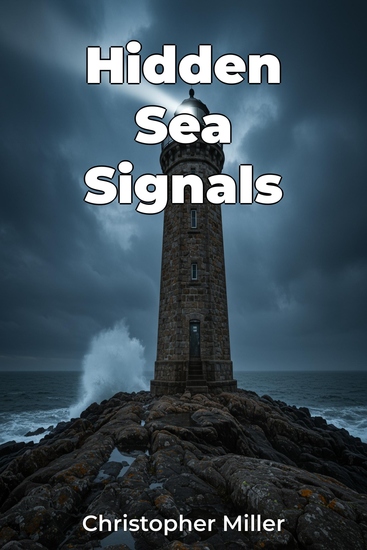
Hidden Sea Signals - cover

Hidden Sea Signals

Christopher Miller

Translator A Ai

Publisher: Publifye

  • 0
  • 0
  • 0

Summary

Hidden Sea Signals explores the fascinating history and technology of lighthouses, revealing how these beacons served as vital pre-digital communication hubs for maritime navigation and global commerce. Far from being simple structures, lighthouses housed sophisticated systems employing light, fog, and radio signals, all managed by dedicated keepers. The book highlights how the evolution of lighthouse technology, from basic coal fires to advanced Fresnel lenses, dramatically improved signal precision and reliability, crucial for maritime safety.

 
The book progresses by first detailing the technological foundations of lighthouses, then examining the lives and work of the keepers, and finally analyzing case studies of maritime incidents where signaling played a critical role. By drawing on archival records, personal journals, and oral histories, Hidden Sea Signals paints a vivid picture of this bygone era.

 
The book uniquely emphasizes how lighthouse communication formed a sophisticated technological network, essential for maritime safety and global trade, long before modern digital systems.
Available since: 02/20/2025.
Print length: 67 pages.


Other books that might interest you

  • Red Cloud’s War: The History and Legacy of the Only 19th Century War Won by Native Americans against the United States - cover

    Red Cloud’s War: The History and...

    Editors Charles River

    • 0
    • 0
    • 0
    In the summer of 1866, Colonel Henry B. Carrington set out from Fort Laramie to establish a series of forts along the Bozeman Trail with the goal of protecting migrants moving along the trail. The Bozeman Trail ran through the Powder River country, which included the traditional hunting grounds of Lakota, Cheyenne, and Arapaho peoples. Carrington had about 1,000 people in his column, of which about 700 were soldiers and 300 were civilians, likely soldiers’ families and migrants. 
    The ongoing hostilities, which included the notorious Fetterman's Massacre, ultimately convinced American officials to head back to the negotiating table with the Native Americans, and as a result, Red Cloud has often been labeled the only Indian chief to win a war against the Americans. After that, however, Red Cloud continued to lead his people to reservations first near the Black Hills and later westward after the Battle of the Little Bighorn. Though he was respected as a war chief, it was his political functions as a spokesman of the Oglala that truly allowed Red Cloud to leave his mark over the last several decades of his life. Whereas Sitting Bull and Crazy Horse suffered premature deaths, Red Cloud outlived the other important leaders of the Sioux until dying in 1909 at 87 years old. Near the end of his life, he reportedly said, “They made us many promises, more than I can remember. But they kept but one -- they promised to take our land...and they took it.” 
    Red Cloud’s War: The History and Legacy of the Only 19th Century War Won by Native Americans against the United States analyzes the seminal moments that brought about the war, the war’s most famous battles, and the aftermath.
    Show book
  • Illinois 1000 - cover

    Illinois 1000

    Henry Isham

    • 0
    • 0
    • 0
    Illinois 1000 is a quick dive into the lives of the English and the Indians of the Upper Midwest a thousand years ago.
     
    Building on The Year 1000 by British historians Robert Lacey and Danny Danzinger, the author 
    moves from one side of the Atlantic to the other. The contrasts are as much from the past to the present as between the two very different cultures. ‘Primitive’ is often used to describe the Indians’ way of life, and not without at least some reason. So much of what characterized and made English life possible was entirely absent in North America.
     
    Yet, centuries later, hundreds, even thousands of Europeans joined the Indians, preferring their way of living to that which they had known in Europe or colonial America. The Indians, the first people, survived and prospered in what was at that time not amber fields of grain but a very 
    ungenerous landscape. If they were brutal, they were hardly unique. In their affinity to the earth they lived on, there were few like them.
    Show book
  • 3 Dirty Gay Men Paranormal Erotic Stories - Vampires Werewolves Gangbang Babysitter and Cowboy - cover

    3 Dirty Gay Men Paranormal...

    Bobby Large, Jim Right

    • 0
    • 0
    • 0
    Delve deep into 3 filthy gay men paranormal fantasies. 
    Titles included are: 
    The Babysitter’s Vampire Night: 
    Setting up a babysitter service is a way for Harvey to make some money, but a call coming in when no one is available leaves him with little choice but to take the job himself. The house he arrives at is no different from the others on a quiet street, but he enters to find out there’s no child. The occupant then reveals his real reason for making the call. A vampire with a babysitter fetish seems insane, but Harvey gives in to a torrid encounter with Mr. Doyle to find out just how sexy a vampire can be. 
    Wild Werewolf on the Prairie: 
    A successful delivery of steers end with Cody making his way back across the open prairie alone. A late start setting out necessitates overnight camping and the howls he hears turn out not to be buffalo wolves. What comes out of the darkness is a legend, but the werewolf doesn’t want to take a life. Its interest is in something much more primal and Cody finds himself having a full moon encounter with an aroused beast. 
    Back Alley Vampire Gangbang: 
    Walking home after a heavy night out is Wesley’s first mistake. Taking a shortcut is his second. He’s not complaining at first when he bumps into Conrad, but a kiss with a handsome guy in a back alley turns crazy when two more men come out of the darkness. There’s no escape when the three men reveal what they really are, but giving in completely brings on as much pleasure as pain when vampire bites turn him on in a way he never expected.
    Show book
  • Drawing Lines - Why Conservatives Must Begin to Battle Fiercely in the Arena of Ideas - cover

    Drawing Lines - Why...

    Kira Davis

    • 0
    • 0
    • 0
    It is time to draw our lines in the sand as Christians and Conservatives by engaging in public conversations with truth and conviction. 


    Kira Davis has built a brand on reaching out to the other side, on giving people space to be wrong, the space to discuss, the space to tolerate. Unfortunately, the people controlling the public conversations right now will have none of it. We're seeing the lengths they will go to and the lies they let stand in service of crushing 50 percent of this nation. They seek unity through complete elimination of the other side. There are times for compromise and times to draw a line in the sand; the latter has arrived. It is time to draw our lines as Christians and Conservatives.
    Show book
  • Edward Vernon-Harcourt - The Last Aristocratic Archbishop of York - cover

    Edward Vernon-Harcourt - The...

    Tony Vernon-Harcourt

    • 0
    • 0
    • 0
    Edward Vernon-Harcourt (1757–1847) was Archbishop of York from 1807 until his death at the age of 90.
    
     
    As a younger son of a wealthy land-owning family, Archbishop Harcourt depended on good family and political connections to make progress in the Church. He had to combine his responsibility for one of the largest dioceses in the Church of England with his duties in parliament and at court and with providing for his family of 16 children. More supportive of reform of both parliament and the church than most of his fellow bishops, Harcourt took steps to improve the training of ordinands in his diocese, encouraged the building of over 100 new churches to cope with population growth in the industrial towns of the West Riding and made some progress in tackling pluralism and non-residence. He was not afraid to stand up for a cause he believed to be right.
    
     
    In this biography, Tony Vernon-Harcourt examines the professional and family life of one of the last aristocratic bishops in the Church of England.
    Show book
  • The 'Hood Comes First - Race Space and Place in Rap and Hip-Hop - cover

    The 'Hood Comes First - Race...

    Murray Forman

    • 0
    • 0
    • 0
    The 'Hood Comes First looks at the increasingly specific emphasis on real neighborhoods and streets in rap music and hip hop culture as an urgent response to the cultural and geographical ghettoization of black urban communities. Examining rap music, along with ancillary hip hop media including radio, music videos, rap press and the cinematic 'hood genre, Murray Forman analyzes hip hop culture's varying articulations of the terms "ghetto," "inner-city," and "the 'hood," and how these spaces, both real and imaginary, are used to define individual and collective identity.Negotiating academic, corporate, and "street" discourses, Forman assesses the dynamics between race, social space and youth. Race, class and national identification are recast and revised within rap's spatial discourse, concluding with the construction of "the 'hood," a social and geographic symbol that has become central to concepts of hip hop authenticity. Additionally, the book analyzes the processes within the music and culture industries through which hip hop has been amplified and disseminated from the 'hood to international audiences.
    Show book