Join us on a literary world trip!
Add this book to bookshelf
Grey
Write a new comment Default profile 50px
Grey
Subscribe to read the full book or read the first pages for free!
All characters reduced
Quantum Computing: The Future of Information Processing - cover

Quantum Computing: The Future of Information Processing

Christopher Ford

Publisher: CKF Publishing

  • 0
  • 0
  • 0

Summary

"Quantum Computing: The Future of Information Processing" is an immersive exploration into the revolutionary world of quantum computing, designed to captivate and enlighten both novices and experts in the field. This comprehensive book navigates through the captivating landscape of quantum mechanics and computing, offering an insightful journey into the following aspects:Unveiling the Quantum Realm:Embark on a fascinating journey into the quantum realm, discovering the fundamental principles that underpin this revolutionary form of computing. Explore the concepts of superposition, entanglement, and quantum interference that redefine the boundaries of classical computing.Mastering Quantum Bits (Qubits):Delve into the enigmatic realm of qubits, the building blocks of quantum computing. Unravel the mysteries behind qubits' superposition and entanglement, unlocking their potential to process information in ways that challenge traditional binary computing.Quantum Algorithms and Applications:Experience the sheer power of quantum algorithms, revealing their prowess in solving complex problems exponentially faster than classical counterparts. Discover groundbreaking applications across cryptography, optimization, machine learning, and scientific simulations.Realizing the Future:Peer into the future landscape shaped by quantum computing. Explore its potential impact on various industries, from healthcare and finance to cybersecurity, and envision a world transformed by quantum-enabled innovation.
Available since: 02/09/2024.


Other books that might interest you

  • The Private Lives of Public Birds - Learning to Listen to the Birds Where We Live - cover

    The Private Lives of Public...

    Jack Gedney

    • 0
    • 0
    • 0
    A book to help the ordinary birdwatcher appreciate the fascinating songs, stories, and science of common birds. 


    Jack Gedney's studies of birds provide resonant, affirming answers to the questions: Who is this bird? In what way is it beautiful? Why does it matter? Masterfully linking an abundance of poetic references with up-to-date biological science, Gedney shares his devotion to everyday Western birds in fifteen essays. Each essay illuminates the life of a single species and its relationship to humans, and how these species can help us understand birds in general. A dedicated birdwatcher and teacher, Gedney finds wonder not only in the speed and glistening beauty of the Anna's hummingbird, but also in her nest building. He acclaims the turkey vulture's and red-tailed hawk's roles in our ecosystem, and he venerates the inimitable California scrub jay's work planting acorns. Knowing that we hear birds much more often than we see them, Gedney offers his expert's ear to help us not only identify bird songs and calls but also understand what the birds are saying. The crowd at the suet feeder will never look quite the same again. Join Gedney in the enchanted world of these not-so-ordinary birds.
    Show book
  • Network Security For Beginners - Strategies Tactics and Ethical Boundaries for Mastering Social Engineering - cover

    Network Security For Beginners -...

    Daniel Green

    • 0
    • 0
    • 0
    In our hyperconnected world, where information flows seamlessly through networks, the need for robust network security is more critical than ever. "Network Security for Beginners: A Beginner's Guide to Safeguarding Your Digital World" is your indispensable companion in understanding and navigating the complex realm of cybersecurity. 
    Unlock the secrets of securing your digital life as this book takes you on a journey from the basics to advanced strategies. Begin with the fundamentals of network security, exploring the types of threats that lurk in the digital shadows. Discover the inner workings of networks, protocols, and the essential role of firewalls and intrusion detection systems. 
    With practical insights, learn how to fortify your devices through effective password management, authentication methods, and encryption techniques. Dive into the intricacies of creating a secure environment, encompassing physical security, network segmentation, virtual private networks (VPNs), and wireless network protection. 
    Equip yourself with the skills to recognize and respond to potential threats, from social engineering to phishing attacks. Develop safe online practices, whether browsing the internet, managing emails, engaging in social media, or conducting online transactions. 
    "Network Security for Beginners" is more than a guide; it's a roadmap to a safer digital world. Whether you're an individual seeking to protect personal information or a business safeguarding its assets, this book empowers you with knowledge and practical strategies. Arm yourself with the tools to face the challenges of today and the uncertainties of tomorrow. Your journey to becoming a vigilant guardian of the digital realm starts here. 
     
    Show book
  • The Dressmaker's Mirror - Sudden Death Genetics and a Jewish Family's Secret - cover

    The Dressmaker's Mirror - Sudden...

    Susan Weiss Liebman

    • 0
    • 0
    • 0
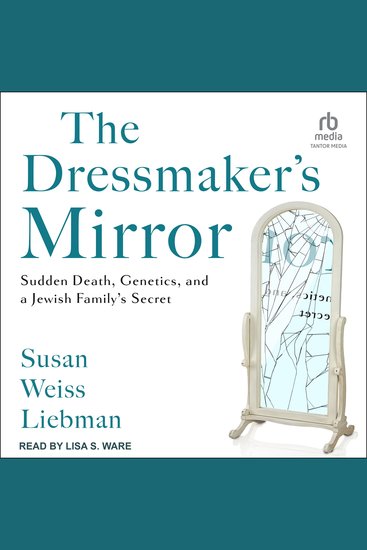
    Experts agree on the value of genetic testing when there is a family history of disease, or if the patient has an illness frequently caused by a mutation. Knowing the disease mutation lets family members find out if they have it too and need preventive care. The book explains that doctors can order tests with genetic counseling at relatively low cost and how this will help them prescribe preventive actions, make earlier diagnoses, and get better outcomes. The book's genetic discussions also delve into the implications of broad-based genetic screening without a family history. Policymakers are considering the benefits and drawbacks of this approach and I present both sides of this debate. 


    While working on this book I uncovered a family secret hidden for over one hundred years. Family lore had it that a heavy dressmaker's mirror fell on and killed my uncle when he was four. But the death certificate told a different story—his true cause of death was heart failure. My grandparents fabricated the accident to protect their surviving children's marriage prospects. Long before the discovery of DNA, my grandparents intuited and feared James Watson's message, "We used to think that our fate was in our stars, but now we know that, in large measure, our fate is in our genes." The book suggests genetic testing and associated medical intervention can change our fates.
    Show book
  • An Apple a Day Keeps the Doctor Away - But Why Buy an Apple if the Doctor Comes Free - cover

    An Apple a Day Keeps the Doctor...

    Dr Mazin Al Khabouri

    • 0
    • 0
    • 0
    Why invest in prevention when treatment is free? This provocative question lies at the heart of An Apple a Day Keeps the Doctor Away: But Why Buy an Apple If the Doctor Comes Free? In this thought-provoking exploration of health economics, Dr Mazin Al Khabouri examines the paradox facing modern healthcare systems—particularly in the GCC and Oman—where easy access to care can unintentionally discourage healthy living.
    
    Blending over four decades of clinical, academic, and leadership experience, the author takes readers on a compelling journey through global healthcare models, from traditional systems to emerging hybrid approaches. He challenges conventional thinking on prevention versus cure, asking how societies can foster responsibility for health while maintaining equitable access to care.
    
    With insightful discussions on innovation—including artificial intelligence, telemedicine, and forward-looking care models—this book offers more than analysis; it presents a call to rethink how healthcare is delivered, financed, and sustained.
    
    Engaging, practical, and deeply relevant, this work is essential reading for policymakers, clinicians, and anyone interested in the future of healthcare.
    Show book
  • Tyrannosaurus Rex The: The History of the World’s Most Famous Dinosaur - cover

    Tyrannosaurus Rex The: The...

    Editors Charles River

    • 0
    • 0
    • 0
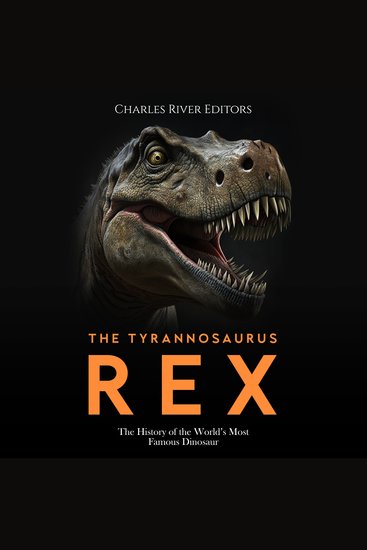
    The massively popular 1990 novel Jurassic Park by Michael Crichton and its subsequent movie adaptations led to a huge resurgence in interest in dinosaurs and the prehistoric world. That interest continues to the present day, even though most of the dinosaurs in Jurassic Park weren’t actually from the Jurassic period. Triceratops, Velociraptor, Tyrannosaurus Rex and the huge sauropods such as Brachiosaurus that feature in the book and movies all actually belong to the Late Cretaceous period, more than 40 million years after the end of the Jurassic. Regardless, certain kinds of dinosaurs remain instantly recognizable, and among them, the “king” is undoubtedly the Tyrannosaurus.  
    	The first discovery of a Tyrannosaurus was made in 1902 and the largest carnivorous dinosaur ever found at the time quickly gripped the popular imagination. Even its name was dramatic - Tyrannosaurus Rex means “King of the Tyrant Lizards.” The T-Rex as it quickly became known didn’t appear until the last age of the Late Cretaceous period, the Maastrichtian, but when it did, it was the biggest and most terrifying of all the theropod predators. The T-Rex was around 13 feet tall at the hips (its tallest point since it isn’t believe to have stood upright), it was over 35 feet long, and it weighed about nine metric tons. Like most therapods, it had very powerful hind legs and much smaller fore legs, so the front legs look almost comically small. This dinosaur also had a large and powerful tail to counterbalance its very large head (some T-Rex skulls are nearly five feet long). Within the skull was a massive jaw lined with teeth up to a foot long. A reconstructive study has estimated that a T-Rex jaw was capable of exerting a pressure of over 55,000 Newtons; the equivalent of almost six tons of pressure. It was fast too, possibly capable of moving at speeds of up to 25 miles per hour. 
    Show book
  • Time Series Feature Engineering - Comprehensive Guide to Extracting Insights from Temporal Data - cover

    Time Series Feature Engineering...

    Simon Winston

    • 0
    • 0
    • 0
    This comprehensive guide is your key to unraveling the mysteries hidden within sequential data, whether you're navigating financial markets, predicting climate patterns, or optimizing business operations. 
    From seasoned data scientists to curious beginners, this book provides a rich exploration of time series feature engineering, demystifying the complexities of temporal data analysis. Dive into the intricacies of identifying trends, capturing seasonality, and decoding the hidden patterns that define time-varying phenomena. With practical examples, hands-on exercises, and real-world applications, you'll gain the skills to transform raw temporal data into actionable insights. 
    Discover the art of crafting meaningful features that empower your predictive models. Whether you're dealing with daily stock prices, hourly energy consumption, or monthly sales figures, "Temporal Insights" equips you with the knowledge to engineer features that resonate with the rhythm of your data. 
    "Time Series Feature Engineering" is your compass through the dynamic landscape of time series feature engineering. Whether you're aiming to forecast stock prices, predict customer demand, or optimize resource allocation, this book empowers you to harness the temporal dimension of data and extract meaningful insights that stand the test of time. Elevate your data science journey with the indispensable skills offered in " Time Series Feature Engineering: Unveiling Patterns and Trends through Time Series Feature Engineering." 
     
    Show book