Join us on a literary world trip!
Add this book to bookshelf
Grey
Write a new comment Default profile 50px
Grey
Subscribe to read the full book or read the first pages for free!
All characters reduced
Paper - cover

Paper

Chris Bush

Publisher: Nick Hern Books

  • 0
  • 0
  • 0

Summary

'People don't need scissors. They don't need beautiful, handcrafted, ninety pound scissors, however impressive they might be. But they do need somewhere to live.'
Faye and Mel have been together forever. Two kids, a mortgage and a diabetic hamster. A regular, unexceptional existence. They work hard, they get by, they do their best. So if it's true - if Faye's father really has left the factory to her - they'd deserve it, wouldn't they? The site could be worth a fortune - not for making scissors, but ripe for redevelopment. It could change everything. But first they need the paperwork.
Paper is a play about family, heritage and legacy, and is part of Chris Bush's triptych of plays about a Sheffield manufacturing family, Rock / Paper / Scissors. The three plays were first performed simultaneously with the same cast moving between three theatres in Sheffield – the Crucible, the Lyceum and the Studio – as part of Sheffield Theatres' fiftieth birthday celebrations in 2022.
Available since: 07/07/2022.
Print length: 96 pages.

Other books that might interest you

  • Self-Portrait With Family - cover

    Self-Portrait With Family

    Amaan Hyder

    • 0
    • 0
    • 0
    In Self-Portrait With Family, Amaan Hyder traces a personal history of family and queerness. With poems that focus on coming out, the collection depicts the relationship between a son and his parents, and an immigrant family and its community in the diaspora. Featuring snapshots of conversations across dinner tables and phone lines, Hyder's striking and beautifully precise poems bring into relief what is said and not said, the retreat from speech and the longing to hear from another.
    By turns tender and skilfully observed, this collection also looks from the family home to the individual experience of the brown queer man in public spaces, searching for intimate connection whilst experiencing discrimination. Self-Portrait With Family distinctively frames such narratives of closeness and distance, exploring a range of poetic forms to draw together intergenerational familial and gay relationships, English and Urdu, the world of the family home and the world outside of it.
    Show book
  • Home Burial - a poem - cover

    Home Burial - a poem

    Robert Frost

    • 0
    • 1
    • 0
    "Home Burial" is a poem about a man and woman whose baby has died. It tells of the burial, how the parents react to this death, particularly their lack of communication. 
    This piece is especially poignant given that Frost's son Elliot died at age 4, his daughter Elinor Bettina died when she was a few days old, his wife experienced a miscarriage, two of his daughters suffered mental breakdowns and died, and his son Carol committed suicide. 
    A Blackstone Audio production.
    Show book
  • Lycidas - Much shorter poem from the famed author of Paradise Lost - cover

    Lycidas - Much shorter poem from...

    John Milton

    • 0
    • 0
    • 0
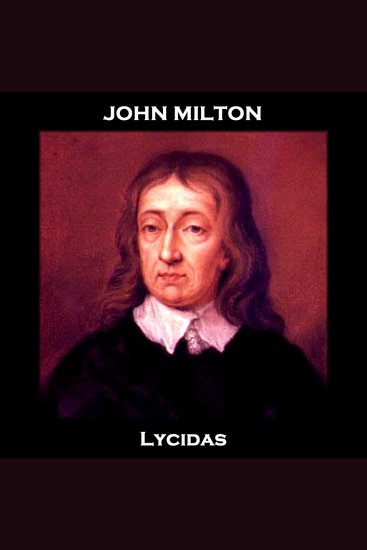
    John Milton was born in Bread Street, London, on December 9th, 1608.  His early years were privately tutored before gaining a place at St Paul’s School and in 1625 he matriculated at Christ's College, Cambridge, earning a BA in 1629 and an MA in 1632. At Cambridge he had developed a reputation for poetic skill but also experienced alienation from his peers and university life as a whole.  
    The next 6 years were spent in private study. He read both ancient and modern works of theology, philosophy, history, politics, literature and science, in preparation for a poetical career.  Milton mastered Latin, Greek, Hebrew, French, Spanish, and Italian. To these he would add Old English (whilst researching his History of Britain) and also acquired more than a passing acquaintance in Dutch.  
    Although he was studying, some of his poetry from this time is remarkable; L’Allegro and Il Penseroso in 1631 and Lycidias in 1638. 
    In May 1638, Milton embarked upon a 15 month tour of France and Italy. These travels added a new and direct experience of artistic and religious traditions, especially Roman Catholicism.  He cut the journey short to return home during the summer of 1639 because of what he claimed were "sad tidings of civil war in England."  
    Once home, Milton wrote prose tracts against episcopacy, in the service of the Puritan and Parliamentary cause.  
    He married 16-year-old Mary Powell in June 1643 but she left him after only a few months during which he wrote and published several writings on divorce. Mary did return after 3 years and their life thereafter seemed harmonious.  Milton received a hostile response to the divorce tracts and drove him to write Areopagitica, his celebrated attack on pre-printing censorship.  
    With the parliamentary victory in the Civil War, Milton wrote The Tenure of Kings and Magistrates (1649) which defended popular government and implicitly sanctioned the regicide which led to his appointment as Secretary for Foreign Tongues by the Council of State.  
    On 24 February 1652 Milton published his Latin defense of the English People, Defensio Pro Populo Anglicano, also known as the First Defense. Milton's Latin prose and intellectual sweep, quickly gained him a European reputation.  
    Tragically his first wife, Mary, died on May 5th, 1652 following the birth of their fourth child.   The following year Milton had become totally blind, probably due to glaucoma.  He then had to dictate his verse and prose to helpers, one of whom was the poet Andrew Marvell.  
    He married again to Katherine Woodcock but she died in February 1658, less than four months after giving birth to a daughter, who also tragically died.  
    Though Cromwell’s death in 1658 caused the English Republic to collapse Milton stubbornly clung to his beliefs and in 1659 he published A Treatise of Civil Power, attacking the concept of a state-dominated church. Upon the Restoration in May 1660, Milton went into hiding for his life. An arrest warrant was issued and his writings burnt. He re-emerged after a general pardon was issued, but was nevertheless arrested and briefly imprisoned before influential friends, such as Marvell, now an MP, intervened 
    His third marriage was to Elizabeth Mynshull. Despite a 31-year age gap, the marriage seemed happy and Milton spent the remaining decade of his life living quietly in London, apart from a short spell in Chalfont St. Giles, during the Great Plague of London.  
    Milton was to now publish his greatest works, which had been gestating for many years.  Paradise Lost, perhaps the classic English Epic poem was originally published in 10 books in 1667.  This was followed by Paradise Regained and Samson Agonistes in 1671.  Because of his anti-monarchy views their reception was muted but over the centuries since Milton has established himself as second only to Shakespeare.  He died of kidney failure on November 8th, 1674 and was buried in the church of St Giles Cripplegate.
    Show book

  • Ages of Man - cover

    Ages of Man

    William Shakespeare

    • 0
    • 0
    • 0
    Here are some of Shakespeare's finest speeches performed by one of the greatest Shakespearean actors of this century. It ranges from the youth of Jaques' introduction to life, 'All the world's a stage!' in ""As You Like It"" to the aged Prospero's goodbye to Ariel and Shakespeare's own farewell to his muse in ""The Tempest"": 'Now my charms are all o'erthrown!' Sir John's masterful reading brings delight to the ear and joy to the heart.
    Show book
  • Songs of Innocence and Experience - cover

    Songs of Innocence and Experience

    William Blake

    • 0
    • 0
    • 0
    William Blake’s volume of poetry entitled Songs of Innocence and Experience is the embodiment of his belief that innocence and experience were “the two contrary states of the human soul,” and that true innocence was impossible without experience. Songs of Innocence contains poems either written from the perspective of children or written about them. Many of the poems appearing in Songs of Innocence have a counterpart in Songs of Experience, with quite a different perspective of the world.    The disastrous end of the French Revolution caused Blake to lose faith in the goodness of mankind, explaining much of the despair found in Songs of Experience. Blake also believed that children lost their innocence through exploitation and from a religious community which put dogma before mercy. He did not, however, believe that children should be kept from becoming experienced entirely. In truth, he believed that children should indeed become experienced but through their own discoveries, which is reflected in a number of these poems.    (Summary adapted from Wikipedia by Annie Coleman)
    Show book
  • From My Eye To The Sky - cover

    From My Eye To The Sky

    J.V. Sadler

    • 0
    • 0
    • 0
    From the author of Licking comes a collection of poetry filled with raw verses that expose a piece of J.V. Sadler’s heart.  
    From My Eye to the Sky places a magnifying glass on U.S. society and forces it to take a look at itself. Unrestrained and unabashed, this collection is a call not only for hope but organized and passionate action toward a better world.  
    Dare to put your eye to the sky. 
    “We shall be free 
    . . . one day 
    We will walk on water 
    . . . one day”
    Show book