Join us on a literary world trip!
Add this book to bookshelf
Grey
Write a new comment Default profile 50px
Grey
Subscribe to read the full book or read the first pages for free!
All characters reduced
The Wittiest Politician in Africa - cover

The Wittiest Politician in Africa

Chinedu J. Nwagwu

Publisher: COMMUNE WRITERS INT'L

  • 0
  • 0
  • 0

Summary

The idea to write this book came as an inner inspiration to me. The Wittiest Politician in Africa is targeted at unveiling some of the discovered strategies employed, utilized and mastered by one of Africa’s best Politicians of all time – Senator Bola Ahmed Tinubu, herein addressed as Senator BAT.

The book x-rays seven (7) powerful strategies that have been working wonders for him in politics over the years. The book portrays these strategies in such a way that makes it easy and enjoyable for anyone to read, learn from and praticalise. If read with an open mind and the lessons herein are learnt and applied, this book is capable of impacting positively on the successes of any practicing or aspiring politician, political student, leaders in any sphere of influence, etc.

As a result of this, I recommend this book, The Wittiest Politician In Africa, to every practicing and intending politician and the general public who want to learn the techniques of the expert himself – Senator BAT and excel in their political career and other leadership quests.
Available since: 04/23/2022.
Print length: 101 pages.
Other books that might interest you

  • Inventing BE - a memoir manifesto - cover

    Inventing BE - a memoir manifesto

    BE Alink

    • 0
    • 0
    • 0
    Fiercely courageous and exhilarating, Inventing BE depicts the life and time travel of Dutch designer, architect and Alinker walking bike founder, BE Alink. Growing up in the Netherlands, she had no language for what she felt about her body. How traditional society—including family members and teachers—viewed her did not align with how she identified from a very early age. In the stirring trenches of international humanitarian work across continents, BE discovered herself in places torn apart by volatile crises like Afghanistan, Kenya, Ethiopia, and Indonesia, positively affecting many others along the way.  
          BE has seen sights and peeked beneath oppressive systems most wouldn’t dare. In the process, she learned that to live a rich life, one had to confront the darkness of humanity to turn on the light of true freedom—in mind, body and spirit. Inventing BE is both memoir and manifesto dedicated to anyone who has ever had to conform or compromise their authentic self. You are never alone, and in the strangest, most far-flung places, you may be right at home.  
    VIDEO https://youtu.be/AcqJtQ-QELo?si=Io2ywyuIkc-Ow3F3
    Show book
  • KNOW ABOUT "AUNG SAN SUU KYI" - A Journey of Courage and Change - cover

    KNOW ABOUT "AUNG SAN SUU KYI" -...

    Saurabh Singh Chauhan

    • 0
    • 0
    • 0
    This is small part of introduction of the book: In the vast tapestry of history, certain individuals emerge as beacons of courage, symbols of change, and inspirations for generations to come. Aung San Suu Kyi, a name etched in the annals of our times, stands as a testament to the power of determination and the pursuit of justice. Her journey is one that transcends borders, politics, and beliefs, reaching out to hearts far and wide. In this journey, we unravel the life of Aung San Suu Kyi a woman whose very name resonates with the ideals of courage and change. Hers is a story that navigates through tumultuous times, through a landscape marked by both adversity and triumph. Born into a political dynasty, Aung San Suu Kyi's path was destined to intersect with the pages of history. As the daughter of Aung San, a key figure in Burma's struggle for independence, she inherited a legacy of courage and a commitment to the cause of freedom. Yet, her own journey was one of unique challenges and choices. As we embark on this exploration, we delve into the early years of her life her education abroad, her exposure to democratic ideals, and her eventual return to Myanmar at a pivotal moment in the nation's history.
    Show book
  • Otto von Bismarck - The Politician Who Built a Powerful State - cover

    Otto von Bismarck - The...

    Kelly Mass

    • 0
    • 0
    • 0
    Otto, Prince of Bismarck, Count of Bismarck-Schönhausen, Duke of Lauenburg, was a conservative German statesman, diplomat, and author who was born Junker Otto Eduard Leopold von Bismarck. Bismarck supervised Germany's unification in 1871 and functioned as its first chancellor till 1890, throughout which time he ruled Europe for 20 years. 
    From 1867 to 1871, he was the chancellor of the North German Confederation, and from 1862 till 1890, he was Prussia's minister president and minister of Foreign Affairs, in addition to his role as chancellor of Germany. Bismarck served in both homes of the Prussian Parliament and was the Prussian envoy to France and Russia before rising to the executive power. He dealt with Prussian King Wilhelm I to join the many German countries, a cooperation that lasted the remainder of Wilhelm's life. 
    In this book, you will discover much more about him and his impact on the Unification of Germany, the decades to come, and the entire culture and economy behind it.
    Show book
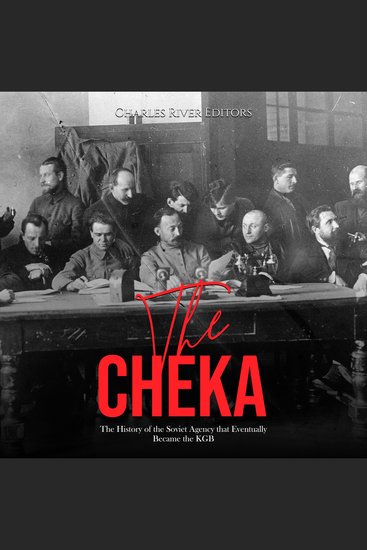
  • Cheka The: The History of the Soviet Agency that Eventually Became the KGB - cover

    Cheka The: The History of the...

    Editors Charles River

    • 0
    • 0
    • 0
    The KGB is one of the most famous abbreviations of the 20th century, and it has become synonymous with the shadowy and often violent actions of the Soviet Union’s secret police and internal security agencies. In fact, it is often used to refer to the Soviet state security agencies throughout its history, from the inception of the inception of the Cheka (Extraordinary Commission) in 1917 to the official elimination of the KGB in 1992. Whether it’s associated with the Russian Civil War’s excesses, Stalin’s purges, and even Vladimir Putin, the KGB has long been viewed as the West’s biggest bogeyman during the second half of the 20th century. 
    	However, the KGB did not appear out of thin air. Naturally, the earliest Soviet leaders utilized intelligence agencies that collected information both abroad and within the Soviet Union, targeting foreign opponents and domestic opponents alike. Lenin did not imagine the scale of the opposition he would have to face after the revolution, and he quickly came to the conclusion that "a special system of organized violence" must be created to implement the dictatorship of the proletariat. 
    	Thus, from nearly the beginning of the Bolshevik takeover of Russia, Lenin and his successors established and relied on a particularly ruthless agency: the All-Russian Extraordinary Commission for Combating Counter-Revolution and Sabotage, later abbreviated to the Extraordinary Commission. Known colloquially as the Cheka (Extraordinary Commission), it soon became as feared by non-socialists as the Tsar’s secret police had ever been. The main means approved by the Council of People's Commissars on December 20, 1917, which the Cheka had to use to fight the counter-revolution, were "seizure of property, resettlement, deprivation of cards, publication of lists of enemies of the people, etc."
    Show book
  • Secrets and Scandals: The Dark Ties of Power and Crime - Uncover the Secrets and Scandals: Audio Lessons Revealing the Dark Ties of Power and Crime - cover

    Secrets and Scandals: The Dark...

    Gideon Thorne

    • 0
    • 0
    • 0
    "Secrets and Scandals: The Dark Ties of Power and Crime" 
    ⭐⭐ Simplified Audio Guide & Explanations Included ⭐⭐ 
    Are you intrigued by the dark underbelly of society, where power and crime intertwine? Ready to delve into gripping tales of intrigue and corruption? 
    Look no further! 
    This audiobook serves as your definitive companion for understanding the complex web of secrets and scandals, applying critical thinking, and engaging in thought-provoking narratives. With this, you're set for an exhilarating journey. 
    Updated for the latest revelations and insights into power and crime. 
    Key features of this enriched audiobook: 
    - Profound insights into the labyrinth of power and crime. 
    - Detailed explanations of the mechanisms behind influential scandals. 
    - Effective strategies for uncovering hidden truths and analyzing corruption. 
    Our audiobook distinguishes itself through comprehensive coverage, essential for a thorough understanding of these dark ties. Concepts aren't merely glossed over; they are explored with precision. 
    Please note that this audiobook is not affiliated with any official investigative entity and is purely an independent resource for your benefit. 
    Designed with a clear structure and easy-to-understand language, our guide ensures smooth transitions between topics. Say goodbye to dense jargon and welcome clear, precise, and engaging content. 
    So, why wait? Click the BUY NOW button, secure your audiobook, and begin your journey into the intriguing world of power and crime!
    Show book
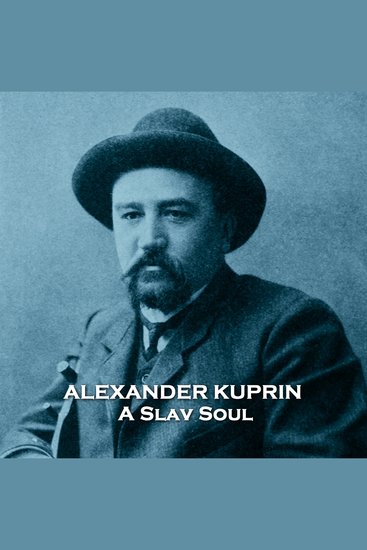
  • A Slav Soul - From their pens to your ears genius in every story - cover

    A Slav Soul - From their pens to...

    Alexander Kuprin

    • 0
    • 0
    • 0
    Alexander Kuprin was born in Narovchat, Penza in Russia on 7th September 1870. 
    At 3 his Father died and he and mother moved to Moscow. By 10 he was enrolled at the Second Moscow Military High School and there his interest in literature began. The Alexander Military Academy followed and two years later he was a sub-lieutenant and posted to an Infantry Regiment for a further four years. 
    Despite his duties he was a now a keen writer and published his first short story at this time. His military duties also garnered him experiences for his breakthrough work ‘The Duel’.  Leaving the military he left for Kiev to work for local newspapers.  He continued to publish both stories and novels and by 1901 he was in St Petersburg becoming part of a group that included Chekhov, Ivan Bunin, Maxim Gorky and Leonid Andreyev.  
    In the years that followed further controversial works and acclaim followed.  His comments on the regime meant he was also put under secret police surveillance.   
    As World War I erupted, Kuprin opened a military hospital but was then given command of an infantry company in Finland. He was soon discharged on grounds of ill health.  
    The October Revolution saw him praise Lenin, but he warned that the Bolsheviks threatened Russian culture and might cause further widespread suffering to the peasants.  As Civil War raged he took his family to Helsinki and then on to Paris. 
    Exile saw his talents decline further and his succumbing to alcoholism. He became lonely and withdrawn. The family's poverty increased his malaise.   
    In May 1937, the Kuprin’s returned to Moscow.  He now saw his work published but wrote almost nothing new.  In 1938 his health rapidly deteriorated.  Already suffering from a kidney problems and sclerosis, he had now developed cancer of the oesophagus.  
    Alexander Kuprin died on 25th August 1938.
    Show book