Join us on a literary world trip!
Add this book to bookshelf
Grey
Write a new comment Default profile 50px
Grey
Subscribe to read the full book or read the first pages for free!
All characters reduced
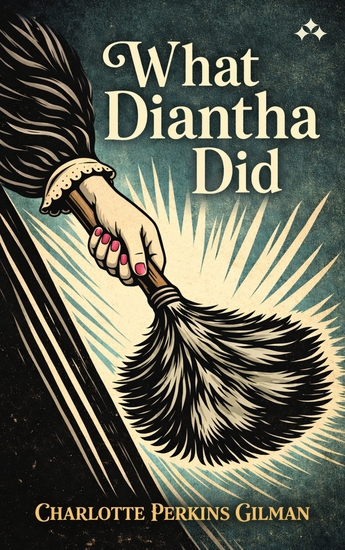
What Diantha Did - cover

What Diantha Did

Charlotte Perkins Gilman

Publisher: Aniara

  • 0
  • 0
  • 0

Summary

Charlotte Perkins Gilman's radical and witty 1910 novel What Diantha Did tells the story of a woman who refuses to settle for the life she is expected to live. Diantha Bell turns everyday domestic work into a way to earn her own living, building something new while quietly challenging the roles women were supposed to accept. It is a story about independence, self-respect, and the power of rethinking what women's work can be.

Gilman (1860–1935), best known for her groundbreaking short story "The Yellow Wallpaper", was one of the early American voices of feminism. In What Diantha Did, Gilman re-imagines the life of women, offering a forward-looking, proto-feminist story about women's agency, ambition, and potential.
Available since: 03/27/2026.
Print length: 201 pages.
Other books that might interest you

  • Sense and Sensibility - cover

    Sense and Sensibility

    Jane Austen

    • 0
    • 0
    • 0
    Within the insular world of the English countryside, among struggling clerical families, husband-hunting mothers and daughters, country fools and snobs, Jane Austen found the raw material she needed to write brilliant novels widely admired for their satiric wit, subtlety and perfection of style. Sense and Sensibility is one of the best of these. It is the story of two sisters, Elinor and Marianne Dashwood, who represent sense and sensibility, respectively. When both appear to be deserted by the young men they had intended to marry, the stage is set for a delicious comedy of manners that not only showcases Austen's perception, humor and incomparable prose, but offers a splendid glimpse of upper and middle-class English society of the early 18th century.
    Show book
  • A Little Joke - From their pens to your ears genius in every story - cover

    A Little Joke - From their pens...

    Anthony Hope

    • 0
    • 0
    • 0
    Sir Anthony Hope Hawkins was born on 9th February 1863 in Clapton, London.  
    He was educated at St John's School, Leatherhead, Marlborough College and Balliol College, Oxford.  Hope trained as a lawyer and barrister and was called to the Bar by the Middle Temple in 1887. Despite what was thought to be a promising legal career he had literary ambitions and wrote in his spare time. 
    His early works appeared in various periodicals of the day but for his first book ‘A Man of Mark’ (1890), with no publisher interested, he published with his own resources.  
    More novels and short stories followed, including the mildly successful ‘Mr Witt's Widow’ in 1892. Hope even found time to run as the Liberal candidate for Wycombe in the election that same year but was unsuccessful. 
    His first major literary success came with ‘The Dolly Dialogues’, a collection of previously published magazine pieces followed very quickly by his instant classic, ‘The Prisoner of Zenda’. He now gave up the vestiges of his legal career to pursue writing full-time. 
    Despite never again reaching the same pinnacle of success he was popular and wrote prolifically across novels, plays and of course, short stories though his writing output rapidly diminished after the war. 
    In 1918 he was knighted for his contribution to propaganda efforts during World War I.  
    His short stories are delicate, mannered and often surprising with their wit, humour and interplay of characters who say one thing and usually mean another.  He was very definitely a writer of escapist rather than serious fare but they are no less enjoyable for that. 
    Anthony Hope died of throat cancer on 8th July 1933 at his country home, Heath Farm at Walton-on-the-Hill in Surrey. He was 70.
    Show book
  • A Christmas Carol - In Prose Being a Ghost Story of Christmas - cover

    A Christmas Carol - In Prose...

    Charles Dickens

    • 0
    • 0
    • 0
    This audiobook is narrated by an AI Voice.  
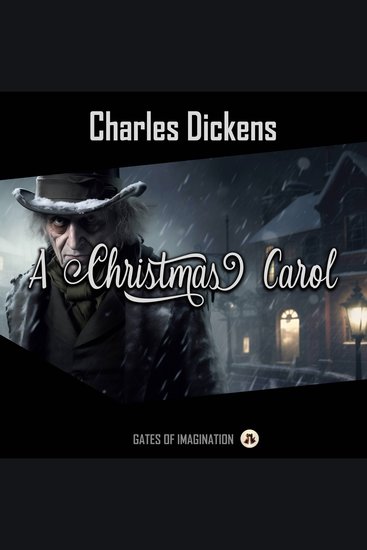
    Ebenezer Scrooge is heartless, stingy, and selfish. He spends his entire days in his office, buried in hefty accounting books. He avoids good deeds like the plague, is never pleasant, and despises Christmas. However, under the influence of extraordinary events that unfold on a certain Christmas Eve, his life undergoes a complete transformation... 
    A timeless tale of the magic of Christmas, of doing good, and of mutual kindness.
    Show book
  • Dickon the Devil - From their pens to your ears genius in every story - cover

    Dickon the Devil - From their...

    Sheridan Le Fanu

    • 0
    • 0
    • 0
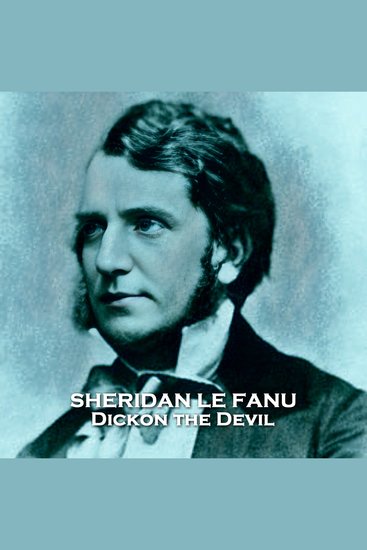
    Joseph Sheridan Le Fanu was born on 28th August 1814 in Dublin into a literary family with Huguenot, Irish and English roots.   
    For a time he and his siblings were tutored but Le Fanu would often immerse himself in the books of his father’s library. 
    In 1833 Le Fanu began his Law studies at Trinity College, Dublin and graduated in 1839. Although called to the bar he instead began a career in journalism.   
    He was also writing. His first fiction story ‘The Ghost and the Bonesetter’ was published in 1838.  In 1843 came the novella ‘Spalatro: From the Notes of Fra Giacomo’, a hero with a particular necrophiliac passion for an undead blood-drinking beauty, a forerunner to his later female vampire ‘Carmilla’.  
    In 1844 Le Fanu married Susanna Bennett with whom he had 4 children. The following year his first novel ‘The C'ock and Anchor’ was published. Works now flowed from his pen and with a rapid increase in family finances they moved, in 1851, to Merrion Square, Dublin, where he remained until his death.  
    In 1858 Susanna died and Le Fanu became reclusive. It was during this period that he produced some of his best work.  Working only by candlelight he wrote through the night, burnishing his reputation as a major figure of 19th Century supernaturalism with many classics including; ‘Green Tea’, ‘Mr Justice Harbottle’, and ‘In a Glass Darkly’.  
    Joseph Thomas Sheridan Le Fanu died in Merrion Square in his native Dublin on February 7th, 1873, at the age of 58.
    Show book
  • In the Court of the Dragon - cover

    In the Court of the Dragon

    Robert W. Chambers

    • 0
    • 0
    • 0
    🎬 Experience the atmospheric visual edition plus narrator intro and outro of this tale by searching 'Jonathan Dunne Horror' on YouTube.  
    Title: In the Court of the Dragon 
    Series Name: Timeless Terrors 
    Series Entry: 123 
    Author: Robert W. Chambers 
    Narrator: Jonathan Dunne 
    Original Publication: 1895 
    Public Domain: Yes 
    Description: 
    In the Court of the Dragon is a haunting tale of inexorable pursuit and metaphysical dread drawn from The King in Yellow. 
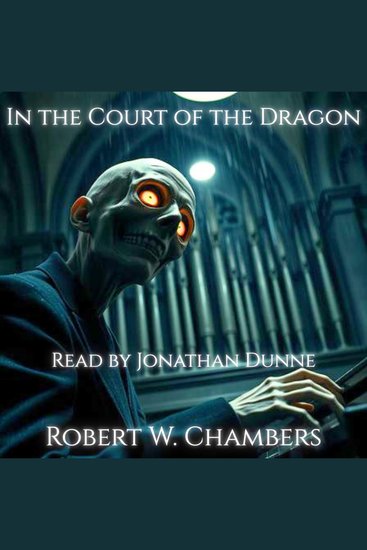
    The story follows a troubled church organist who becomes convinced that a sinister churchwarden — a gaunt, black-robed figure with an air of dreadful authority — is hunting him. What begins as a vague unease during a church service swells into a waking nightmare, as the man feels himself marked, summoned, and relentlessly pursued. The boundaries between sanctuary and snare, between sacred ritual and profane destiny, begin to collapse. 
    Chambers crafts a suffocating atmosphere of inevitability. The horror does not rush; it advances with ceremonial slowness, like the tolling of a funeral bell. The organ’s music becomes a summons, the church transforms into a labyrinth of judgment, and the looming figure of the Dragon embodies something far older and more terrible than mere madness. 
    Unlike tales that rely on overt violence, In the Court of the Dragon unsettles through fatalism and spiritual claustrophobia. The terror lies in being chosen — in sensing that one’s name has been entered into some dreadful ledger, and that the machinery of fate has already begun to turn. 
    Narrated by Amazon bestselling horror author Jonathan Dunne, this performance captures the story’s mounting paranoia, dreamlike unreality, and inexorable descent into cosmic judgment — bringing Chambers’ strange and lingering vision to chilling life.
    Show book
  • Lady Susan - cover

    Lady Susan

    Jane Austen

    • 0
    • 0
    • 0
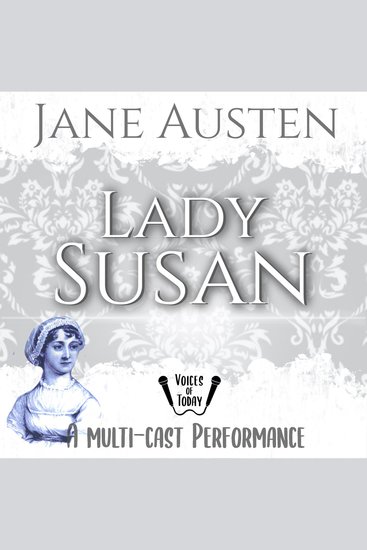
    This epistolary novel was probably written in 1794, but was not published until 1871. 
    Lady Susan Vernon, middle-aged and recently widowed, has retained her looks and appealing vivacity. She makes use of her bereavement and her loss of wealth by imposing herself on the hospitality of relatives, and by amusing herself in flirtation with the various men who fall under her spell. 
    Lady Susan has a daughter, Frederica, who is bashful and innocent—in stark contrast to her unfeeling and manipulative mother. Her mother is anxious to marry Frederica off to a spouse of appropriate wealth and social standing, and also, perhaps, to capture a new mate for herself.  
    The forty-one letters between the various parties in this tale of twisted courtship describe Lady Susan’s path to marital satisfaction for her daughter and herself.
    Show book