Join us on a literary world trip!
Add this book to bookshelf
Grey
Write a new comment Default profile 50px
Grey
Subscribe to read the full book or read the first pages for free!
All characters reduced
The Green Dwarf - cover

The Green Dwarf

Charlotte Brontë

Publisher: DigiCat

  • 0
  • 0
  • 0

Summary

In "The Green Dwarf," Charlotte Brontë explores the complexities of human relationships through a rich tapestry of fantasy and psychological depth. The narrative unfolds in a vividly imagined world where elements of the gothic mingle with sharp social commentary, revealing Brontë's skill in weaving intricate character arcs against an evocative backdrop. The story addresses themes of love, jealousy, and the supernatural, showcasing Brontë's ability to challenge societal norms while employing a lyrical prose style that reflects her command of the English language and her influence by the Romantic tradition. Charlotte Brontë, an influential figure of the Victorian literary canon, is known for her profound understanding of the human psyche and her exceptional narrative voice. Raised in the Yorkshire moors, her experiences of isolation and familial struggles undoubtedly shaped her literary endeavors. "The Green Dwarf," believed to be written during her youth at a time of intense personal and artistic exploration, captures her burgeoning talent and preoccupations, providing insight into her evolving perspectives on identity and social constraints. For readers seeking to immerse themselves in exquisite prose that combines fantastical elements with deep psychological insight, "The Green Dwarf" is an essential addition to the literary canon. By engaging with this early work, one gains a broader understanding of Brontë's development as an author and the thematic preoccupations that would later define her more mature works, making it a compelling read for both scholars and enthusiasts.
Available since: 05/25/2022.
Print length: 116 pages.

Other books that might interest you

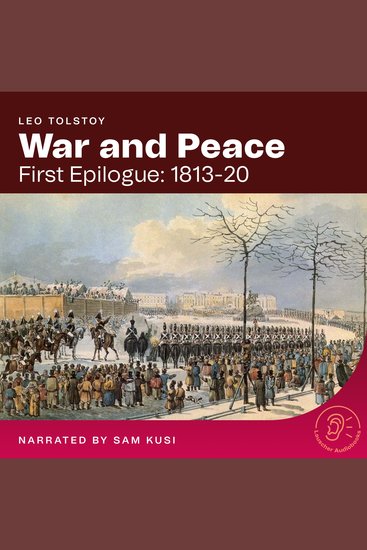
  • War and Peace (First Epilogue: 1813-20) - cover

    War and Peace (First Epilogue:...

    Leo Tolstoy

    • 0
    • 0
    • 0
    War and Peace is a literary work mixed with chapters on history and philosophy by the Russian author Leo Tolstoy. It was first published serially, then published in its entirety in 1869. It is regarded as one of Tolstoy's finest literary achievements and remains an internationally praised classic of world literature.
    First Epilogue: 1813-20: Seven years had passed. The storm-tossed sea of European history had subsided within its shores and seemed to have become calm. But the mysterious forces that move humanity (mysterious because the laws of their motion are unknown to us) continued to operate.
    Show book
  • Anthem - cover

    Anthem

    Ayn Rand

    • 0
    • 0
    • 0
    Anthem is a dystopian fiction novella by Russian-American writer Ayn Rand, written in 1937 and first published in 1938 in the United Kingdom. The story takes place at an unspecified future date when mankind has entered another Dark Age. Technological advancement is now carefully planned and the concept of individuality has been eliminated. A young man known as Equality 7-2521 rebels by doing secret scientific research. When his activity is discovered, he flees into the wilderness with the girl he loves. Together they plan to establish a new society based on rediscovered individualism.
    Show book
  • Black Beauty - cover

    Black Beauty

    Anna Sewell

    • 0
    • 0
    • 0
    "As a young horse, Black Beauty is well-loved and happy. But when his owner is forced to sell him, his life changes drastically. He has many new owners--some of them cruel and some of them kind. All he needs is someone to love him again...  Whether pulling an elegant carriage or a ramshackle cab, Black Beauty tries to live as best he can. This is his amazing story, told as only he could tell it."
    Show book
  • The Tempest - cover

    The Tempest

    William Shakespeare

    • 0
    • 0
    • 0
    "We are such stuff as dreams are made on."
    
    Transport yourself to a remote, enchanted island in William Shakespeare's final masterpiece, The Tempest. Prospero, the usurped Duke of Milan, has spent twelve years in exile, mastering the occult arts and commanding the spirits of the isle. When a magical storm brings his treacherous enemies to his shores, Prospero finally has the chance to settle the score.
    
    The play is a breathtaking blend of spectacle and soul-searching. Guided by the ethereal spirit Ariel and hindered by the earthy, resentful Caliban, Prospero orchestrates a series of illusions to confront his brother's betrayal. Yet, amid the schemes of revenge, a tender romance blossoms between his daughter, Miranda, and the shipwrecked Prince Ferdinand.
    
    A profound meditation on the nature of authority, the bond of family, and the power of mercy, The Tempest is often seen as Shakespeare's farewell to the stage. This definitive edition captures the play's unique atmospheric beauty and its timeless message of reconciliation.
    
    Surrender to the magic of the isle. Buy "The Tempest" today and experience the Bard's final, visionary work.
    Show book
  • The Adventures of Tom Sawyer - cover

    The Adventures of Tom Sawyer

    Mark Twain

    • 0
    • 0
    • 0
    Published in 1876, "The Adventures of Tom Sawyer" is an American classic written by Mark Twain. The novel focuses on the youthful escapades of Tom Sawyer, a mischievous and imaginative boy who lives in the fictional town of St. Petersburg, Missouri. Along with his friends, particularly Huckleberry Finn, Tom embarks on a series of adventures ranging from treasure hunting to fighting crime. The book explores themes of childhood, friendship, and moral development and offers a nostalgic look at life along the Mississippi River during the 19th century.
    Show book
  • The Old Bell-Ringer - From their pens to your ears genius in every story - cover

    The Old Bell-Ringer - From their...

    Vladimir Korolenko

    • 0
    • 0
    • 0
    Vladimir Galaktionovich Korolenko was born in Zhytomyr, Ukraine, then part of the Russian Empire on 27th July 1853. 
    His father died when he was 13 and life was then often struck with bouts of poverty, which resulted in his education being somewhat erratic.   A spell in exile at 23 was followed by another as the politics of the times opposed his volatile but heart-felt passions. 
    Writing was also coming to the fore and in 1879 his debut short story telling of a young Narodnik searching for social and spiritual identity, was published. 
    In 1881, Korolenko refused to swear allegiance to the new Russian Tsar and was again exiled, this time much farther afield.  He spent the next three years doing manual work, but took time to study local customs and history.  These impressions in exile provided rich material for his writings. 
    In 1885 he was allowed to settle in Nizhny, where again he repeatedly questioned the authorities.  That same year ‘Makar's Dream’ established his literary reputation and was part of his first collection ‘Sketches and Stories’, the following year. 
    In the early 1890’s when famine struck Central Russia, he went to work on relief missions, collecting donations, supervising the delivery and distribution of food, opening 45 free canteens, all this while writing the graphic reports that would later be published as ‘In the Year of Famine’ in 1893. 
    By 1896 despite some psychological disorders, he was well regarded amongst Russian writers and was even a member of the Russian Academy of Sciences.  Throughout his writing career Korolenko was a staunch advocate of human rights, putting that sacred activity above what he called his 'part-time-writing'. 
    In the Revolutionary year of 1905, under his editorship, Russkoye Bogatstvo published the Manifest by the Petersburg Soviet of the Workers' deputies. Korolenko was now repeatedly harassed by the authorities, had his flat raided many times and materials confiscated. 
    As a lifetime opponent of Tsarism, he guardedly welcomed the Revolution of 1917.  Once the nature of Bolshevism was established, he soon started to criticize it. During the Russian Civil War that ensued, he condemned both the Red Terror and the White Terror.  
    Despite suffering from a progressive heart disorder, he collected food packages for children in famine-stricken Moscow and Petrograd as well as organised orphanages and shelters for the homeless.  
    Vladimir Korolenko died in Poltava, Ukraine, of the complications of pneumonia on 25th December 1921.  He was 68.
    Show book