Join us on a literary world trip!
Add this book to bookshelf
Grey
Write a new comment Default profile 50px
Grey
Subscribe to read the full book or read the first pages for free!
All characters reduced
Shirley - A Sweeping Novel of Love Industry and Social Change in 19th-Century England - cover

Shirley - A Sweeping Novel of Love Industry and Social Change in 19th-Century England

Charlotte Brontë, Zenith Maple Leaf Press

Publisher: Zenith Maple Leaf Press

  • 0
  • 0
  • 0

Summary

In a time of unrest, love and ambition are tested against the forces of change.
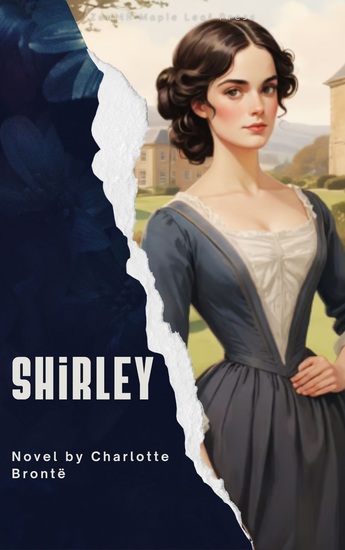
Set during the turbulent years of the Industrial Revolution and the Luddite uprisings of early 19th-century England, Shirley intertwines romance, social commentary, and vivid historical detail.

At the center of the story is Shirley Keeldar, an independent and wealthy young woman who challenges the era's expectations for women, and Caroline Helstone, a gentle but determined clergyman's niece. Around them swirl factory disputes, economic hardship, and questions of gender, class, and self-determination.

Brontë's second published novel moves beyond the intimate focus of Jane Eyre to present a broader social canvas, without losing her gift for compelling characters and emotional depth.

"A rich blend of romance and social history, with one of literature's earliest strong, independent heroines."
– The Guardian

"Charlotte Brontë's most political novel—sharp, intelligent, and deeply human."
– The New York Times

✅ Why Readers Love It:
🏭 Explores industrial unrest, women's roles, and social justice

💕 Features intertwined romances against a backdrop of historical upheaval

📚 A compelling portrait of early feminist ideals

🎯 Click 'Buy Now' to step into Charlotte Brontë's vivid portrayal of love, industry, and the fight for independence.
Available since: 08/08/2025.
Print length: 265 pages.

Other books that might interest you

  • The Mark on the Wall - cover

    The Mark on the Wall

    Anonymous

    • 0
    • 0
    • 0
    What is the mark on the wall? A shadow? A nail? Or something deeper?
    
    The Mark on the Wall is one of Virginia Woolf's most celebrated early short stories, a perfect, brief plunge into the Modernist style she would perfect in novels like Mrs. Dalloway and To the Lighthouse.
    
    From a comfortable chair by the fire, the narrator's eye catches a mysterious dark mark. What follows is a mesmerizing journey of the mind, a stream-of-consciousness exploration that moves fluidly from speculation about the mark's origin to meditations on history, gender roles, life's impermanence, and the nature of thought itself.
    
    This story is a masterclass in:
    
    Psychological Depth: The inner world of the narrator becomes the landscape of the story.
    
    Philosophical Inquiry: Questioning the rigid structures of society and logic.
    
    Modernist Innovation: A concise, groundbreaking example of breaking traditional narrative forms.
    
    If you appreciate literary fiction, psychological depth, and the intricate beauty of language, this short story is an essential read from one of the 20th century's greatest writers.
    
    Discover the mystery that lies beyond the surface. Click "Buy Now" and begin your journey into the mind.
    Show book
  • Gooseberries - cover

    Gooseberries

    Anton Chekhov

    • 0
    • 0
    • 0
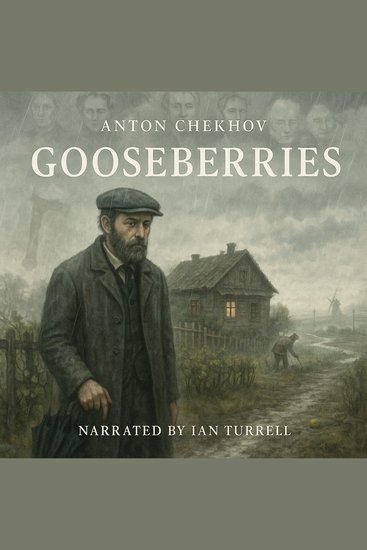
    In Anton Chekhov’s haunting short story Gooseberries, a rain-soaked evening in the Russian countryside becomes the backdrop for a quietly devastating tale of comfort, delusion, and moral awakening. As Ivan Ivanovitch and his companion seek shelter in a landowner’s estate, a simple conversation unfolds into a powerful monologue about happiness, privilege, and the unseen suffering that underpins contentment. 
    Chekhov masterfully juxtaposes the rustic idyll of country life with a piercing reflection on the ethics of retreating from the world’s troubles. With its melancholic beauty, quiet irony, and philosophical weight, Gooseberries is a profound meditation on the illusion of peace and the price of personal fulfillment. Narrated with eloquent sensitivity by Ian Turrell, this classic resonates more deeply than ever in an age still divided between comfort and conscience.
    Show book
  • Mysteries Of The Lost Continent Atlantis - cover

    Mysteries Of The Lost Continent...

    William Elliot

    • 0
    • 0
    • 0
    This classic work, written by Theosophist, W. Scott-Elliot, this book goes into detail about the lost city of Atlantis. The information came from C. W. Leadbeater, who said he received his information from astral clairvoyance. Scott-Elliot provides info on the people of Atlantis, such as their religion, races, different periods money, education, and much more.Atlantis, is a legendary island in the Atlantic Ocean, lying west of the Strait of Gibraltar. The principal sources for the legend are two of Plato’s dialogues, Timaeus and Critias. In the former, Plato describes how Egyptian priests, in conversation with the Athenian lawgiver Solon, described Atlantis as an island larger than Asia Minor and Libya combined and situated just beyond the Pillars of Hercules (the Strait of Gibraltar). About 9,000 years before the birth of Solon, the priests said, Atlantis was a rich island whose powerful princes conquered many of the lands of the Mediterranean until they were finally defeated by the Athenians and the latter’s allies. The Atlantians eventually became wicked and impious, and their island was swallowed up by the sea as a result of earthquakes. In the Critias, Plato supplied a history of the ideal commonwealth of the Atlantians.Medieval European writers who received the tale from Arab geographers believed the stories to be true, and later writers tried to identify it with an actual country. After the Renaissance, for example, attempts were made to identify Atlantis with America, Scandinavia, and the Canary Islands. The story of Atlantis, if Plato did not invent it, may in fact reflect ancient Egyptian records of a volcanic eruption on the island of Thera about 1500 BCE. This eruption, one of the most stupendous of historical times, was accompanied by a series of earthquakes and tsunamis that shattered civilization on Crete, thereby perhaps giving rise to the legend of Atlantis.
    Show book
  • The Great Gatsby - cover

    The Great Gatsby

    F. Scott Fitzgerald

    • 0
    • 0
    • 0
    The Great Gatsby is a triumph of descriptive prose, and has entered into the annuls of fame of both American literature as well as Americana. The story transcends time, and while set in the Roaring Twenties, describes the human psyche - its needs, desires, obsessions - in both detail and depth. A must read for anyone wanting to gain a deeper understanding into the mindset of that time, as well as perhaps modern-day America.
    Show book
  • Diary Horror - The 'Found Footage' of the Written Word - cover

    Diary Horror - The 'Found...

    Robert Bloch, Guy de Maupassant,...

    • 0
    • 0
    • 0
    Fifteen stories told through the recovered pages of diaries/journals. 
    Contents: 
    What Killed Granded? by Ian Gordon (HorrorBabble, 2020) 
    An investigation told through a series of audio logs. 
    The Diary of Alonzo Typer by H. P. Lovecraft (Weird Tales, 1938) 
    An occult researcher disappears without a trace. 
    The Horror in the Lighthouse by E. A. Poe and R. Bloch (Fantastic, 1953) 
    Bloch completes Poe's famous fragment. 
    The Diary of Philip Westerly by Paul Compton (WT, 1936) 
    Unsettling incidents involving a mirror. 
    Notebook Found in a Deserted House by Robert Bloch (WT, 1951) 
    A boy hides from 'them ones'. 
    The Hall Bedroom by M. E. W. Freeman (Short Story Classics, 1905) 
    A peculiar room in a boarding house. 
    The Diary of a Madman by Guy de Maupassant (Le Gaulois, 1885) 
    The thoughts of an undiscovered murderer. 
    The Polar Vortex by Malcolm Ferguson (WT, 1946) 
    A terrible experiment. 
    The Impossible Adventure by H. T. W. Bousfield (WT, 1940) 
    A curious set of notes. 
    The Bed of Shadows by Fred R. Farrow, Jr. (WT, 1929) 
    What lurked above the man in the bed? 
    The Way Home by P. F. Stern (WT, 1935) 
    A man suffering from amnesia. 
    The Floor Above by M. Humphreys (WT, 1923) 
    A man's troubling stay with an old friend. 
    The Horla by Guy de Maupassant (1887) 
    A man is haunted by an invisible presence. 
    The Hollow Moon by Everil Worrell (WT, 1939) 
    A vampire and strange icebergs. 
    The Green Meadow by H. P. Lovecraft (The Vagrant, 1927) 
    A notebook found in a meteorite.
    Show book
  • A Princess's Vengeance - From their pens to your ears genius in every story - cover

    A Princess's Vengeance - From...

    Catherine Louisa Pirkis

    • 0
    • 0
    • 0
    The bookshelves of British literature are incredible collections that have gathered together centuries of very talented authors.  From these Isles their fame spread and whilst among their number many are now forgotten or neglected their talents endure.  Among them is Catherine Louisa Pirkis.
    Show book