Join us on a literary world trip!
Add this book to bookshelf
Grey
Write a new comment Default profile 50px
Grey
Subscribe to read the full book or read the first pages for free!
All characters reduced
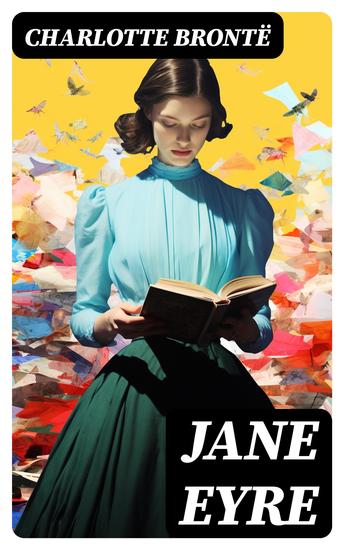
Jane Eyre - cover

Jane Eyre

Charlotte Brontë

Publisher: DigiCat

  • 0
  • 0
  • 0

Summary

In "Jane Eyre," Charlotte Brontë presents a richly textured narrative that intertwines themes of love, morality, and social critique within the framework of a Gothic romance. The novel follows the life of its eponymous heroine, Jane, as she navigates the oppressive structures of Victorian society, seeking autonomy and belonging. Brontë's use of first-person narration immerses readers in Jane's inner turmoil, while her lyrical prose captures the stark contrasts between passion and restraint, social class and personal agency. As a pioneering work in feminist literature, "Jane Eyre" challenges normative gender roles and advocates for emotional and intellectual independence. Charlotte Brontë, one of the renowned Brontë sisters, drew upon her own experiences of isolation and societal restrictions in crafting "Jane Eyre." Born in 1816, Brontë faced the limitations imposed on women of her time, which informed her creations. The loss of family members and the impact of her upbringing in a clergyman's household added depth to her exploration of the themes of love, identity, and resilience, making Jane's journey profoundly relatable and universal. "Jane Eyre" is a timeless classic that continues to resonate with contemporary readers. Its profound insights into human nature, combined with Brontë's compelling storytelling, make it a must-read for anyone interested in literature that scrutinizes personal agency amidst societal constraints. This novel is not merely a tale of romance; it is an exploration of the struggle for self-determination and integrity, making it essential for both literary scholars and casual readers alike.
Available since: 10/11/2022.
Print length: 484 pages.

Other books that might interest you

  • Dagon (Unabridged) - cover

    Dagon (Unabridged)

    H. P. Lovecraft

    • 0
    • 0
    • 0
    "Dagon" is the second story of the writer H.P.Lovecraft, written in 1917 and published ,for the first time, in 1919. The work takes its title from the mythological God Dagon, and tells a disturbing story, happened years before to a man with the obsession of suicide. Before throwing himself from the window of his attic, this man writes some notes related to his mental state. Then, he began to recall an old story that happened in the years of the First World War: suddenly, he finds himself a prisoner of a German ship in the Pacific Ocean. After only five days, the protagonist manages to escape with a raft. Wandering for days, adrift in the sea, one afternoon he finds himself stranded on a disquieting and apparently deserted island. Immediately he notices that in the mud, a lot of rotting fish are stranded...
    Show book
  • Old Mortality Volume 2 - cover

    Old Mortality Volume 2

    Walter Scott

    • 0
    • 0
    • 0
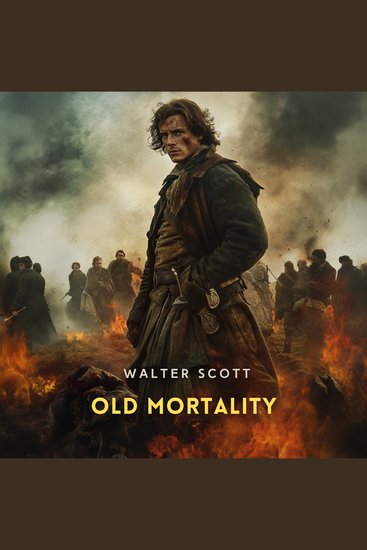
    "Old Mortality" by Walter Scott is a historical novel set in 17th-century Scotland. The story revolves around Henry Morton, a young man caught in the conflicts between Royalists and Covenanters. With the fanatical Old Mortality, he journeys through a politically charged landscape marked by religious strife and personal sacrifices. Scott weaves a tale of love, loyalty, and the tumultuous events of the Bishops' Wars. Against a backdrop of historical events, the characters confront moral dilemmas and navigate the complex web of politics and religion. "Old Mortality" stands as a powerful exploration of the human cost of ideological battles in a turbulent period.
    Show book
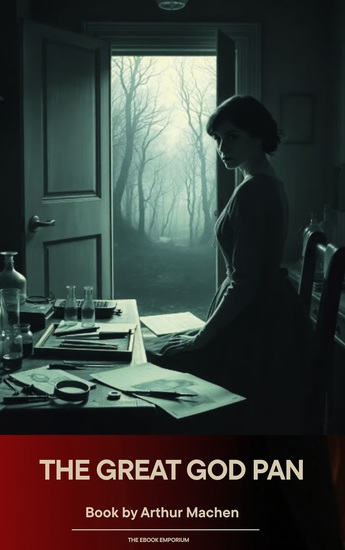
  • The Great God Pan - cover

    The Great God Pan

    ARTHUR MACHEN

    • 0
    • 0
    • 0
    "I saw the Great God Pan."
    
    In a remote house in the Welsh hills, a scientist named Dr. Raymond performs a radical brain surgery on a young woman named Mary. His goal: to open her mind's eye to the spiritual world—to see "the Great God Pan." The experiment succeeds, but at a catastrophic cost. Years later, a series of inexplicable suicides among the London elite begins to trace back to a mysterious, radiant, and terrifying woman named Helen Vaughan.
    
    The Dawn of Cosmic Horror: Long before Lovecraft, Arthur Machen explored the idea that our reality is merely a veil covering a vast, indifferent, and monstrous truth. The Great God Pan is a masterpiece of atmosphere and suggestion, utilizing a fragmented narrative of letters and chance encounters to build a sense of impending doom. It is a story where the ancient, pagan past bleeds into the sophisticated drawing rooms of Victorian London.
    
    A Landmark of Weird Fiction: This novella shocked Victorian audiences with its themes of forbidden knowledge and biological horror. Its influence can be felt in everything from The Exorcist to modern folk horror. Machen's prose is lush, decadent, and deeply unsettling, making it an essential read for anyone who believes that the most terrifying monsters are the ones we cannot fully perceive.
    
    Some secrets are meant to remain hidden. Purchase "The Great God Pan" today and experience the birth of modern horror.
    Show book
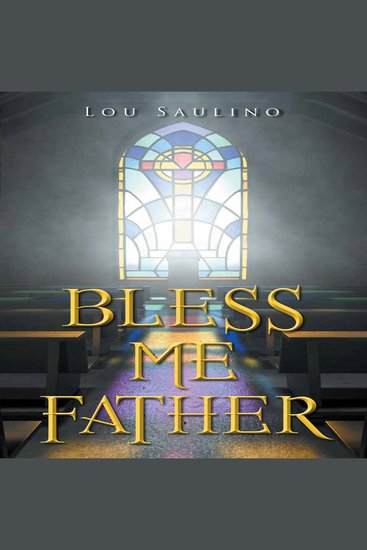
  • Bless Me Father - cover

    Bless Me Father

    Louis Saulino

    • 0
    • 0
    • 0
    “A man of God debates his next course of action when a penitent’s confession reveals startling information regarding a woman’s unsolved murder in this quiet mystery. A Lou Saulino solid crime story sharing the spotlight with a priest’s family and nagging doubts.” - Kirkus Book review 
    BLESS ME FATHER has captured the curiosity and evoked enthusiasm of law enforcement professionals and former Catholic priest. “Bless Me Father is a departure from Lou Saulino’s previous books about growing up with the love of sports. His first crime story hits it out of the ballpark….a great read and definitely a page-turner.” - John E. Sullivan Det. NYPD Ret. 
    “I liked this book. It is a tough, smart, and compassionate story. There are memorable characters. I know of no one who could have written a book like this. Lou has the real-life experience and the heart to give all of us the life-changing thoughts.” - P. Olsinski, Teacher, Counselor, Student of People 
    “Family, families---intertwined by: love and protection of each other, right or wrong; sports, sorrow and guilt, Bless Me Father entertains with a little sports history; but also is thought-provoking ---what, how do you honor faith, a memory and vows to ‘family’. An enjoyable weekend read.” - Cecile T. Woodward, Assistant Police Chief, Phoenix PD Ret
    Show book
  • What happened to the thistle - cover

    What happened to the thistle

    H. C. Andersen

    • 0
    • 0
    • 0
    Short story by H. Ch. Andersen about the way plants are likely to perceive the world and their fate.
    Show book
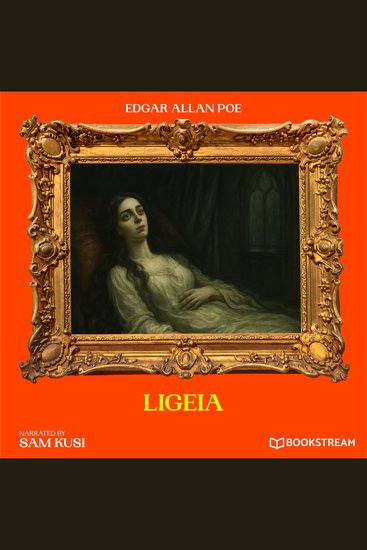
  • Ligeia - cover

    Ligeia

    Edgar Allan Poe

    • 0
    • 0
    • 0
    "Ligeia" is an early short story by American writer Edgar Allan Poe, first published in 1838. The story follows an unnamed narrator and his wife Ligeia, a beautiful and intelligent raven-haired woman. She falls ill, composes "The Conqueror Worm", and quotes lines attributed to Joseph Glanvill (which suggest that life is sustainable only through willpower) shortly before dying.
    After her death, the narrator marries the Lady Rowena. Rowena becomes ill, and she dies as well. The distraught narrator stays with her body overnight and watches as Rowena slowly comes back from the dead – though she has transformed into Ligeia. The story may be the narrator's opium-induced hallucination, and there is debate whether the story was a satire. After the story's first publication in The American Museum, it was heavily revised and reprinted throughout Poe's life.
    The story is told by an unnamed narrator who describes the qualities of Ligeia: a beautiful, passionate and intellectual woman, raven-haired and dark-eyed. He thinks he remembers meeting her "in some large, old decaying city near the Rhine." He is unable to recall anything about the history of Ligeia, including her family's name, but remembers her beautiful appearance.
    Show book