

Join us on a literary world trip!
Add this book to bookshelf
Grey
Write a new comment Default profile 50px
Grey
Subscribe to read the full book or read the first pages for free!
All characters reduced
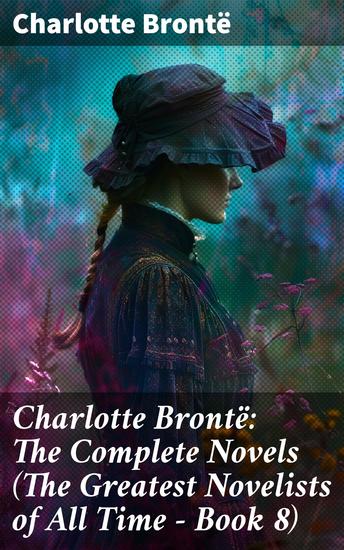
Charlotte Brontë: The Complete Novels (The Greatest Novelists of All Time – Book 8) - Exploring the Gothic Elements and Complex Characters of a Literary Pioneer - cover

Charlotte Brontë: The Complete Novels (The Greatest Novelists of All Time – Book 8) - Exploring the Gothic Elements and Complex Characters of a Literary Pioneer

Charlotte Brontë

Publisher: Good Press

  • 0
  • 0
  • 0

Summary

In "Charlotte Bront√´: The Complete Novels," readers are introduced to the comprehensive literary oeuvre of one of the foremost novelists of the 19th century. This collection encapsulates Bront√´'Äôs exquisite narrative style characterized by its emotional intensity, psychological depth, and exploration of complex social issues, particularly the struggles of women in a patriarchal society. Through such seminal works as "Jane Eyre" and "Shirley," Bront√´ dispenses with conventions to depict the inner lives of her characters, offering insights into their desires, moral dilemmas, and existential struggles, becoming a forerunner of feminist literature. Charlotte Bront√´, born in 1816 in Yorkshire, faced an array of personal and societal challenges that profoundly shaped her literary themes. The loss of her siblings and the restrictive roles assigned to women during her time fostered her unique perspective on loneliness, love, and individuality. These experiences undoubtedly influenced her writings, allowing her to craft stories that amplify the voices of female characters who grapple with societal constraints and internal conflicts. This anthology is essential for anyone seeking to understand the evolution of the novel as a literary form, as well as the rich complexities of Bront√´'Äôs characters and themes. It serves as both an introduction for new readers and a comprehensive resource for scholars, making it a must-read for those interested in the fundamental shifts in literary history.
Available since: 12/24/2023.
Print length: 1837 pages.

Other books that might interest you

  • Punchkin - cover

    Punchkin

    Mary Frere

    • 0
    • 1
    • 0
    Mary Eliza Isabella Frere (1845–1911) was an English author of works regarding India. She is most famous for her beautiful retellings of Indian fairy tales.  
    "Punchkin" is a traditional fairy tale about a Rajah with seven daughters. When he remarries, the princesses' stepmother is determined to do away with the girls and make her own daughter the heir to the throne. A series of adventures and trials follows which leads to the overthrow of an evil magician.
    Show book
  • The Montezuma Emerald - cover

    The Montezuma Emerald

    Rodrigues Ottolengui

    • 0
    • 0
    • 0
    Rodrigues Ottolengui was an American writer and pioneering dentist born in Charleston, SC, who lived most of his life in New York City. Ottolengui was one of the first dentists to use X-rays and was a specialist in orthodontics and root canal therapy. In the 1890s, Ottolengui published four novels and a collection of detective short stories, including The Montezuma Emerald. 
    A seasoned stage actor, Raymond Stottlemyre was born and raised in Pelican Rapids, MN. He has worked in local radio, narrated audio programs, and has performed in hundreds of plays over the decades.
    Show book
  • Counterparts (Unabridged) - cover

    Counterparts (Unabridged)

    James Joyce

    • 0
    • 0
    • 0
    James Augustine Aloysius Joyce (2 February 1882 - 13 January 1941) was an Irish novelist, short story writer, poet and literary critic. He contributed to the modernist avant-garde movement and is regarded as one of the most influential and important writers of the 20th century.
    COUNTERPARTS: The bell rang furiously and, when Miss Parker went to the tube, a furious voice called out in a piercing North of Ireland accent: "Send Farrington here!" Miss Parker returned to her machine, saying to a man who was writing at a desk...
    Show book
  • Les Misérables: Volume 3: Marius - Book 3: The Grandfather and the Grandson (Unabridged) - cover

    Les Misérables: Volume 3: Marius...

    Victor Hugo

    • 0
    • 0
    • 0
    Victor-Marie Hugo (26 February 1802 - 22 May 1885) was a French poet, novelist, essayist, playwright, and dramatist of the Romantic movement. During a literary career that spanned more than sixty years, he wrote abundantly in an exceptional variety of genres: lyrics, satires, epics, philosophical poems, epigrams, novels, history, critical essays, political speeches, funeral orations, diaries, and letters public and private, as well as dramas in verse and prose.
    BOOK 3: THE GRANDFATHER AND THE GRANDSON: When M. Gillenormand lived in the Rue Servandoni, he had frequented many very good and very aristocratic salons. Although a bourgeois, M. Gillenormand was received in society. As he had a double measure of wit, in the first place, that which was born with him, and secondly, that which was attributed to him, he was even sought out and made much of.
    Show book
  • Hills and the Sea - cover

    Hills and the Sea

    Hilaire Belloc

    • 0
    • 0
    • 0
    In Hills and the Sea , Hilaire Belloc offers a lyrical celebration of the natural world, blending travel writing, philosophy, and personal reflection. With vivid prose and deep emotional resonance, he explores the spiritual and intellectual significance of landscapes—particularly the rolling hills and vast sea that symbolize freedom, permanence, and the divine order of creation. Drawing from his walks across southern England and reflections on the English Channel, Belloc meditates on history, faith, and man’s connection to place. Rooted in his Catholic worldview and love for tradition, the essays convey a profound sense of wonder and reverence for the beauty and meaning embedded in the natural world. A timeless work for lovers of nature, travel, and thoughtful contemplation.
    Show book
  • Morphine - This story is perhaps the greatest depiction and description in literature of the human psyche going through addiction - cover

    Morphine - This story is perhaps...

    Mikhail Bulgakov

    • 0
    • 0
    • 0
    Mikhail Bulgakov was born on 15th May 1891 in Kiev, in the Kiev Governorate of the Russian Empire, into a Russian family.  He was one of seven children. 
     
    In 1901, Bulgakov attended the First Kiev Gymnasium, and developed a keen interest in Russian and European literature, theatre and opera.  After the death of his father in 1907, his mother assumed responsibility for his education.  After graduating Bulgakov entered the Medical Faculty of Kiev University and then took up a post as physician at the Kiev Military Hospital. 
     
    At the outbreak of the First World War, he volunteered as a doctor and was sent directly to the front, where he was badly injured at least twice.  To suppress chronic pain, especially in the abdomen, he injected morphine.  It took years to wean himself off. 
     
    He now took up medical posts in various towns and in 1919, he was mobilised by the Ukrainian People's Army and assigned to the Northern Caucasus.  There, he became seriously ill with typhus and barely survived.  
     
    After this illness, Bulgakov abandoned his medicine to pursue writing.  He moved to Vladikavkaz and had two plays staged there with great success.  He wrote too for various newspapers and other outlets, but his critics were many.  And growing. 
     
    When a Moscow's theatre director severely criticised Bulgakov, Stalin personally protected him, saying that a writer of Bulgakov's quality was above ‘party words’ like ‘left’ and ‘right’.   Indeed, it is said that Stalin watched ‘The Days of the Turbins’ at least 15 times. 
     
    It was not to last and by March 1929, Bulgakov's career was ruined when Government censorship stopped publication of any of his work and plays. 
     
    In despair, Bulgakov wrote a personal letter to Stalin.  He requested permission to emigrate.  He received a phone call from the Soviet leader, who asked the writer whether he really desired to leave. He replied that a Russian writer cannot live outside of his homeland.  Stalin thus gave him permission to continue working. In May 1930, he re-joined the theater, as stage director's assistant.  
     
    During the last stressful decade of his life, and in poor health, Bulgakov continued to work on ‘The Master and Margarita’, wrote plays, critical works, stories, and continued translations and dramatisations of novels.  Many of them were not published, others were derided by critics.  
     
    On 10th March 1940, Mikhail Afanasyevich Bulgakov died from nephrosclerosis.  He was 48. 
     
    ‘The Master and Margarita’ was not published in any form until the mid-1960’s 
     
    In this story Bulgakov relates the terrifying and hellish descent into addiction that seems so avoidable and yet so chillingly not.
    Show book
