Join us on a literary world trip!
Add this book to bookshelf
Grey
Write a new comment Default profile 50px
Grey
Subscribe to read the full book or read the first pages for free!
All characters reduced
Foul Play - cover

Foul Play

Charles Reade, Dion Boucicault

Publisher: DigiCat

  • 0
  • 0
  • 0

Summary

Foul Play is a compelling anthology that delves into the multifaceted world of intrigue and deception. Through a range of literary styles, the collection captures a spectrum of themes, from moral ambiguity to the corrupting power of greed, presented in a dramatic narrative form. Readers will find themselves entranced by the rich tapestry of plots woven throughout, each story providing a unique lens through which the darker sides of human nature are explored, making this anthology a significant contribution to the theatrical and literary landscapes of its era. The anthology features the works of notable authors Charles Reade and Dion Boucicault, both celebrated for their innovative theatrical contributions. Their backgrounds in dramatics and storytelling significantly influence the anthology's tone, as they expertly craft tales that reflect societal issues and the intricacies of human emotion. Aligning with the literary movements of the 19th century that sought to challenge the status quo and explore ethical dilemmas, Reade and Boucicault's collective voices enrich the theme of Foul Play, offering readers insights into the historical and cultural contexts of their time. For readers seeking a diverse collection of perspectives that provoke thought and reflection, Foul Play serves as an essential volume. It offers a window into the complexities of action and consequence, with each story fostering a dialogue that transcends its pages. This anthology is not only educational in its breadth of insight but also enhances the reader's understanding of narrative structure and thematic depth, making it a worthwhile addition to any literary collection.
Available since: 07/31/2022.
Print length: 372 pages.

Other books that might interest you

  • The Presidents of World War II - cover

    The Presidents of World War II

    Editors Charles River

    • 0
    • 0
    • 0
    Franklin Delano Roosevelt might be America’s greatest 20th century president, but there’s no question that he was the most unique. A well-connected relative of Theodore Roosevelt, FDR was groomed for greatness until he was struck down by polio. Nevertheless, he persevered, rising through New York politics to reach the White House just as the country faced its greatest challenge since the Civil War, beginning his presidency with one of the most iconic lines ever spoken during an inaugural address. For over a decade, President Roosevelt threw everything he had at the Great Depression, and then threw everything the country had at the Axis powers during World War II. Ultimately, he succumbed to illness in the middle of his fourth term, just before the Allies won the war.  
    	Among America’s presidents, Harry Truman’s presidency produced some of the nation’s most crucial decisions and left one of the nation’s most unique legacies. When President Franklin Roosevelt died in April 1945, Vice President Truman, somewhat unprepared for the Presidency, now had to fill some of the biggest shoes in American history. Incredibly, Truman had not been informed of the country’s secret attempt to build atomic bombs. 
    	The new president had to usher America through victory in Europe in his first month and decide to drop atomic bombs on Hiroshima and Nagasaki a few months later, but the end of World War II produced only the first of many consequential decisions Truman would face during his nearly 8 years in office. As president, Truman would lay the groundwork for the next 50 years of American foreign policy, as the architect of Cold War containment, the man who signed off on the Marshall Plan, and the commander-in-chief during much of the Korean War.
    Show book
  • In the Fourth Dimension - From their pens to your ears genius in every story - cover

    In the Fourth Dimension - From...

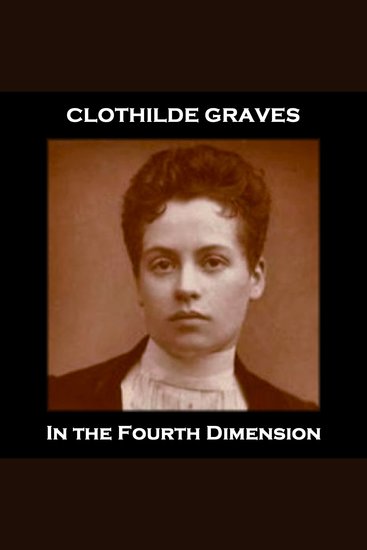
    Clotilde Graves

    • 0
    • 0
    • 0
    Clotilde Augusta Inez Mary Graves was born on the 3rd June 1863 at Buttevant Castle, Co. Cork, to parents with military backgrounds. 
    At age nine, the family moved to Southsea in England for yet another military posting.  Her father’s postings gave her valuable experiences that would be put to good use in later years in some of her literary works. 
    She was educated at a Catholic convent in Lourdes before returning to London in 1884 to study art in Bloomsbury.  She worked part-time at the British Museum and the Royal Female School of Art and generated further income by drawing little pen-and-ink grotesques for the comic papers.  
    A few years later a chance meeting found her writing extra lyrics for a pantomime version of Puss in Boots.  She followed up with several financially successful plays, both in London and New York, and gained a measure of notoriety in one with the comparison of marriage and prostitution.   
    Despite her dramatic success she published her first novel in 1911 under the pseudonym of Richard Dehan which she continued to use for later works.  As well as novels and plays she published collections of short stories which glow with talent and invention. 
    She was an unusual figure in London society, wearing her hair short, taking on a masculine manner and cut of clothing, and smoking cigarettes in public when such traits were considered eccentric at best.  Add to this her admired collection of Chinese and Japanese trophies, her enthusiasm for fly-fishing and her riding of a tricycle and you have a perfect image of this fascinating writer. 
    Clotilde Graves died at the convent of Our Lady of Lourdes at Hatch End in Middlesex, on the 3rd December 1932.  She was 69.
    Show book
  • The Shakespeare Conundrum - Examining the True Identity of the Literary Genius - cover

    The Shakespeare Conundrum -...

    John Harpoon

    • 0
    • 0
    • 0
    The question of who wrote the works attributed to William Shakespeare has intrigued scholars, historians, and literary enthusiasts for centuries. Despite being one of the most celebrated figures in the world of literature, Shakespeare’s true identity remains a subject of mystery. The sheer volume of his works, their profound depth, and the complexity of their themes have led many to wonder whether the man from Stratford-upon-Avon was truly the author of the plays and sonnets that bear his name. This uncertainty has given rise to one of the most enduring and controversial debates in literary history: the Shakespeare authorship question. 
      
    The core of this mystery lies in the limited biographical information available about Shakespeare’s life. Born in 1564 in Stratford-upon-Avon, Shakespeare’s early years remain largely undocumented, with no personal manuscripts or letters bearing his signature. The surviving records of his life mainly consist of legal documents, such as his marriage license, business transactions, and his will. While these historical artifacts confirm his existence and some of his professional endeavors, they provide little insight into his intellectual and literary development. For a figure of his stature, this absence of personal evidence is startling, leading some to question whether the “Stratford man” could have truly written the works attributed to him. 
      
    In the absence of definitive evidence, a number of alternative theories have emerged, suggesting that another writer, or group of writers, may have been responsible for Shakespeare’s remarkable body of work. These theories have ranged from the claim that the works were penned by an aristocrat such as Francis Bacon, to the suggestion that the true author was the playwright Christopher Marlowe, whose death in 1593 has been disputed by some.
    Show book
  • Beyond Babylon Resilience in Ruins: Tales of Art Adventure and Redemption in Slab City California - cover

    Beyond Babylon Resilience in...

    Jason Jansson

    • 0
    • 0
    • 0
    Preface 
    Welcome to the vibrant, unpredictable world of Slab City California—a place where trials and transformation intersect amidst the desert ruins. In the season of 2024, I embarked on a journey to this otherworldly post-apocalyptic landscape, seeking refuge from the constraints of modern society and discovering profound lessons in resilience and human connection. 
    My experiences in Slab City were nothing short of transformative. What began as a quest for escape evolved into a profound exploration of self-discovery and communal living. Here, amidst the remnants of a forgotten military base, I encountered a community unlike any other—a gathering of souls navigating their own purgatories, seeking solace and renewal in the desert expanse. 
    As you delve into the pages of this book, you'll join me on a journey of personal evolution and collective wisdom. From the vibrant art installations of East Jesus to the camaraderie of the Oasis Club, each encounter in Slab City left an indelible mark on my spirit. The Slabbers I met—resilient, resourceful, and irreverently creative—taught me invaluable lessons about living authentically and embracing the unexpected. 
    Through the trials and tribulations of Slab City, I discovered that true transformation begins with the courage to embrace the unknown and the willingness to connect deeply with others. This book is a testament to the enduring spirit of humanity, a celebration of unconventional living, and a reminder that amidst desolation, hope and community flourish. 
    Join me as we uncover the secrets of Slab City, where the mundane fades away and the extraordinary emerges. May this journey inspire you to seek your own path of authenticity and resilience, wherever your adventures may lead. 
    Let the metamorphosis begin. Jason
    Show book
  • The Second Book of Maccabees - The Timeless Account of Courage Faith and Sacrifice - A Modern Translation - Adapted for the Contemporary Reader - cover

    The Second Book of Maccabees -...

    Anonymous Jewish Historian

    • 0
    • 0
    • 0
    What does it take to stand firm in the face of oppression? How can faith and courage inspire hope in the darkest times? 
    The Second Book of Maccabees is a powerful account of resistance, sacrifice, and unwavering faith. Attributed to an anonymous historian, this ancient text chronicles the Jewish revolt against Seleucid rule, led by the brave Judas Maccabeus and his followers. But it’s more than just history—it’s a testament to the enduring strength of spirit in the face of persecution. 
    Now available in a modern, accessible translation, this edition captures the depth and drama of the original while making its timeless message clear and engaging for today’s listener. 
    What you'll discover inside:The Heroic Story of the Maccabees – A stirring narrative of rebellion, faith, and triumphFaith in the Face of Persecution – Stories of devotion to God under intense sufferingLessons on Courage and Sacrifice – Timeless wisdom on resilience, justice, and moral strengthA Window into Jewish History and Culture – Insight into the events that shaped Jewish identity 
    Whether you seek historical knowledge, spiritual insight, or a story of unshakable courage, The Second Book of Maccabees offers a deeply moving experience. 
    Start your journey today and discover a story of faith, bravery, and hope that still resonates across the ages.
    Show book
  • Ernest Shackleton and Robert Falcon Scott: The History of the British Explorers’ Notorious Rivalry during the Heroic Age of Antarctic Exploration - cover

    Ernest Shackleton and Robert...

    Editors Charles River

    • 0
    • 0
    • 0
    An earlier wave of explorers led to the opening of the New World, and early polar expeditions saw ancient ships of various nations sail along the coastlines of Greenland and within reach of the Arctic and Antarctic continents. Many 19th century figures approached the polar region with an eye to traversing it. Most notable among them was British explorer Sir James Clark Ross, who took the Erebus and the HMS Terror to the southernmost coastlines of the planet.  
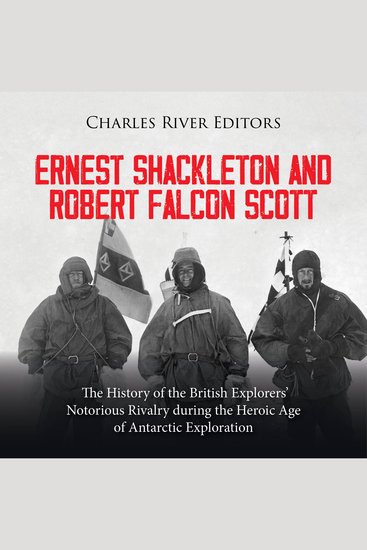
    Some of the explorers who were involved became household names around the world, including British explorer Sir Ernest Henry Shackleton and Norwegian explorer Roald Amundsen. Perhaps the one that has become most closely associated with this period is Robert Falcon Scott. Widely referred to as “Scott of the Antarctic,” Captain Scott became an icon of tenacity in the face of incredible adversity, and his final expedition to the South Pole lives on as an example of the nobility of the human spirit, even in the face of utter disaster. A monument to Scott’s persistence still stands at Observation Point, inscribed with the last line of Tennyson’s “Ulysses”: “To strive, to seek, to find, and not to yield.” 
    Inevitably, as time passed, modern historians further removed from the romanticization of the expeditions began to more closely (and objectively) scrutinize the explorers and their missions. However, in the case of Scott, that has only furthered his renown, because historians still have wildly different opinions of him, from his personality and leadership to the results of his missions, especially his ill-fated final one. Likewise, Shackleton’s place in history is not the one he set out to make, but his extraordinary deeds have made his contributions to early exploration of Antarctica indelible. Despite the victor’s wreath eventually going to another, Shackleton’s name is essential to any discussion of Antarctic exploration.
    Show book