Join us on a literary world trip!
Add this book to bookshelf
Grey
Write a new comment Default profile 50px
Grey
Subscribe to read the full book or read the first pages for free!
All characters reduced
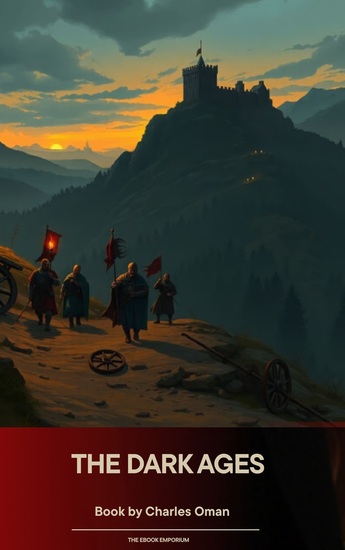
The Dark Ages - cover

The Dark Ages

Charles Oman

Publisher: The Ebook Emporium

  • 0
  • 0
  • 0

Summary

"The world was changing, but it was not ending."

Spanning nearly five centuries of transformation, Sir Charles Oman's classic work deconstructs the myth of the "Dark Ages" as a period of mere ignorance. Instead, he reveals a vibrant, violent, and crucial era where the wreckage of the Roman Empire was forged into the foundations of modern Europe. From the deposition of Romulus Augustulus to the death of Charles the Fat, Oman provides a sweeping narrative of the men and movements that shaped the West.

The Clash of Civilizations: Oman masterfully tracks the rise and fall of dynasties. Witness the struggle of the Byzantine Empire to hold the East against the rising tide of Islam, the brutal expansion of the Frankish kings, and the terrifying shadow of the Viking raids. This is a history of grand strategy and battlefield tactics, where the author's expertise in military history shines through every chapter.

The Pillars of the Middle Ages: Beyond the battlefield, The Dark Ages explores the intellectual and religious shifts of the era. Follow the influence of the papacy, the preservation of classical knowledge in monasteries, and the administrative genius of Charlemagne's Renaissance. Oman proves that this was an age of intense creativity and political evolution, setting the stage for the Crusades and the feudal system that would follow.

History written with the precision of a scholar and the soul of a storyteller. Purchase "The Dark Ages" today and rediscover the roots of the Western world.
Available since: 01/04/2026.
Print length: 329 pages.

Other books that might interest you

  • Real Pirates of the Caribbean - cover

    Real Pirates of the Caribbean

    Editors Charles River

    • 0
    • 0
    • 0
    The Golden Age of Piracy generally refers to the era when history’s most famous pirates roamed the seas of the West Indies from 1670-1720, engaging in colorfully daring and oftentimes murderous attacks on any ship they felt emboldened enough to take on. And it is no coincidence that while the end of the Golden Age was marked by the death of Blackbeard, the beginning of it was marked by the rise of Henry Every. Though Every is no longer as well-remembered as the likes of Blackbeard or Black Bart, in his day he was the “King of Pirates”, and he is recognized as blazing the trail and setting the gold standard for the pirates that followed him.  
    Although Captain Morgan has become somewhat synonymous with spiced rum in the 21st century, Henry Morgan has been one of the best known pirates and privateers for centuries, long before an alcohol was named after him. The swashbuckling captain, who fought nearly as hard as he drank, has long been a favorite among authors looking to write exciting novels about pirates. 
    	It would be an understatement to say that pop culture’s perception of piracy and pirates has been primarily influenced by Captain Edward Teach, known to the world as Blackbeard, the most famous pirate of all time. An English pirate who terrorized the high seas near the Carolinas in the early 18th century, a period often referred to as the Golden Age of Piracy, Blackbeard was the gold standard, and in the 300 years since his death he has inspired legends that have spanned books like Treasure Island, movies, and even theme park rides.  
    Black Bart may not be as well known today as other pirates of the era, but he was truly the gold standard during the Golden Age of Piracy. Despite the fact he was initially reluctant to become a pirate and had to be talked into it, Roberts and his crew captured nearly 500 ships in just a few years, making him the most successful pirate in history. 
    Show book
  • Chola Empire : 9th to 12th Century - cover

    Chola Empire : 9th to 12th Century

    Saurabh Kumar

    • 0
    • 0
    • 0
    The book takes us through the era of the Great Chola Empire between the 9th and 12th centuries and also throws light on the era of Rajaraja and Rajendra I.
    Show book
  • Landslide - The inside story of the 2024 election - cover

    Landslide - The inside story of...

    Tim Ross, Rachel Wearmouth

    • 0
    • 0
    • 0
    On 22 May 2024, Rishi Sunak stood outside 10 Downing Street and announced an early election, in an attempt to catch his opponents by surprise. Just minutes later, Tory hearts sank, with images of the Prime Minister soaking in the rain instantly defining his hapless campaign. The next six weeks delivered more mistakes, a betting scandal, apocalyptic Tory polls, bitter backroom arguments and finally the worst result in the Conservative Party's 190-year history.
    Keir Starmer's Labour, meanwhile, stormed to victory with one of the biggest landslides on record after fourteen years in the wilderness. But the party won with its fewest votes in almost a decade, raising questions about how popular Starmer really was. Scotland's voters abandoned the SNP, Ed Davey's Lib Dems surged to their best election ever and Nigel Farage once again blew up the Conservative Party's plans.
    This gripping account by seasoned Westminster journalists Tim Ross and Rachel Wearmouth tells the full inside story of the key tactics and powerful forces that delivered the most seismic upheaval in a generation. What role did Starmer's character play in his party's success? How did Labour's election machine engineer such a devastatingly efficient vote? Was there anything Sunak could have done to avert disaster? What does it all mean for the future of Britain?
    Blending exclusive interviews and explosive accounts from key players, Landslide sets out to answer these questions and more, revealing a dramatic and sometimes disturbing picture of British politics at a turbulent time.
    Show book
  • Master Your Patience : A Practical Guide to Manage Your Skills - cover

    Master Your Patience : A...

    Dr. Pedro Costa

    • 0
    • 0
    • 0
    Preface by the Monk Coen. ”In this book, Pedro Costa makes an important analysis - an anamnesis of altered states of consciousness, and gives us guidelines, recipes, suggestions so that we can perceive our moods and develop the ability to deal with them. We will need patience a lot - in order to have physical, mental and social health. 
    We can identify the enemies of patience. Not only we can, but we should. Let us define them as the main causes of our daily unrest. First, the people. Second, time. Third, the situations. The fourth can be understood as the union of the first three: chaos, or ”people with no time in difficult situations”. Normally, when we lose patience completely we fall into this last stage of impatience. It`s this combination of factors that disturbs our peace. In this book, we describe a method so you always remember the ”good allies” of patience. A way to improve your life. It`s the ”4S” rule, a shortcut to memorizing it. Thus, the four allies of patience are: Silence, Sight, Smile and Sure. Easy, right? We`ll go into detail about this method and each of the four allies as well as the enemies of a complete change to a better life. We must also observe that the more we focus on the present, the more likely we are to find the allies of patience. The authors P. COSTA and G. COSTA bring a two-fold vision from different areas. First a broad approach of patience by medical science, linked to mindfulness, and on the other hand an approach by anthropology, closely related to the totality of the human being, including all of its dimensions.
    Show book
  • Motherland - A Journey through 500000 Years of African Culture and Identity - cover

    Motherland - A Journey through...

    Luke Pepera

    • 0
    • 0
    • 0
    A groundbreaking exploration of 500,000 years of African history, cultures, and identity. 


    Historian, archaeologist, and anthropologist Luke Pepera takes us on a personal journey discovering 500,000 years of African history and cultures in order to reclaim and reconnect with this extraordinary heritage. He tackles the question many people of African descent ask—Who are we? Where do we come from? What defines us? And it explores how knowledge of this deeper history might affect current understandings of African identity. 


    Through thematically-linked chapters that explore aspects of African identity from nomadic culture and matriarchal society to beliefs about the afterlife and the tradition of oral storytelling, and interwoven with Luke's own experiences of exploring his Ghanaian family history and his personal questions of identity, this is a comprehensive, relevant, and beautifully told new history of Africa, and how it has shaped the world we know today.
    Show book
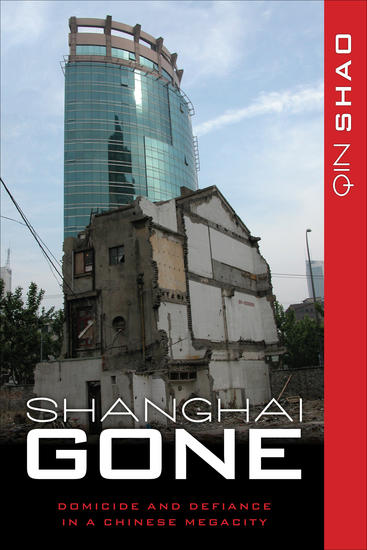
  • Shanghai Gone - Domicide and Defiance in a Chinese Megacity - cover

    Shanghai Gone - Domicide and...

    Qin Shao

    • 0
    • 0
    • 0
    “One of the best accounts of the reality of gentrification and urban development in China . . . grounded with solid historical, ethnographic and legal evidence” (Urban Studies). In recent decades, the centuries-old city of Shanghai has been demolished and rebuilt into a gleaming megacity. With its world famous skyscrapers, it now ranks with New York and London as a hub of global finance. But that transformation has come at a grave human cost. In Shanghai Gone, Qin Shao applies the concept of domicide—the eradication of a home against the will of its dwellers—to the sweeping destruction of neighborhoods, families, and life patterns that made way for the new Shanghai.   Shao gives voice to the holdouts and protesters who resisted domicide and demanded justice. She follows, among others, a reticent kindergarten teacher turned diehard petitioner; a descendant of gangsters and squatters who has become an amateur lawyer for evictees; and a Chinese Muslim who has struggled to recover his ancestral home in Xintiandi, an infamous site of gentrification dominated by a well-connected Hong Kong real estate tycoon.   Highlighting the wrenching changes spawned by China’s reform era, Shao vividly portrays the corrupt and rapacious pursuit of growth and profit, the personal wreckage it has left behind, and the enduring human spirit it has unleashed.
    Show book