Join us on a literary world trip!
Add this book to bookshelf
Grey
Write a new comment Default profile 50px
Grey
Subscribe to read the full book or read the first pages for free!
All characters reduced
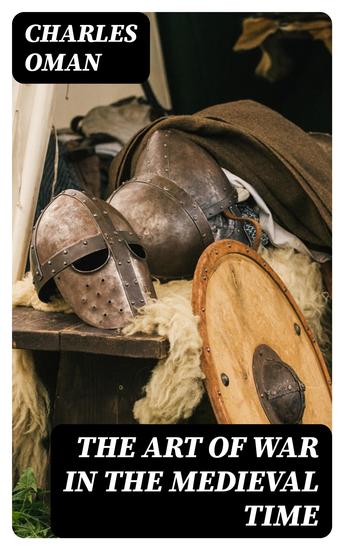
The Art of War in the Medieval Time - cover

The Art of War in the Medieval Time

Charles Oman

Publisher: DigiCat

  • 0
  • 0
  • 0

Summary

In "The Art of War in the Medieval Time," Charles Oman delves into the intricate tapestry of military strategy and conduct during the pivotal medieval period. Through meticulous research and articulate prose, Oman examines the evolution of warfare from the Roman era to the onset of the Renaissance, highlighting the interplay between technology, politics, and social structures. His literary style combines historical analysis with vivid descriptions, making complex military concepts accessible while maintaining scholarly rigor. This work not only sheds light on battlefield tactics but also explores the broader implications of warfare on medieval society, providing a comprehensive view of how conflicts shaped cultural and political landscapes. Charles Oman, a prominent historian and military analyst, was profoundly influenced by his own experiences and academic pursuits in military history. His extensive background in the subject, bolstered by his role as an editor of various historical publications, informed his thorough exploration of medieval warfare. Oman's keen understanding of both the operational aspects of military engagement and the socio-political ramifications of war underpins this work, making it an essential contribution to historical literature. This book is highly recommended for historians, military enthusiasts, and readers seeking a nuanced understanding of medieval warfare. Oman's engaging narrative, coupled with his scholarly insights, renders "The Art of War in the Medieval Time" not only informative but also an enjoyable read, poised to enrich the reader's appreciation of the complexities of military strategy throughout history.
Available since: 10/11/2022.
Print length: 123 pages.

Other books that might interest you

  • The Ripple Effect - China's Complex Presence in Southeast Asia - cover

    The Ripple Effect - China's...

    Enze Han

    • 0
    • 0
    • 0
    Many studies of China's relations with and influence on Southeast Asia tend to focus on how Beijing has used its power asymmetry to achieve regional influence. Yet, scholars and pundits often fail to appreciate the complexity of the contemporary Chinese state and society, and just how fragmented, decentralized, and internationalized China is today. 


    In The Ripple Effect, Enze Han argues that a focus on the Chinese state alone is not sufficient for a comprehensive understanding of China's influence in Southeast Asia. Instead, we must look beyond the Chinese state, to non-state actors from China, such as private businesses and Chinese migrants. These actors affect people's perception of China in a variety of ways, and they often have wide-ranging as well as long-lasting effects on bilateral relations. Looking beyond the Chinese state's intentional influence reveals many situations that result in unanticipated changes in Southeast Asia. Han proposes that to understand this increasingly globalized China, we need more conceptual flexibility regarding which Chinese actors are important to China's relations, and how they wield this influence, whether intentional or not.
    Show book
  • The Wari Empire - Pre-Incan Conquerors and the Engineers of South America - cover

    The Wari Empire - Pre-Incan...

    Rolf Hedger

    • 0
    • 0
    • 0
    The Wari Empire emerged as one of the most influential pre-Incan civilizations in the Andean region, setting the foundation for future Andean states, including the Inca. Its origins can be traced back to the highlands of present-day Peru, where early societies laid the groundwork for its rise. The unique combination of environmental adaptation, cultural influences, and political innovation allowed the Wari to establish a powerful state that would dominate much of the central Andes for centuries. 
    Before the Wari civilization took shape, the Andean region was home to various cultures that contributed to its development. Among these, the Chavín culture, which thrived from around 900 to 200 BCE, played a crucial role in spreading religious and artistic traditions that later influenced Wari art and iconography. The Nazca civilization, known for its intricate geoglyphs and advanced irrigation techniques, also left an imprint on Wari agricultural and engineering practices. However, it was the lesser-known Huarpa culture of the Ayacucho Valley that provided the most direct influence on early Wari society. The Huarpa people developed small-scale irrigation systems, terraced farming, and distinct ceramic styles, all of which became defining features of Wari civilization. 
    Sometime between 500 and 600 CE, the Wari began to expand beyond their heartland in the Ayacucho region. This expansion was driven by both environmental necessity and strategic ambition. The high-altitude valleys of the central Andes provided fertile land for agriculture, but they were also subject to fluctuating climatic conditions. To mitigate these challenges, Wari elites developed large-scale irrigation systems and storage facilities, ensuring food security for growing populations. This ability to manage resources effectively gave them an advantage over neighboring groups, allowing them to assert dominance through both diplomacy and military conquest.
    Show book
  • How to Overcome Depression Fear Anxiety and Worry with CBT DBT & ACT - CBT Workbook Dialectical Behavior Therapy Acceptance and Commitmet Therapy - cover

    How to Overcome Depression Fear...

    Sarah Z. Murphy

    • 0
    • 0
    • 0
    Discover proven strategies to conquer depression, fear, anxiety, and worry with this powerful guide to CBT (Cognitive Behavioral Therapy), DBT (Dialectical Behavior Therapy), and ACT (Acceptance and Commitment Therapy). This comprehensive audiobook offers practical tools and techniques rooted in the latest psychological research to help you break free from the cycle of negative emotions and thought patterns. 
    Inside, you’ll learn:How CBT helps you challenge and reframe unhelpful thoughts, reducing the impact of anxiety and depression.The core principles of DBT, including emotional regulation and mindfulness, to manage overwhelming feelings and improve relationships.How ACT encourages acceptance of difficult emotions while committing to actions that align with your values, fostering a more meaningful life.Effective strategies for managing fear, anxiety, and worry with a focus on practical application and real-life scenarios. 
    Whether you’re dealing with everyday stress or more intense mental health challenges, this audiobook offers a clear roadmap to healing and personal growth. Empower yourself with the tools to transform your mindset and live a life free from the grip of anxiety and depression. Start your journey toward emotional well-being today!
    Show book
  • Dahomey Kingdom - The Amazon Warriors and the Kingdom of Blood and Power - cover

    Dahomey Kingdom - The Amazon...

    Rolf Hedger

    • 0
    • 0
    • 0
    The Kingdom of Dahomey emerged as a dominant force in West Africa during the early 17th century, rising from a small tribal settlement to a powerful and organized state. Located in present-day Benin, Dahomey was founded by the Fon people, who established a centralized monarchy that would go on to shape the region’s history for centuries. The kingdom’s foundation was marked by military expansion, strategic leadership, and a distinct socio-political structure that set it apart from neighboring states. 
    The origins of Dahomey can be traced back to the reign of King Houegbadja, who ruled in the early 1600s. He is often credited with transforming the region into a formidable kingdom by unifying various smaller communities under a single rule. Before Dahomey’s consolidation, the region was dominated by the more powerful Allada Kingdom. However, through strategic alliances and calculated warfare, the rulers of Dahomey gradually expanded their influence, laying the groundwork for future dominance. 
    One of the key aspects of Dahomey’s rise was its strong central government. Unlike many other African polities of the time, Dahomey’s monarchy operated with an intricate administrative system. The king, known as the Ahosu, wielded absolute power but was supported by a council of advisors and military leaders who ensured efficient governance. This structured political organization allowed Dahomey to maintain stability even as it expanded through military campaigns.
    Show book
  • The Women Are Up to Something - How Elizabeth Anscombe Philippa Foot Mary Midgley and Iris Murdoch Revolutionized Ethics - cover

    The Women Are Up to Something -...

    Benjamin J. B. Lipscomb

    • 0
    • 0
    • 0
    On the cusp of the Second World War, four women went to Oxford to begin their studies: a fiercely brilliant Catholic convert; a daughter of privilege longing to escape her stifling upbringing; an ardent Communist and aspiring novelist with a list of would-be lovers as long as her arm; and a quiet, messy lover of newts and mice who would become a great public intellectual of our time. They became lifelong friends. At the time, only a handful of women had ever made lives in philosophy. But when Oxford's men were drafted in the war, everything changed. 


    As Elizabeth Anscombe, Philippa Foot, Mary Midgley, and Iris Murdoch labored to make a place for themselves in a male-dominated world, as they made friendships and families, and as they drifted toward and away from each other, they never stopped insisting that some lives are better than others. They argued that courage and discernment and justice—and love—are the heart of a good life. 


    This book presents the first sustained engagement with these women's contributions: with the critique and the alternative they framed. Drawing on a cluster of recently opened archives and extensive correspondence and interviews with those who knew them best, Benjamin Lipscomb traces the lives and ideas of four friends who gave us a better way to think about ethics, and ourselves.
    Show book
  • The Deadly Rise of Anti-science - A Scientist's Warning - cover

    The Deadly Rise of Anti-science...

    M.D. Peter J. Hotez

    • 0
    • 0
    • 0
    During the height of the COVID-19 pandemic, one renowned scientist, in his famous bowtie, appeared daily on major news networks such as MSNBC, NPR, the BBC, and others.  
     
    Dr. Peter J. Hotez often went without sleep, working around the clock to develop a nonprofit COVID-19 vaccine and to keep the public informed. During that time, he was one of the most trusted voices on the pandemic and was even nominated for a Nobel Peace Prize for  
    his selfless work. He also became one of the main targets of anti-science rhetoric that gained traction through conservative news media.  
     
    In this eyewitness story of how the anti-vaccine movement grew into a dangerous and prominent anti-science element in American politics, Hotez describes the devastating impacts it has had on Americans’ health and lives. As a scientist who has endured antagonism from anti-vaxxers and been at the forefront of both essential scientific discovery and advocacy, Hotez is uniquely qualified to tell this story. By weaving his personal experiences together with information on how the anti-vaccine movement became a tool of far-right political figures around the world, Hotez opens readers’ eyes to the dangers of anti-science. He explains how anti-science became a major societal and lethal force: in the first years of the pandemic, more than 200,000 unvaccinated Americans needlessly died despite the widespread availability of COVID-19 vaccines. Even as he paints a picture of the world under a shadow of aggressive ignorance, Hotez demonstrates his innate optimism, offering solutions for how to combat science denial and save lives in the process.
    Show book