Join us on a literary world trip!
Add this book to bookshelf
Grey
Write a new comment Default profile 50px
Grey
Subscribe to read the full book or read the first pages for free!
All characters reduced
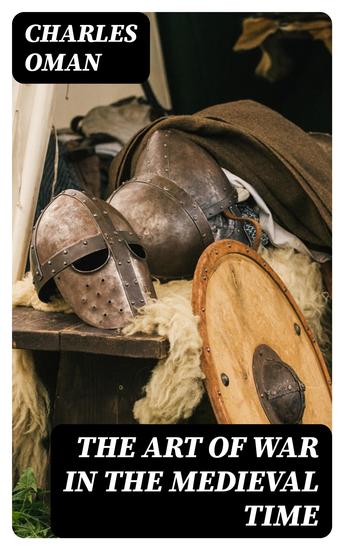
The Art of War in the Medieval Time - Enriched edition - cover

The Art of War in the Medieval Time - Enriched edition

Charles Oman

Publisher: DigiCat

  • 0
  • 0
  • 0

Summary

In "The Art of War in the Medieval Time," Charles Oman delves into the intricate tapestry of military strategy and conduct during the pivotal medieval period. Through meticulous research and articulate prose, Oman examines the evolution of warfare from the Roman era to the onset of the Renaissance, highlighting the interplay between technology, politics, and social structures. His literary style combines historical analysis with vivid descriptions, making complex military concepts accessible while maintaining scholarly rigor. This work not only sheds light on battlefield tactics but also explores the broader implications of warfare on medieval society, providing a comprehensive view of how conflicts shaped cultural and political landscapes. Charles Oman, a prominent historian and military analyst, was profoundly influenced by his own experiences and academic pursuits in military history. His extensive background in the subject, bolstered by his role as an editor of various historical publications, informed his thorough exploration of medieval warfare. Oman's keen understanding of both the operational aspects of military engagement and the socio-political ramifications of war underpins this work, making it an essential contribution to historical literature. This book is highly recommended for historians, military enthusiasts, and readers seeking a nuanced understanding of medieval warfare. Oman's engaging narrative, coupled with his scholarly insights, renders "The Art of War in the Medieval Time" not only informative but also an enjoyable read, poised to enrich the reader's appreciation of the complexities of military strategy throughout history.

In this enriched edition, we have carefully created added value for your reading experience:
- A succinct Introduction situates the work's timeless appeal and themes.
- The Synopsis outlines the central plot, highlighting key developments without spoiling critical twists.
- A detailed Historical Context immerses you in the era's events and influences that shaped the writing.
- A thorough Analysis dissects symbols, motifs, and character arcs to unearth underlying meanings.
- Reflection questions prompt you to engage personally with the work's messages, connecting them to modern life.
- Hand‐picked Memorable Quotes shine a spotlight on moments of literary brilliance.
- Interactive footnotes clarify unusual references, historical allusions, and archaic phrases for an effortless, more informed read.
Available since: 10/11/2022.
Print length: 123 pages.

Other books that might interest you

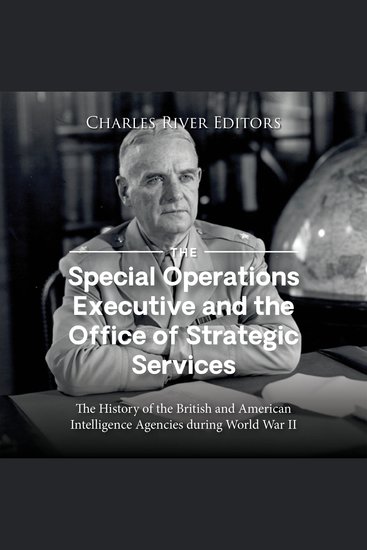
  • Special Operations Executive and the Office of Strategic Services The: The History of the British and American Intelligence Agencies during World War II - cover

    Special Operations Executive and...

    Editors Charles River

    • 0
    • 0
    • 0
    When people think about the Second World War, they seldom think in terms of silence and small acts. This was a war in which the industry of entire nations was rearranged to feed fighting, and it was fought on a scale in which battles could include hundreds of thousands of combatants. Whole cities and populations were destroyed, with millions of casualties occurring at places like Leningrad. 
    But World War II was also a conflict in which modern covert operations first hit their stride. From the jungles of Burma to the streets of Paris, spies, saboteurs, and commandos carried out missions built on secrecy and cunning. Precise, self-contained operations could be as important to the outcome of the war as acts of massive destruction, whether it involved targeted assassinations, sabotaging key logistics, or counterintelligence to break up the enemy’s own rings. At the time, most of these operations were hidden from the public since that was the only way they could be successfully carried out, but in the years since, stories about various missions have emerged. They paint a picture of incredible courage and ingenuity, whether in war zones, enemy territory, or far from the front lines. 
    Though it might be hard to believe, the Americans did not have a covert operations organization when they joined the war, and like the British, it took them some time to realize it could be a powerful tool. In time, all the hard work led to the growth of the OSS into an organization with over 13,000 staff and 40 offices scattered across the world. Its purposes were initially similar to that of Britain’s Special Operations Executive, including espionage, sabotage, and intelligence assessments, but with time and experience, it expanded to include economic, psychological, and guerrilla warfare, as well as counter-intelligence work. And of course, it would all chart a path for the early days of America’s most famous intelligence agency, the CIA. 
    Show book
  • A Life In Letters - cover

    A Life In Letters

    Simone Weil, Annette Devaux,...

    • 0
    • 0
    • 0
    Now in the pantheon of great thinkers, Simone Weil (1909–1943) lived largely in the shadows, searching for her spiritual home while bearing witness to the violence that devastated Europe twice in her brief lifetime. The letters she wrote to her parents and brother from childhood onward chart her intellectual range as well as her itinerancy and ever-shifting preoccupations, revealing the singular personality at the heart of her brilliant essays. 


    The first complete collection of Weil's missives to her family, A Life in Letters offers new insight into her personal relationships and experiences. The letters abound with vivid illustrations of a life marked by wisdom as much as seeking. The daughter of a bourgeois Parisian Jewish family, Weil was a troublemaking idealist who preferred the company of miners and Russian exiles to that of her peers. An extraordinary scholar of history and politics, she ultimately found a home in Christian mysticism. 


    A Life in Letters depicts Simone Weil's thought taking shape amid political turmoil, as she describes her participation in the Spanish struggle against fascism and in the transatlantic resistance to the Nazis. An introduction and notes by Robert Chenavier contextualize the letters historically and intellectually, relating Weil's letters to her general body of writing.
    Show book
  • Collected Articles of Frederick Douglass - The Tract Of The Quiet Way - cover

    Collected Articles of Frederick...

    Frederick Douglass

    • 0
    • 0
    • 0
    Frederick Douglass's 'Collected Articles' compiles powerful writings from the iconic abolitionist and statesman. From poignant narratives on slavery to impassioned calls for justice, Douglass's eloquent prose captures the essence of his tireless advocacy for freedom, equality, and human rights. This anthology stands as a testament to Douglass's indomitable spirit and enduring impact on the fight against oppression, making it a timeless repository of wisdom and activism. Read in English, unabridged.
    Show book
  • The Odd Fellows' Primer - cover

    The Odd Fellows' Primer

    Michael Greenzeiger

    • 0
    • 0
    • 0
    The Odd Fellows' Primer is a work cut from the same cloth as the great 19th century manuals written by luminaries such as Rev. Aaron Grosh and Paschal Donaldson, designed to give the initiate everything they need to practice and live Odd Fellowship in the lodge and beyond.  
    This comprehensive work explores and explains concepts of fraternalism and parliamentary procedure and the deeper spiritual and ethical facets of this ancient and venerable tradition. 
    Expertly narrated by Toby Hanson and written by Michael Greenzeiger, the Odd Fellows' Primer is designed to both inform and inspire. It is sure to become a treasured addition to any fraternal library.
    Show book
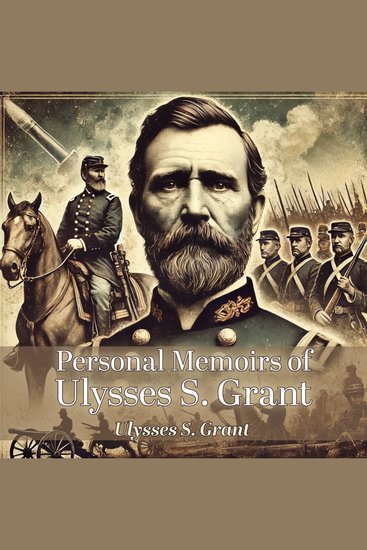
  • Personal Memoirs of Ulysses S Grant - cover

    Personal Memoirs of Ulysses S Grant

    Ulysses S. Grant

    • 0
    • 0
    • 0
    Step into history with Personal Memoirs of Ulysses S. Grant, the captivating autobiography of one of America’s greatest military leaders and the 18th President of the United States. Written with remarkable clarity and humility, Ulysses S. Grant’s memoirs offer an unparalleled glimpse into the Civil War and his extraordinary life. 
    Grant recounts his early years, his rise through the ranks of the Union Army, and the pivotal battles that shaped the nation’s destiny. From Shiloh to Vicksburg and the surrender at Appomattox, his firsthand accounts of these historic events are both vivid and insightful. 
    More than a military narrative, Grant’s memoirs reveal his reflections on leadership, character, and the challenges of a nation at war. His straightforward and honest storytelling style has earned this work a reputation as one of the finest autobiographies in American literature. 
    Expert narration brings Grant’s voice to life, making this audiobook an engaging experience for history enthusiasts and newcomers alike. Perfect for commutes, long walks, or quiet moments of reflection, it’s a timeless journey through the life of a remarkable leader. 
    Start listening to Personal Memoirs of Ulysses S. Grant today and immerse yourself in the legacy of an American icon!
    Show book
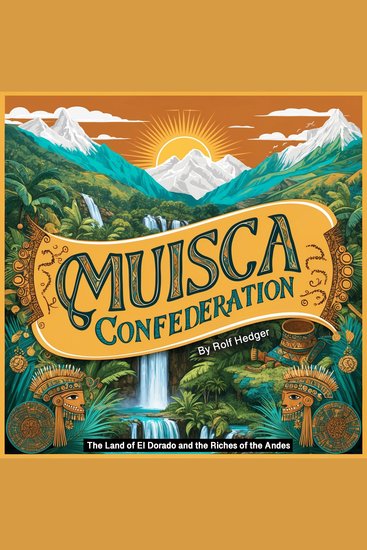
  • Muisca Confederation - The Land of El Dorado and the Riches of the Andes - cover

    Muisca Confederation - The Land...

    Rolf Hedger

    • 0
    • 0
    • 0
    The Muisca Confederation was one of the most sophisticated political entities in pre-Columbian South America, emerging in the highlands of present-day Colombia. The origins of this powerful society can be traced back to the earliest inhabitants of the Eastern Cordillera of the Andes, a region characterized by fertile valleys, cool mountain climates, and abundant natural resources. Over time, these early settlers developed complex social structures, agricultural techniques, and political institutions that would form the foundation of the Muisca Confederation.  
    The first groups to settle in the high-altitude plateaus of the Andean region arrived thousands of years ago, likely migrating from Central America or other parts of South America. These early inhabitants lived in small, semi-nomadic communities, relying on hunting, fishing, and rudimentary farming. As they adapted to their environment, they developed advanced agricultural methods, cultivating maize, potatoes, quinoa, and other crops suited to the high-altitude terrain. The fertile lands and steady supply of food allowed for population growth, leading to the establishment of permanent settlements. 
    As Muisca society evolved, it became increasingly hierarchical, with distinct roles emerging among its members. The transition from small, scattered villages to organized chiefdoms marked a significant turning point in their history. Power began to concentrate in the hands of local leaders, or caciques, who governed their respective communities. Over time, these leaders expanded their influence, forming alliances and asserting control over larger territories. The most powerful of these rulers eventually became the Zipa of Bacatá and the Zaque of Hunza, the two principal leaders who governed the northern and southern regions of the Muisca Confederation.
    Show book