Join us on a literary world trip!
Add this book to bookshelf
Grey
Write a new comment Default profile 50px
Grey
Subscribe to read the full book or read the first pages for free!
All characters reduced
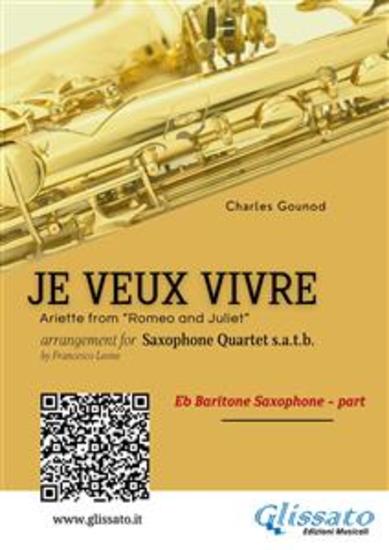
Eb Baritone Sax: Je Veux Vivre for Saxophone Quartet satb - Ariette from “Romeo and Juliet” - cover

Eb Baritone Sax: Je Veux Vivre for Saxophone Quartet satb - Ariette from “Romeo and Juliet”

Charles Gounod, a cura di Francesco Leone

Publisher: Glissato Edizioni Musicali

  • 0
  • 0
  • 0

Summary

Eb Baritone Saxophone part of "Je Veux Vivre" ariette by Charles Gounod arranged for Saxophone Quartet satb, Intermediate level, key concert Eb, duration 3.30 (+-) . Score and Parts available in series. Scan Qr code (in cover) for audio demo or visit www.glissato.it. product code: EG0862
____________________________
Parte di Saxofono Baritono Mib : Je Veux Vivre, arietta da "Romeo e Giulietta" per Quartetto di Sax s.a.t.b. di livello medio. Partitura e Parti staccate disponibili nella collana.
Available since: 03/01/2022.


Other books that might interest you

  • A Triumph of surgery - cover

    A Triumph of surgery

    Dinesh Redhu

    • 0
    • 0
    • 0
    This story is about Tricki, a dog who is the pet of a rich lady named Mrs. Pumphrey. She loves her dog very much and is unable to refuse him anything he wants.
    Show book
  • Samantha DickPrivate Investigator - cover

    Samantha DickPrivate Investigator

    Zeke Richardson

    • 0
    • 0
    • 0
    A female private investigator in San Francisco in the 1940s and her adventures
    Show book
  • Getting into Drama School: The Compact Guide - cover

    Getting into Drama School: The...

    Nick Moseley

    • 0
    • 0
    • 0
    This encouraging, no-nonsense guide walks you through the whole process of applying for drama school – including doing your initial research, selecting the right school for you, choosing and preparing your audition pieces, nailing the audition and dealing with recalls.
    This revised and updated edition incorporates recent changes to the application process such as online auditions, ensuring you have the most up-to-date information.
    Perfect for any aspiring actor, as well as anyone advising or coaching them, it will answer your questions, bust commonly held myths and give you all the knowledge you need to boost your chances of getting into drama school.
    The Compact Guides are pocket-sized introductions for actors and theatremakers, each tackling a key topic in a clear and comprehensive way. Written by industry professionals with extensive hands-on experience of their subject, they provide you with maximum information in minimum time.
    Show book
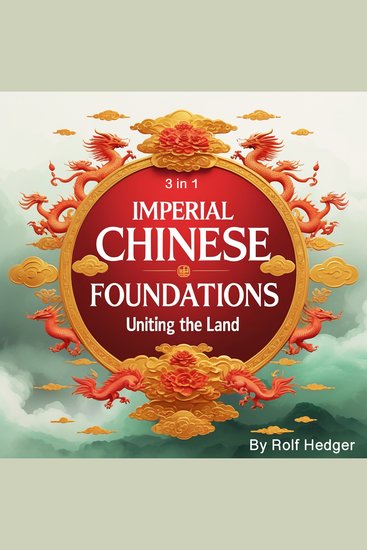
  • Imperial Chinese Foundations - Uniting the Land (3 in 1) - cover

    Imperial Chinese Foundations -...

    Rolf Hedger

    • 0
    • 0
    • 0
    The story of China's imperial unification represents one of history's most consequential political transformations. "Imperial Chinese Foundations: Uniting the Land" explores the three dynasties that forged China's imperial system—a political structure that would endure for over two millennia. 
    The brief but revolutionary Qin Dynasty (221-206 BCE) ended centuries of warring states by conquering all rivals under the leadership of the First Emperor, Qin Shi Huang. Through military might, standardized writing, currency, measurements, and a unified legal code, the Qin created China's first centralized bureaucratic empire—though their harsh Legalist policies triggered rebellion after the emperor's death. 
    The Western Han Dynasty (206 BCE-9 CE) consolidated imperial rule through a more pragmatic blend of Confucian ideology and centralized governance. Under Emperor Wu's dynamic leadership, the Han expanded Chinese territory, opened the Silk Road, established the civil service examination system, and created cultural and political institutions that would define Chinese civilization for millennia. 
    As power shifted to the Eastern Han (25-220 CE), the dynasty initially flourished before facing mounting challenges from natural disasters, court intrigues, and the Yellow Turban Rebellion. Yet even as political cohesion weakened, this period saw remarkable innovations—including paper, the seismograph, and advances in mathematics and medicine—while Buddhism began its profound influence on Chinese civilization. 
    Through examining these three foundational dynasties, we witness the birth and evolution of the imperial Chinese state that would serve as a template for governance across East Asia and continue to influence Chinese identity into the modern era.
    Show book
  • The Films of Martin Scorsese and Robert De Niro - cover

    The Films of Martin Scorsese and...

    Andrew J Rausch

    • 0
    • 0
    • 0
    In 1973, early in their careers, Martin Scorsese and Robert De Niro collaborated for the first time. Over the next few decades, they worked together on seven more movies, many of which brought them both acclaim and awards. And while successful director and actor pairings have occurred throughout the history of film, few have fashioned so many works of enduring value as these two artists. In little more than two decades, Scorsese and De Niro produced eight features, including the classics Taxi Driver, Raging Bull, and GoodFellas.  In The Films of Martin Scorsese and Robert De Niro, Andrew J. Rausch examines the creative output of this remarkable pair, from their initial offering, Mean Streets, to their most recent film together, Casino. Rausch looks at their relationship as individual artists who worked together to create cinematic magic, as well as the friendship that was forged nearly 40 years ago. Drawing upon interviews and other sources, Rausch goes behind the scenes of their eight films, providing insi
    Show book
  • The Object at Hand - Intriguing and Inspiring Stories from the Smithsonian Collections - cover

    The Object at Hand - Intriguing...

    Beth Py-Lieberman

    • 0
    • 0
    • 0
    With charm and exuberance, The Object at Hand presents a behind-the-scenes vantage point of the Smithsonian collections. Veteran Smithsonian magazine editor Beth Py-Lieberman weaves together adaptations of the magazine's extensive and compelling coverage and interviews with scholars, curators, and historians to take listeners on an unforgettable journey through the Smithsonian museums. 


    Objects are grouped into the themes audacity, utopia, fierce, haunting, deception, lost, desire, triumph, scale, optimism, playful, rhythm, and revealing to engage with the emotional dimensions of each object, how they relate to each other, and how they fit into the larger American story. 


    Py-Lieberman reflects on the profound connections between even outwardly dissimilar objects and offers insight and stories from Smithsonian experts. The book explores artworks, scientific specimens, historical artifacts, airplanes, spacecraft, plants, and so much more, contemplating how each item represents different facets of humanity and resonates with cultural meaning in surprising ways. Whimsical, affecting, and insightful, The Object at Hand offers an intimate and exclusive tour of the Smithsonian collections.
    Show book