¡Acompáñanos a viajar por el mundo de los libros!
Añadir este libro a la estantería
Grey
Escribe un nuevo comentario Default profile 50px
Grey
Suscríbete para leer el libro completo o lee las primeras páginas gratis.
All characters reduced
In the clouds - cover

In the clouds

Charles Egbert Craddock

Editorial: Good Press

  • 0
  • 0
  • 0

Sinopsis

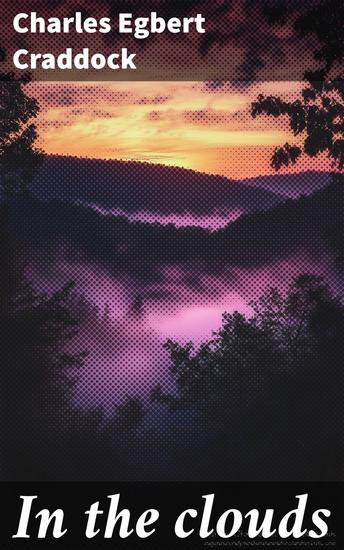
In "In the Clouds," Charles Egbert Craddock showcases his mastery of regionalism and naturalism through a vivid tapestry of Tennessee's mountainous landscapes and the complexities of rural life. Written in the late 19th century, the narrative weaves together rich descriptions and intricate character studies, reflecting the author's keen observations of Southern culture and the human condition. The book is particularly notable for its evocative imagery and the use of dialect, allowing readers to fully immerse themselves in the rich tapestry of Appalachian life and the societal dynamics of that era. Craddock, the pen name of American author Mary Noailles Murfree, was deeply influenced by her own upbringing in the southern Appalachian region. Her intimate knowledge of the mountains and their inhabitants lends authenticity to her work, as she skillfully blends fiction with her experiences. Craddock's inclination towards portraying the struggles and resilience of rural communities echoes her belief in the power of place and the richness of human narratives. For those seeking an authentic exploration of Southern life and the beauty of the Appalachian wilderness, "In the Clouds" offers a profound literary experience. Craddock's insight into human emotions, coupled with her poetic language, invites readers to journey through a world where nature and humanity intersect, making this work an essential addition to any literary enthusiast's collection.
Disponible desde: 24/04/2025.
Longitud de impresión: 200 páginas.
Otros libros que te pueden interesar

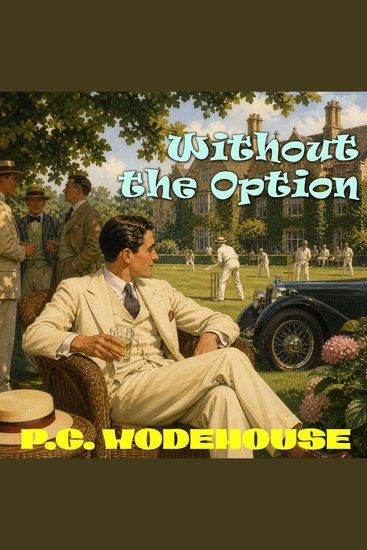
  • Without the Option - cover

    Without the Option

    P. G. Wodehouse

    • 0
    • 0
    • 0
    Some men are born to lead. Others are born to follow. Bertie Wooster, however, was born to regard the legal system as something that happens to other people—preferably at a safe distance.
    In Without the Option, P. G. Wodehouse sends Bertie hurtling from harmless celebration into the dignified horror of British justice, where a misplaced moment of enthusiasm for a policeman's helmet has entirely proper consequences. When his friend Sippy finds himself threatened by an aunt of truly formidable proportions, Bertie agrees—without fully consulting reality—to a bold and highly experimental solution involving impersonation, relocation, and the general suspension of sensible decision-making.
    The countryside, it turns out, is not a refuge so much as a different stage on which to commit the same errors in slightly better lighting. Very quickly, Bertie discovers that "being someone else" is an occupation with no pension plan and a shocking amount of paperwork. Between suspicious relatives, social expectations, and objects of questionable legal ownership, he is soon operating at the very limits of polite endurance.
    Effortlessly comic and structurally disastrous in the most reassuring way, this is Wodehouse at full tilt: where plans behave like unruly pets, authority arrives without warning, and every attempt at improvement quietly accelerates chaos.
    Perfect for listeners who appreciate British humour at its most refined, where catastrophe is inevitable, but always impeccably dressed.
    Ver libro
  • HG Wells -More Selected Short Stories - cover

    HG Wells -More Selected Short...

    H. G. Wells

    • 0
    • 0
    • 0
    H.G. Wells is widely regarded as one of the most imaginative and visionary writers of the late 19th and early 20th centuries. Best known for his groundbreaking science fiction novels like The War of the Worlds and The Time Machine, Wells was also a prolific short story writer, producing a diverse body of work that explored many of the same themes as his longer novels: the wonders and perils of scientific progress, the mysteries of the human mind, and the complex relationship between society and the individual. 
    Wells’ short stories, though perhaps less celebrated than his novels, serve as a window into his vast intellectual curiosity and creative range. These stories often play with speculative ideas in compact, inventive ways, offering a glimpse of his talent for combining narrative flair with philosophical inquiry. In these pages, the reader will find tales of strange inventions, eerie encounters, and dystopian visions, all of which reflect Wells’ keen interest in the future of humanity and the ethical dilemmas that arise with technological advancement. 
    Head Stories Audio presents their second selection of Short Stories by H.G Wells, narrated by Simon Hester. With original music.
    Ver libro
  • The Magic Skin - cover

    The Magic Skin

    Honoré de Balzac

    • 0
    • 0
    • 0
    A ruined young man about to drown himself steps into a curiosity shop and is offered a piece of shagreen that grants every wish — and shrinks with each one, dragging his life in with it. Balzac wrote it at thirty-two and made his name; he worked nights on fifty cups of coffee a day and died at fifty-one, which gives the parable an edge he did not intend.
    Ver libro
  • Of Time and the River - cover

    Of Time and the River

    Thomas Wolf

    • 0
    • 0
    • 0
    What does it mean to leave home, discover oneself, and find a place in the world?
    
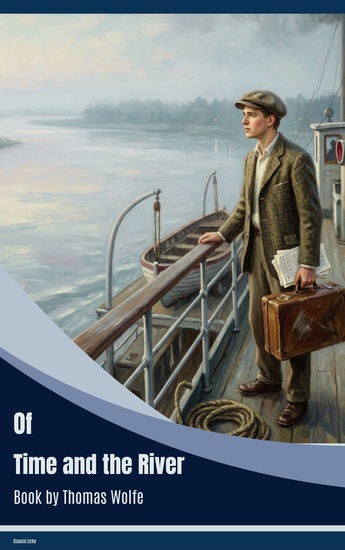
    In Of Time and the River, Thomas Wolfe follows the continuing journey of Eugene Gant, an aspiring writer searching for identity, experience, and artistic purpose.
    
    Set against the changing landscapes of America and Europe, the novel explores Eugene's development as he encounters new people, places, relationships, and ideas. His journey becomes both a physical and emotional search for meaning as he struggles with ambition, loneliness, memory, love, family, loss, and the passage of time.
    
    Wolfe's richly lyrical prose gives the novel a distinctive emotional intensity. Time itself becomes a central presence, shaping memory and reminding the characters of the fleeting nature of youth, relationships, and human experience.
    
    As Eugene moves beyond his familiar surroundings, he confronts the challenges of becoming an artist and the complicated relationship between personal experience and creative expression. The novel reflects Wolfe's recurring interest in home, identity, memory, mortality, and the desire to understand one's place in the world.
    
    For readers who enjoy American literary fiction, coming-of-age novels, autobiographical fiction, psychological fiction, poetic prose, and stories about artistic ambition, Of Time and the River offers a deeply reflective literary experience.
    
    Follow Eugene Gant on his journey through youth, discovery, loss, and artistic awakening. Read Of Time and the River today and experience Thomas Wolfe's powerful meditation on time, memory, identity, and the search for meaning.
    Ver libro
  • After Twenty years - From their pens to your ears genius in every story - cover

    After Twenty years - From their...

    O Henry

    • 0
    • 0
    • 0
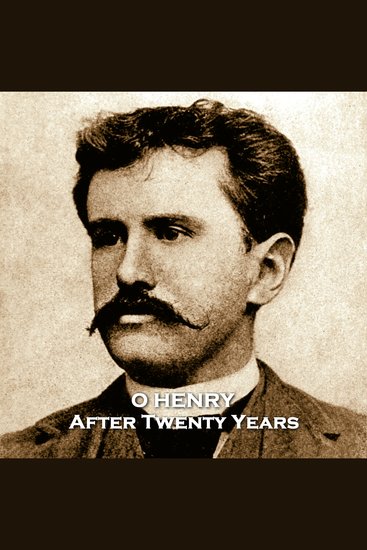
    William Sydney Porter was born on 11th September 1862 in Greensboro, North Carolina. At age 3 his mother died from tuberculosis. From an early age it was clear Porter had a large appetite for reading as he absorbed the world around him. 
    He first attended at a school run by his aunt before enrolling at the Lindsey Street High School and then worked at his uncle’s drugstore and gained a pharmacists’ license in 1881.  
    A persistent cough took him to Texas in the hope that a change of climate would help his symptoms. He took on various types of work, initially from ranch hand and cook and then as varied as pharmacist, draftsman, bank teller and journalist. He also began to write, though for now, purely as a hobby. 
    He was a member of several singing and dramatic groups when he met 17 year old Athol Estes, daughter of a wealthy Austin family. Despite her mother’s objection owing to Athol’s tuberculosis, they began courting and in July 1887, they eloped and soon married. 
    Athol, impressed by his writing, encouraged him to get them published. A job as a draftsman at the Texas General Land Office paid a healthy $100 dollars per month and life was good. 
    But then life turned cruel. His son died a few hours after birth although a daughter, Margaret, came the following year.  His job had to be vacated but another was found at the First National Bank of Austin. The bank operated informally and Porter was careless in keeping the books. He lost that job but began writing for the humourous weekly The Rolling Stone and the Houston Post. Some time later the federal Bank auditors went through his former accounts and he was arrested on charges of embezzlement. 
    Porter fled the day before his trial to Honduras. Holed up for several months he began to write.  Athol had become too ill to travel to meet him and learning that her health was deteriorating he surrendered to the court in February 1897.  Bail was obtained so that he could stay with Athol during her final days.  
    Porter was sentenced to five years at the Ohio Penitentiary in Columbus. His pharmacy qualifications got him the job of night druggist.  His sentence also gave him time to write and publish fourteen short stories. In December 1899 in McClure’s Magazine he published a short story as O Henry.  
    He was released two years early in July 1901, and reunited with Margaret, now 11, in Pittsburgh.  He now began his most prolific period of writing; a short story per week for the New York World, while also publishing works in other magazines.  Eventually over 600 of his short stories were published. 
    Porter was a heavy drinker and in 1908 his health, which had deteriorated for several years, took a dramatic turn for the worse, as did his writing. 
    O Henry died of cirrhosis of the liver complicated by diabetes and an enlarged heart on 5th June 1910.<
    Ver libro
  • The Law of Life - From their pens to your ears genius in every story - cover

    The Law of Life - From their...

    Jack London

    • 0
    • 0
    • 0
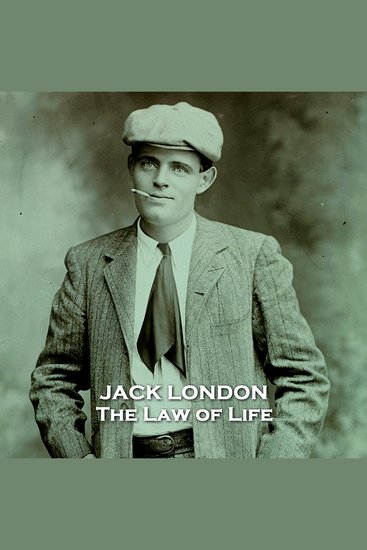
    John Griffith Chaney was born on January 12th, 1876 in San Francisco.   
    His father, William Chaney, was living with Flora Wellman when she became pregnant.  Chaney insisted she have an abortion.  Flora's response was to turn a gun on herself.  Although her wounds were not severe the trauma made her temporarily deranged. 
    In late 1876 his mother married John London and the young child was brought to live with them as they moved around the Bay area, eventually settling in Oakland where now, calling himself Jack, he completed grade school. 
    Jack worked hard at several jobs, sometimes 12-18 hours a day, but his dream was university.  He studied hard and borrowed the money to enrol in the summer of 1896 at the University of California in Berkeley. 
    In 1897, at 21, Jack searched out newspaper accounts of his mother's suicide attempt and for the name of his biological father. He wrote to Chaney, then living in Chicago, who claimed he could not be Jack’s father because he was impotent and casually asserted that London's mother had relations with other men.  Jack, devastated by the response, quit Berkeley and went to the Klondike. Other accounts suggest that his dire finances presented Jack with the excuse he needed to leave. 
    In the Klondike Jack began to gather material for his writing but also accumulated many health problems, including scurvy, which together with hip and leg problems he would carry for the rest of his life. 
    During the late 1890's Jack was regularly publishing short stories and by the turn of the century full blown novels. 
    By 1904 Jack had married, fathered two children and was now in the process of divorcing.  A stint as a reporter on the Russo-Japanese war of 1904 was equal amounts trouble and experience. But that experience was always put to good use in a continuing and remarkable output of work. 
    In 1905 he married Charmian Kittredge who at last was a soul and companion who brought him some semblance of peace despite his advancing alcoholism and his incurable wanderlust. 
    Twelve years later Jack had amassed both wealth and a literary reputation through such classics as ‘The Call of the Wild’, ‘White Fang’ and many others. He had a reputation as a social activist and was a tireless friend of the workers.   
    Jack London died suffering from dysentery, late-stage alcoholism and uremia, aged only 40, on November 22nd 1916 at his property in Glen Elen in California.
    Ver libro