Join us on a literary world trip!
Add this book to bookshelf
Grey
Write a new comment Default profile 50px
Grey
Subscribe to read the full book or read the first pages for free!
All characters reduced
The Greatest Works of Charles Downer Hazen - Exploring History Through Hazen's Insightful Essays - cover

The Greatest Works of Charles Downer Hazen - Exploring History Through Hazen's Insightful Essays

Charles Downer Hazen

Publisher: Good Press

  • 0
  • 0
  • 0

Summary

In "The Greatest Works of Charles Downer Hazen," readers are presented with a compelling anthology that encapsulates the intellectual breadth and depth of Hazen'Äôs historical scholarship. Renowned for his meticulous research and engaging prose, Hazen navigates the complexities of modern history, shedding light on pivotal events and figures that shaped contemporary society. His literary style is marked by a clear, accessible narrative that balances scholarly rigor with a lucid presentation, making profound historical insights approachable to a broader audience. Hazen's works reflect a nuanced understanding of socio-political dynamics, enriched by his comprehensive perspective on the American historical landscape in the early 20th century. Charles Downer Hazen was a distinguished historian and educator, known for his emphasis on historical analysis within the context of societal evolution. His academic journey, which included esteemed positions at Columbia University, inspired him to explore the interplay of ideas and events that form the backbone of modern civilization. Hazen'Äôs writings are underlined by a commitment to clarity and relevance, often drawing from his experiences in a rapidly changing world. This anthology is highly recommended for those keen on understanding the foundational aspects of modern history through an engaging lens. Hazen'Äôs ability to articulate complex historical narratives renders this book an essential read for students, scholars, and history enthusiasts alike, inviting them to reflect on the past as a living narrative that informs our present and future.
Available since: 11/20/2023.
Print length: 1141 pages.
Other books that might interest you

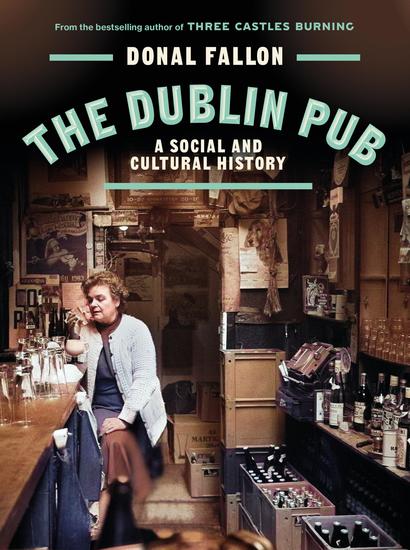
  • The DUBLIN PUB - A SOCIAL AND CULTURAL HISTORY - cover

    The DUBLIN PUB - A SOCIAL AND...

    Donal Fallon

    • 0
    • 0
    • 0
    'Here is a history of publand, yes, but here is a moment in time as well.'
    For centuries, the public house has played an important role in the social and cultural history of Dublin. As the headquarters for a major revolution, a mecca of literary invention or a haven from work, 'the local' is a cornerstone of community life and a testament to human endeavour in an ever-changing city.
    Beginning with the taverns and ale houses of the 17th and 18th centuries, Donal Fallon brings the reader on a visual journey through world renowned public houses such as the Brazen Head, The Long Hall, Grogan's and The Palace, and on to early houses and gay bars, spirit grocers and shebeens. As well as the establishments themselves, the 'Plain People of Ireland' appear in chapters about temperance, karaoke and snugs. Along the way, we meet patrons as diverse and famous around the capital as Theobald Wolfe Tone, Nell McCafferty and Con Houlihan. And visitors to Dublin are also here, as the photographer Lee Miller seeks out the city of James Joyce and Elizabeth Taylor searches in vain for the Ladies' toilet.
    Drawing from rich archival collections, The Dublin Pub includes many previously unpublished photographs as well as testimonies from the past and present to bring the history of the Dublin pub to vivid life.
    Show book
  • My Blue Book of Grammar for Class 7 - cover

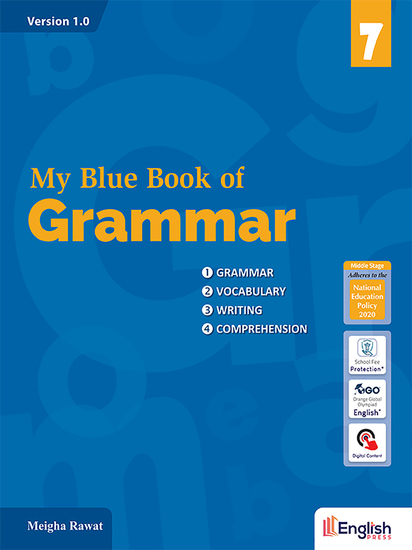
    My Blue Book of Grammar for Class 7

    Meigha Rawat

    • 0
    • 0
    • 0
    A Grammar Series That Uses the Functional Approach 
    
    KEY FEATURES 
    - Functional approach to grammar teaching, using exemplars to illustrate the usage before defining the structure and rules 
    - Vocabulary taught through language-in-use to build the learners’ vocabulary through use rather than memorisation of rules 
    - Contemporary topics to inculcate 21-century skills amongst learners 
    - Use of literature to help learners understand how grammar is used in text 
    - A comprehension section comprising texts from different genres so that learners may relate grammar to different types of works produced in English 
    - Phonics in Grades 1 and 2 to teach the very basis of language 
    - Uniquely stylised illustrations 
    - Activities such as puzzles, crosswords, word grids and games to aid the facilitator in using the concept of ‘flipped classroom’ 
    - Periodic tests to help the learners self-assess the acquisition of concepts 
    - Digital component to cater to a technology-driven classroom 
    
    DESCRIPTION: 
    My Blue Book of Grammar is a course that has been conceptualized and designed keeping in mind the increasingly dynamic role of the English language in today’s world. Especially in our country, where English serves as the lingua franca, a grammar course has to offer not only an exposition of the pedagogy but also the exhibition of the utility of that pedagogy. The aim of a grammar series should be to encourage the development of competency amongst learners, even though their proficiency levels may vary. While the level of exposure to English of all learners may be different, a grammar series should aid in the development of a certain level of confidence amongst the learners, with the end result being that they are able to converse without hesitation in English. 
    
    WHAT WILL YOU LEARN 
    - Understand grammar concepts 
    - Learn how to use different vocabulary concepts taught through language-in-use 
    - Learn 21-century skills 
    - Develop deeper understanding of and appreciation for literature 
    - Have clearer pronunciation through a better understanding of phonics 
    
    WHO THIS BOOK IS FOR: 
    School students of Grades 7 
    
    TABLE OF CONTENTS 
    GRAMMAR 
    1. Compound–Complex Sentences 
    2. Ellipsis 
    3. Compound Subject 
    4. Reported Speech 
    5. Compound Predicate 
    6. Coordinating Adjectives 
    7. Sentences, Fragments and Run-ons 
    8. Comparative and Superlative Adverbs 
    9. Pronoun–Antecedent Agreement 
    10. Active and Passive Voice 
    11. Commas: With Introductory Phrases; When Addressing a Person; 
    in Dates; and in Addresses 
    12. Comma Splices 
    13. Singular and Plural Possessive Nouns 
    14. Linking Verbs 
    15. Transitive and Intransitive Verbs – Revision 
    Test Paper 1 
    VOCABULARY 
    16. Difference Between Who and Whom 
    17. Formal and Informal Language 
    18. Compound Subject with I and Me 
    19. Can and Could 
    20. Redundancy 
    21. Prefixes: inter–, trans–, super– 
    22. Suffixes: –ent, –ant, –ous 
    23. Latin and Greek Roots 
    24. Good vs Well 
    25. Using Clues from the Context to Find the Meaning of the Word 
    26. How versus What in Exclamations 
    27. Positive and Negative Connotations 
    28. Suggestions and Requests 
    Test Paper 2 
    WRITING 
    29. Writing a Notice 
    30. Narrative Poem 
    31. Dialogue Writing 
    32. Writing a Summary 
    33. Survey Findings 
    Test Paper 3 
    COMPREHENSION 
    34. I Have a Dream 
    35. Ain’t I a Woman? 
    36. We Are the World 
    37. Thang-Ta: The Martial Art Dance of Manipur 
    Orange Global Olympiad – English Sample Paper
    Show book
  • Shepherd’s Sight - A Farming Life - cover

    Shepherd’s Sight - A Farming Life

    Barbara McLean

    • 0
    • 0
    • 0
    A restorative and resonant memoir of a year in the life of an aging shepherd 
    		 
    For 50 years, Barbara McLean has tended a flock of Border Leicester sheep on her small Ontario farm, Lambsquarters. In Shepherd’s Sight she shares the crises, pleasures, and challenges of farm life over the course of a year. Now in her 70s, McLean faces a new problem: how much longer she can continue with the physically taxing work that is her central source of meaning and satisfaction.  
    		 
    Through her unsentimental gaze, we witness the highs and heartbreaks of delivering and rearing lambs, the shearing and spinning of wool, the wildlife in the woods (and occasionally in the house), and the garden produce moving from seed to harvest to table. Even after half a century on this land, McLean is still making fresh observations, and she shares them in evocative, elegant prose. As she moves through the calendar year, she also reflects on years past, offering a long view on climate, stewardship, and agriculture. 
    		 
    With its vivid description and absorbing storytelling, Shepherd’s Sight offers an unforgettable glimpse of a life lived on the land.
    Show book
  • A Nation With Two Face - Brave Nation but In The Darkness - cover

    A Nation With Two Face - Brave...

    Dr. Azami

    • 0
    • 0
    • 0
    A Nation with Two Faces: A Brave Nation in the Darkness is a powerful reflection on Afghanistan’s twenty-year war, from the U.S.-led invasion in 2001 to the chaotic withdrawal in 2021. 
     It explores the rise, fall, and resurgence of the Taliban, revealing the deep political and cultural complexities behind their return. Through the voices of civilians, it documents the immense human cost, loss, displacement, and trauma etched into daily life. The book critically examines foreign interventions, questioning motives beyond the fight against terrorism. 
     Women’s rights and media narratives are analyzed in contrast with the lived realities of Afghan women. It confronts war crimes, injustice, and the silence around accountability, urging global awareness and responsibility. 
     Eyewitness memories bring raw emotion and vivid imagery to the chaos, fear, and resilience of Afghan communities. The book remains neutral, prioritizing truth over blame, and focuses on human stories above politics. 
     It highlights the gap between foreign policies and ground realities, emphasizing cultural misunderstanding. 
     Each chapter adds depth to the complex puzzle of Afghanistan’s struggle for peace, identity, and sovereignty. 
     This is not just a story of war, but a call for compassion, justice, and a rethinking of international intervention. 
     A tribute to the resilience of the Afghan people, the book serves as both a historical record and a message for the future.
    Show book
  • Railroad Robber Barons The: The Lives of the Magnates Who Dominated America’s Rail Industry in the 19th Century - cover

    Railroad Robber Barons The: The...

    Editors Charles River

    • 0
    • 0
    • 0
    The Gilded Age and the dawn of the 20th century are often remembered as an era full of monopolies, trusts, and economic giants in heavy industries like oil and steel. Men like Andrew Carnegie built empires like Carnegie Steel, and financiers like J.P. Morgan merged and consolidated them. The era also made names like Astor, Cooke, and Vanderbilt instantly recognizable across the globe. Over time, the unfathomable wealth generated by the businesses made the individuals on top incredibly rich, and that in turn led to immense criticism and an infamous epithet used to rail against them: robber barons.  
    	Dozens of men were called “robber barons”, and the industrial might wielded by some of these men in the late 19th century directly led to a public backlash and made President Teddy Roosevelt the “trust buster”, and there has since been countless regulations to attempt to avoid the types of monopolies found over 100 years ago. However, many 20th century historians and writers pushed back against the allegations hurled at the “robber barons” and even took issue with the name. Libertarian writer John Stossel argued, “They weren't robbers, because they didn't steal from anyone, and they weren't barons - they were born poor...” Ironically, one of America’s most famous robber barons, Andrew Carnegie, epitomized the American Dream, migrating with his poor family to America in the mid-19th century and rising to the top of the business world in his adopted country. And like Carnegie, railroad tycoon Cornelius Vanderbilt set a precedent of sorts with his philanthropy, most notably his gift to Vanderbilt University, which bears his name. Similarly, the West Coast's most famous railroad mogul became Leland Stanford, who also bequeathed a prestigious university after making it to the top of the industry.
    Show book
  • The Mahabharata - Divine Essence Of All Yoga - cover

    The Mahabharata - Divine Essence...

    Veda Vyas

    • 0
    • 0
    • 0
    Krishna Dvaipāyana, also known as and Veda Vyāsa "the one who classified the Vedas"), is a rishi (sage). He is best known as the author of the Mahabharata, one of the two most important epics of Hinduism. He is also credited as the traditional compiler of the Vedas, as well as the writer of other important works including the Puranas. As per the Mahabharata, Vyasa is the son of rishi Parashara and a fisherwoman named Kali (Satyavati), who later marries king Shantanu of Kuru. Throughout the epic, Vyasa appears occasionally helping the Kuru kingdom. His spiritual career includes compiling many texts and spreading the knowledge through his disciples. The festival of Guru Purnima is dedicated to him. It is also known as Vyasa Purnima, the day believed to be both of his birth and when he divided the Vedas. Vyasa is considered one of the seven Chiranjivis (long-lived, or immortals), who are still in existence according to Hindu tradition.
    Show book