Join us on a literary world trip!
Add this book to bookshelf
Grey
Write a new comment Default profile 50px
Grey
Subscribe to read the full book or read the first pages for free!
All characters reduced
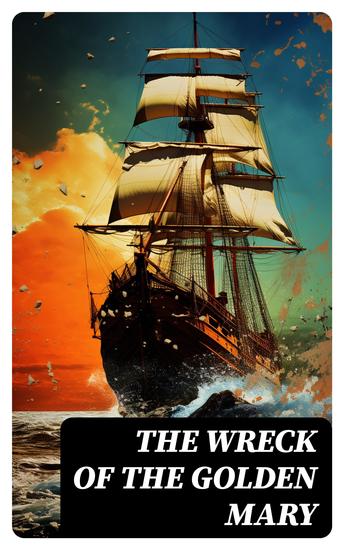
The Wreck of the Golden Mary - cover

The Wreck of the Golden Mary

Charles Dickens, Wilkie Collins, Percy Fitzgerald, Holme Lee, Adelaide Anne Proctor, Rev. James White

Publisher: DigiCat

  • 0
  • 0
  • 0

Summary

The anthology 'The Wreck of the Golden Mary' emerges as an evocative tapestry of literary brilliance, weaving together tales of resilience, camaraderie, and survival. Set against the chilling backdrop of a doomed sea voyage, this collection of stories and essays traverses diverse literary styles, from narrative fiction to reflective prose. The thematic unity of shared human endurance in the face of adversity binds the pieces, offering readers a complex exploration of the human spirit. Standout narratives captivate with their dramatic tension and poignant reflection, making the anthology a significant contribution to 19th-century literature. The venerable lineup of six acclaimed authors, including Charles Dickens and Wilkie Collins, epitomizes the richness of Victorian era literary craftsmanship. Their collective contributions underscore a nuanced understanding of personal and collective struggles. Together, these writers paint a vivid landscape influenced by the realities of the era, lending authenticity and depth to the anthology. Such convergence of rich literary backgrounds invites readers into a historical dialogue enhanced by the cultural vernacular of the time. This anthology is a must-read for enthusiasts of Victorian literature and those seeking to immerse themselves in the multifaceted narratives of human strife and solidarity. 'The Wreck of the Golden Mary' offers a singular opportunity to explore interconnected stories that resonate across time and culture, illuminating the varied facets of maritime and human history. It invites readers to engage with its rich array of perspectives, fostering a profound understanding of survival and community, making it an essential addition to any literary collection.
Available since: 11/21/2022.
Print length: 85 pages.

Other books that might interest you

  • The Prince and the Pauper - cover

    The Prince and the Pauper

    Mark Twain

    • 0
    • 0
    • 0
    This treasured historical satire, played out in two very different socioeconomic worlds of 16th-century England, centers around the lives of two boys born in London on the same day: Edward, Prince of Wales and Tom Canty, a street beggar. During a chance encounter, the two realize they are identical and, as a lark, decide to exchange clothes and roles--a situation that briefly, but drastically, alters the lives of both youngsters.
    
    The Prince, dressed in rags, wanders about the city's boisterous neighborhoods among the lower classes and endures a series of hardships; meanwhile, poor Tom, now living with the royals, is constantly filled with the dread of being discovered for who and what he really is.
    Show book
  • Top 10 Short Stories The - Virginia Woolf - The top ten short stories written by Virginia Woolf - cover

    Top 10 Short Stories The -...

    Virginia Woolf

    • 0
    • 0
    • 0
    Short stories have always been a sort of instant access into an author’s brain, their soul and heart.  A few pages can lift our lives into locations, people and experiences with a sweep of landscape, narration, feelings and emotions that is difficult to achieve elsewhere. 
     
    In this series we try to offer up tried and trusted ‘Top Tens’ across many different themes and authors. But any anthology will immediately throw up the questions – Why that story? Why that author?  
     
    The theme itself will form the boundaries for our stories which range from well-known classics, newly told, to stories that modern times have overlooked but perfectly exemplify the theme.  Throughout the volume our authors whether of instant recognition or new to you are all leviathans of literature. 
     
    Some you may disagree with but they will get you thinking; about our choices and about those you would have made.  If this volume takes you on a path to discover more of these miniature masterpieces then we have all gained something. 
     
    Stream of consciousness seems matter of fact nowadays.  But Woolf catapulted it into a new Modernist form.  Characters now came with much individuality, flaws and form that literature was forever changed.  Despite her tragic suicide and the sure loss of what was to come these stories still confirm her literary greatness. 
     
    1 - The Top 10 - Virginia Woolf - An Introduction 
    2 - Solid Objects by Virginia Woolf 
    3 - An Unwritten Novel by Virginia Woolf 
    4 - Mrs Dalloway in Bond Street 
    5 - A Society by Virginia Woolf 
    6 - Kew Gardens by Virginia Woolf 
    7 - The String Quartet by Virginia Woolf 
    8 - Monday or Tuesday by Virginia Woolf 
    9 - A Haunted House by Virginia Woolf 
    10 - The Mark on the Wall by Virginia Woolf 
    11 - The Legacy by Virginia Woolf
    Show book
  • To Build a Fire - and Other Stories - cover

    To Build a Fire - and Other Stories

    Jack London, Henry James, Sir...

    • 0
    • 0
    • 0
    Dive into a world of classic literature with our meticulously curated digital audiobook collection, “To Build a Fire - and Other Stories.” This collection brings together four captivating short stories from some of the greatest authors in literary history, each narrated to perfection. 
     
    Featured Stories: 
     
    To Build a Fire by Jack London - Experience the harrowing tale of survival in the Yukon wilderness, where man’s struggle against nature is vividly brought to life. 
     
    Brooksmith by Henry James - Delve into the poignant story of a butler whose life is intertwined with the social circles of his employers, revealing the complexities of human relationships. 
     
    Gloria Scott by Sir Arthur Conan Doyle - Join Sherlock Holmes in one of his earliest cases, unraveling a mystery that sets the stage for his illustrious detective career. 
     
    The Stranger’s Latchkey by R. Austin Freeman - Follow the intriguing investigation of Dr. Thorndyke as he solves a perplexing case involving a mysterious key and a hidden secret.
    Show book
  • Idiot The - Audiolbook - cover

    Idiot The - Audiolbook

    Fyodor Dostoevsky, Classic...

    • 0
    • 0
    • 0
    The Idiot is one of Fyodor Dostoevsky's most profound and philosophical novels, exploring the nature of goodness in a world driven by selfishness and ambition. The story follows Prince Lev Myshkin, a man of extraordinary kindness and sincerity, who returns to Russia after years of medical treatment abroad. His innocence and honesty set him apart from the manipulative society he encounters, where people view his goodness as either weakness or foolishness.As Myshkin navigates the complexities of high society, he becomes entangled in a web of relationships, each testing his ideals and moral strength. Dostoevsky uses his protagonist to pose fundamental questions about human nature, love, and the struggle between purity and corruption. The Idiot is a moving and thought-provoking novel that challenges readers to consider whether true goodness can survive in a world filled with deception and cruelty.
    Show book
  • A Christmas Carol - cover

    A Christmas Carol

    Charles Dickens

    • 0
    • 0
    • 0
    A Christmas Carol is a popular Christmas story by Charles Dickens. Scrooge is a greedy old man, who only cares about himself. One night he is greeted by a couple of ghosts who teach him a lesson. The moral of the story is: be kind, appreciate your family and friends and help those in need. Recommended for age 7+.
    Show book
  • Candide - cover

    Candide

    Voltaire

    • 0
    • 0
    • 0
    Candide is characterised by its sarcastic tone, as well as by its erratic, fantastical and fast-moving plot. A picaresque novel with a story similar to that of a more serious bildungsroman, it parodies many adventure and romance clichés, the struggles of which are caricatured in a tone that is mordantly matter-of-fact. Still, the events discussed are often based on historical happenings, such as the Seven Years' War and the 1755 Lisbon earthquake. As philosophers of Voltaire's day contended with the problem of evil, so too does Candide in this short novel, albeit more directly and humorously.    Voltaire ridicules religion, theologians, governments, armies, philosophies, and philosophers through allegory; most conspicuously, he assaults Leibniz and his optimism. Voltaire's men and women point his case against optimism by starting high and falling low. A modern could not go about it after this fashion. He would not plunge his people into an unfamiliar misery. He would just keep them in the misery they were born to. But such an account of Voltaire's procedure is as misleading as the plaster cast of a dance.    Look at his procedure again. Mademoiselle Cunégonde, the illustrious Westphalian, sprung from a family that could prove seventy-one quarterings, descends and descends until we find her earning her keep by washing dishes in the Propontis. The aged faithful attendant, victim of a hundred acts of rape by negro pirates, remembers that she is the daughter of a pope, and that in honor of her approaching marriage with a Prince of Massa-Carrara all Italy wrote sonnets of which not one was passable. We do not need to know French literature before Voltaire in order to feel, although the lurking parody may escape us, that he is poking fun at us and at himself. His laughter at his own methods grows more unmistakable at the last, when he caricatures them by casually assembling six fallen monarchs in an inn at Venice.    A modern assailant of optimism would arm himself with social pity. There is no social pity in "Candide." Voltaire, whose light touch on familiar institutions opens them and reveals their absurdity, likes to remind us that the slaughter and pillage and murder which Candide witnessed among the Bulgarians was perfectly regular, having been conducted according to the laws and usages of war. Had Voltaire lived today he would have done to poverty what he did to war. Pitying the poor, he would have shown us poverty as a ridiculous anachronism, and both the ridicule and the pity would have expressed his indignation.
    Show book