Join us on a literary world trip!
Add this book to bookshelf
Grey
Write a new comment Default profile 50px
Grey
Subscribe to read the full book or read the first pages for free!
All characters reduced
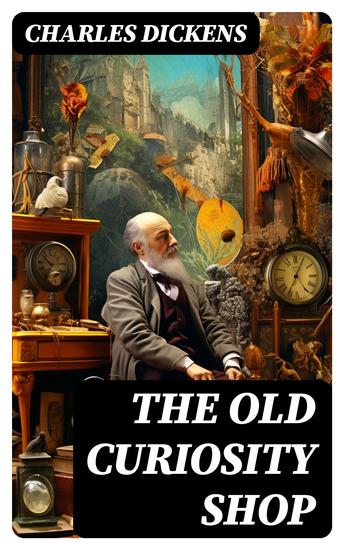
The Old Curiosity Shop - Illustrated Edition - cover

The Old Curiosity Shop - Illustrated Edition

Charles Dickens

Publisher: DigiCat

  • 0
  • 0
  • 0

Summary

In "The Old Curiosity Shop," Charles Dickens weaves a richly textured narrative set against the backdrop of Victorian London, exploring themes of poverty, innocence, and the unyielding grip of fate. Through the story of Little Nell and her grandfather, Dickens employs a poignant blend of melodrama and vivid characterization, creating a powerful commentary on the societal issues of his time, particularly the harsh realities faced by the vulnerable. The novel is marked by Dickens's signature attention to detail and intricate plotting, as each character— from the avaricious Quilp to the benevolent Kit—serves to illuminate the broader human experience. Charles Dickens, a master of his craft and a chronicler of 19th-century life, was profoundly influenced by his own experiences with poverty and hardship as a child. His dedication to social reform and his acute awareness of the struggles faced by the marginalized fundamentally shaped his narrative style and thematic focus in "The Old Curiosity Shop." Dickens's deep empathy for his characters invites readers to reflect on their plights, rendering the tale both a personal and social critique of the times. This novel is highly recommended for readers seeking a compelling exploration of human resilience against adversity, as well as those interested in the evolution of narrative techniques in Victorian literature. Dickens's depth of insight and emotional resonance make "The Old Curiosity Shop" a timeless masterpiece that continues to resonate with contemporary audiences.
Available since: 12/14/2023.
Print length: 591 pages.
Other books that might interest you

  • Tono-Bungay - Book the Fourth: The Aftermath of Tono-Bungay (Unabridged) - cover

    Tono-Bungay - Book the Fourth:...

    H. G. Wells

    • 0
    • 0
    • 0
    Herbert George "H. G." Wells (1866 - 1946) was an English writer.
    He was prolific in many genres, including the novel, history, politics, social commentary, and textbooks and rules for war games. Wells is now best remembered for his science fiction novels and is called a "father of science fiction"
    BOOK THE FOURTH: THE AFTERMATH OF TONO-BUNGAY: That evening I talked with my uncle in the Hardingham for the last time. The atmosphere of the place had altered quite shockingly. Instead of the crowd of importunate courtiers there were just half a dozen uninviting men, journalists waiting for an interview. Ropper the big commissionaire was still there, but now indeed he was defending my uncle from something more than time-wasting intrusions. I found the little man alone in the inner office pretending to work, but really brooding. He was looking yellow and deflated.
    Show book
  • The Pilgrim's Progress - cover

    The Pilgrim's Progress

    John Bunyan

    • 0
    • 0
    • 0
    The Pilgrim's Progress from This World to That Which Is to Come is a Christian allegory written by John Bunyan. First published in 1678, it is considered one of the most significant works of English literature and Protestant theology.  
    The story follows Christian, a character representing everyman, as he journeys from the City of Destruction to the Celestial City, which symbolizes Heaven. Burdened by the awareness of his sins, depicted by a physical weight on his back, Christian seeks salvation. He is guided by Evangelist, who directs him to the Wicket Gate. Along his journey, Christian encounters various allegorical characters who either assist or impede his progress. Christian, an everyman character, journeys from the City of Destruction to the Celestial City (representing Heaven). Burdened by the knowledge of his sin (represented by a physical burden on his back), Christian seeks salvation. He is guided by Evangelist, who directs him to the Wicket-gate. Along his path, Christian encounters various allegorical characters who either help or hinder his progress.
    Show book
  • Candide - cover

    Candide

    Voltaire

    • 0
    • 0
    • 0
    "Candide, or Optimism" is a satirical novella written by the French philosopher Voltaire, first published in 1759. It follows the adventures of the young Candide, who is raised in a utopian world and taught that “all is for the best.” The narrative takes him through a series of misfortunes, exposing him to the harsh realities of the world, ultimately leading him to question his optimistic beliefs. Voltaire uses Candide’s journey to satirize religion, governments, the military, and the philosophy of optimism, particularly as espoused by Leibniz. "Candide" is considered one of the greatest achievements of Western literature
    Show book
  • Water of Life The - Story Time Episode 57 (Unabridged) - cover

    Water of Life The - Story Time...

    Brothers Grimm

    • 0
    • 0
    • 0
    A king was dying. An old man told his sons that the water of life would save him. Each one set out in turn. The two older ones, setting out in hopes of being the heir, were rude to a dwarf on the way and became trapped in ravines. When the youngest son went the dwarf asked where he was going, and he told him. The dwarf told him it was in a castle, and gave him an iron wand to open the gates and two loaves to feed to the lions inside. Then he had to get the water before the clock struck 12 when the gates would shut again.
    Show book
  • The Terrible Solomons - cover

    The Terrible Solomons

    Jack London

    • 0
    • 0
    • 0
    “The Terrible Solomons” written by Jack London: There is no gainsaying that the Solomons are a hard-bitten bunch of islands. On the other hand, there are worse places in the world. But to the new chum who has no constitutional understanding of men and life in the rough, the Solomons may indeed prove terrible.
    Show book
  • The Secret Sense - cover

    The Secret Sense

    Isaac Asimov

    • 0
    • 0
    • 0
    "The Secret Sense" is a science fiction short story by American writer Isaac Asimov, published in Cosmic Stories in March 1941. It takes place against the background of an ancient and highly developed culture living in large underground cities on Mars.The Martians couldn't taste and their hearing was bad, but they had a secret sense all their own.
    Show book