Join us on a literary world trip!
Add this book to bookshelf
Grey
Write a new comment Default profile 50px
Grey
Subscribe to read the full book or read the first pages for free!
All characters reduced
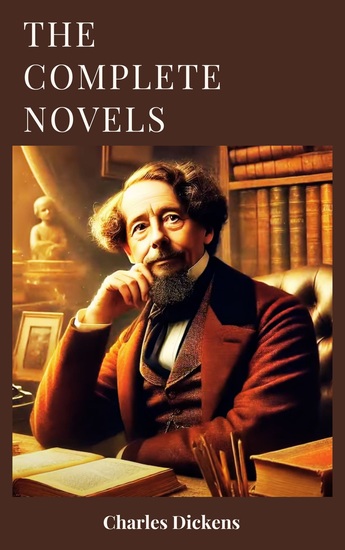
The complete novels of Charles Dickens - A Treasury of Victorian Masterpieces - cover

The complete novels of Charles Dickens - A Treasury of Victorian Masterpieces

Charles Dickens, Zenith Crescent Moon Press

Publisher: Zenith Crescent Moon Press

  • 0
  • 0
  • 0

Summary

📖 Embark on an unforgettable journey through the world of Charles Dickens, one of the greatest novelists in English literature. The Complete Novels of Charles Dickens presents an extraordinary collection of his timeless masterpieces, from the heartwarming David Copperfield to the poignant and satirical Great Expectations. Each novel reflects the intricacies of Victorian society and the enduring themes of love, hope, redemption, and social justice.

✨ This comprehensive eBook brings together beloved classics like A Tale of Two Cities, Oliver Twist, and Bleak House, alongside lesser-known gems that showcase Dickens' unmatched storytelling prowess. With vivid characters, evocative settings, and profound moral lessons, Dickens' novels continue to captivate and inspire readers around the globe.

📜 Explore stories of resilience and transformation, meet iconic characters like Ebenezer Scrooge, Pip, and Oliver, and immerse yourself in Dickens' unparalleled ability to portray the human condition. This collection is a treasure trove for lovers of classic literature and a celebration of one of history's most influential authors.

🌟 Own this definitive collection and experience the brilliance of Dickens in every page. Click Buy Now and cherish the legacy of an unrivaled literary genius.
Available since: 03/26/2025.
Print length: 2429 pages.
Other books that might interest you

  • The Madman - cover

    The Madman

    Kahlil Gibran

    • 0
    • 0
    • 0
    The Madman, His Parables and Poems is a book written by Kahlil Gibran, which was published in the United States by Alfred A. Knopf in 1918, with illustrations reproduced from original drawings by the author. It was Gibran's first book in English to be published, also marking the beginning of the second phase of Gibran's career. May Ziade, with whom Gibran had been corresponding since 1912, reviewed it in Al-Hilal, a magazine in Egypt.
    Among the most significant works Kahlil Gibran: "Broken Wings", "The Prophet", "The Earth Gods" , "The Garden of the Prophet".
    Show book
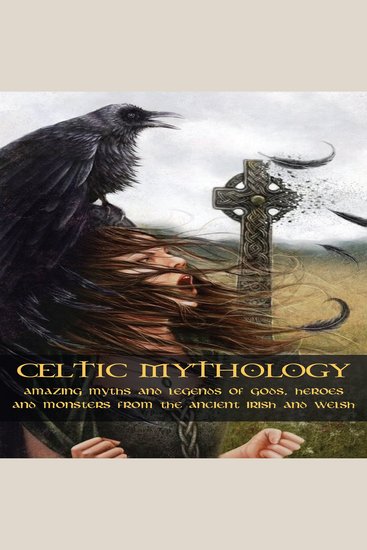
  • CELTIC MYTHOLOGY - Amazing Myths and Legends of Gods Heroes and Monsters from the Ancient Irish and Welsh - cover

    CELTIC MYTHOLOGY - Amazing Myths...

    Adan McCarthy

    • 0
    • 0
    • 0
    Dive into the enchanting world of Celtic mythology with this captivating collection of myths and legends from ancient Ireland and Wales. This book brings to life the rich tapestry of stories passed down through generations, unveiling a realm where gods wield immense power, heroes embark on epic quests, and fearsome monsters roam the land. 
    Journey through the mystical landscapes of the Celts, where you'll encounter:Mighty Gods and Goddesses: Discover the powerful deities who shaped the world's fate, from the wise and benevolent Dagda to the fierce and formidable Morrigan.Legendary Heroes: Follow the adventures of legendary figures such as Cú Chulainn, whose strength and bravery knew no bounds, and Fionn mac Cumhaill, the fearless leader of the Fianna.Monstrous Beasts: Confront the terrifying creatures that haunted the ancient Celts, including the dreaded Banshee and the formidable Balor of the Evil Eye. 
    This comprehensive guide to Celtic mythology not only recounts these timeless tales but also delves into the cultural significance and historical context behind them. Whether you are a mythology enthusiast, a lover of folklore, or simply curious about the ancient world, this book offers a fascinating glimpse into the spiritual and mythological heritage of the Celtic people. 
    Immerse yourself in the magic and mystery of Celtic mythology and explore the awe-inspiring legends that continue to captivate and inspire to this day.
    Show book
  • Maiden Arc The: Coming of Age - Archetypal Character Guided Meditation for Writers - cover

    Maiden Arc The: Coming of Age -...

    K.M. Weiland

    • 0
    • 0
    • 0
    Archetypes can help you write stories that tap the depths of the human experience. This 45-minute guided meditation will help you dive deep into your subconscious creativity and write a resonant Maiden Arc story.  
    As the first archetypal journey in the cycle of life arcs, the Maiden represents a crucial initiatory experience. This coming-of-age arc will take you and your characters on a journey through all the challenges of growing up, individuating from authority figures, and finding an identity and role in a wider world that often seems overwhelming and even dangerous.  
    This meditation will help you visualize and imagine important characters and settings. It gives you the opportunity to explore every vital beat while offering all the space you need to find your own unique story. It will show you how your character may interact with corresponding archetypal antagonists (Authority and Predator) and grapple with a thematic Lie and Truth (Submission vs. Sovereignty) in order to evolve from Innocent to Individual.   
    (Note: Although a feminine arc, this journey may be taken by any character of any gender. Gender-neutral terms are used throughout the meditation to help you apply its imagery to the specifics of your own story.) 
    K.M. Weiland’s book Writing Archetypal Character Arcs taught writers how to identify and structure the six most important initiatory journeys of the human experience (Maiden, Hero, Queen, King, Crone, and Mage). These “life arcs” include the youthful Hero’s Journey as one of six, but go so much deeper to explore little-known feminine and elder arcs as well. 
    Now you can explore these archetypal journeys yourself by accessing the potent tool of “dreamzoning.” Just sit back and let your imagination take over as these audio adventures guide you through every important beat in the archetypal arcs.
    Show book
  • Don't You Dare - cover

    Don't You Dare

    Gayla Turner

    • 0
    • 0
    • 0
    "Don't You Dare" is a compelling story that weaves together a current-day journey of discovery and a true-life love story between two women that took place over a hundred years ago. Newspaper headlines and stories back then didn't mention LGBTQ people. The LGBTQ community loved and lived in the background of society because it was too dangerous to do otherwise. All were hidden, just like the wedding photos belonging to author Gayla Turner's grandmother – Ruby. This unforgettable book begins with the discovery of these hidden wedding photos dated June 8, 1915. As these photos unveiled an awe-inspiring secret, Gayla Turner embarked on a seven-year journey to find out more about her grandmother and the woman standing next to her dressed as the groom.Curiosity led to extensive research that uncovered a love story between Ruby and the mystery woman in the photos. The author also uncovered a secret lesbian social club that was formed in the early 1900s by a local businesswoman. Women from as far away as Chicago traveled by train to the little farm town of Amherst, Wisconsin, to attend her exclusive parties. The local town people thought Cora held private tea and card parties so single young ladies could talk about how to find a husband. Little did they know, finding a man was not a subject of their conversations.
    Show book
  • ballast - cover

    ballast

    Quenton Baker

    • 0
    • 0
    • 0
    A poetic sequence using the 1841 slave revolt aboard the brig Creole as a lens through which to view the vitality of Black lives and the afterlife of slavery.In 1841, the only successful, large-scale revolt of American-born enslaved people erupted on the ship Creole. 135 people escaped chattel slavery that day. The event was recounted in US Senate documents, including letters exchanged between US and British consulates in The Bahamas and depositions from the white crew on the ship. There is no known record or testimony from the 135 people who escaped. Their story has been lost to time and indifference. Quenton Baker’s ballast is an attempt at incomplete redress.With imagination, deep empathy, and skilled and compelling lyricism, Baker took a black marker to those Senate documents and culled a poetic recount of the Creole revolt. Layers of ink connect readers to Baker’s poetic process: (re)phrasing the narrative of the state through a dexterous process of hands-on redactions.ballast is a relentless, wrenching, and gorgeously written book, a defiant reclamation of one of the most important but overlooked events in US history, and an essential contribution to contemporary poetry.
    Show book
  • Ludwig Wittgenstein - Language Logic and the Limits of Philosophy - cover

    Ludwig Wittgenstein - Language...

    Hector Davidson

    • 0
    • 0
    • 0
    Ludwig Wittgenstein, one of the most influential philosophers of the 20th century, profoundly shaped modern thought, particularly in the realms of language, logic, and the philosophy of mind. His philosophy spans two distinct periods, marked by an evolution in his views on the relationship between language, meaning, and reality. Wittgenstein’s work challenges the way we think about and use language, positing that philosophical problems often arise from misunderstandings of language and its limitations. 
    Wittgenstein’s early philosophy, as presented in his landmark work Tractatus Logico-Philosophicus, was grounded in the belief that language could mirror the structure of reality. According to his "picture theory of meaning," words and sentences are pictures that represent facts in the world. He argued that the limits of language are also the limits of the world, and anything that could not be meaningfully expressed through language was simply beyond the scope of philosophy. This view led him to conclude that many traditional philosophical problems were nonsensical, arising from a misuse of language. 
    However, Wittgenstein underwent a significant philosophical transformation after his work on the Tractatus, largely due to his dissatisfaction with the results of his early approach. By the time of his later work, particularly in Philosophical Investigations, Wittgenstein had rejected the picture theory of meaning and developed the concept of "language games." He argued that meaning is not inherent in words themselves but is derived from their use in various social contexts. Language, for Wittgenstein, is a tool embedded in human practices and activities. He claimed that understanding language requires understanding the ways it functions in specific contexts, challenging the idea of a fixed, underlying structure of meaning.
    Show book