Join us on a literary world trip!
Add this book to bookshelf
Grey
Write a new comment Default profile 50px
Grey
Subscribe to read the full book or read the first pages for free!
All characters reduced
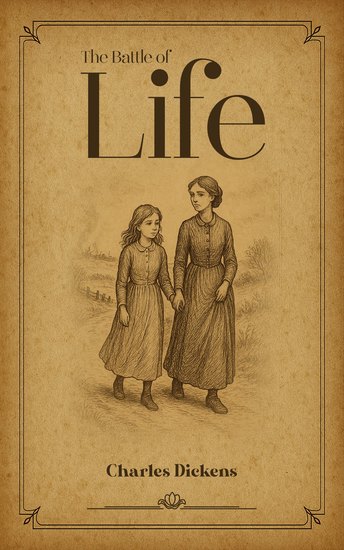
The Battle of Life - cover

The Battle of Life

Charles Dickens

Publisher: CLXBX

  • 0
  • 0
  • 0

Summary

The Battle of Life is a lesser-known yet deeply touching novella by Charles Dickens that explores themes of love, sacrifice, forgiveness, and quiet heroism. Set in a peaceful English village, the story shifts away from bustling cities and social institutions to focus on the emotional struggles that define human life.

The narrative centers on two devoted sisters whose lives are shaped by loyalty and deep affection. When romantic misunderstandings and emotional conflicts threaten their happiness, one sister makes a profound personal sacrifice in the belief that love sometimes requires self-denial. As years pass, the true meaning of her actions—and the hidden strength behind them—gradually comes to light.

Unlike Dickens's darker social novels, The Battle of Life presents a more intimate and reflective portrait of human experience. The "battle" of the title is not one of war or violence, but of inner conflict: the struggle between selfish desire and selfless love, between resentment and forgiveness.

Tender, gentle, and morally uplifting, The Battle of Life celebrates compassion, reconciliation, and the quiet victories of the heart. With its emotional depth and timeless message, the story stands as a reminder that the greatest battles are often fought within—and that love, patience, and understanding can lead to lasting peace.
Available since: 02/05/2026.
Print length: 104 pages.
Other books that might interest you

  • Equality at Sea (Unabridged) - cover

    Equality at Sea (Unabridged)

    Frederick Marryat

    • 0
    • 0
    • 0
    Captain Frederick Marryat (10 July 1792 - 9 August 1848) was a Royal Navy officer, a novelist, and an acquaintance of Charles Dickens. He is noted today as an early pioneer of nautical fiction, particularly for his semi-autobiographical novel Mr Midshipman Easy (1836). He is remembered also for his children's novel The Children of the New Forest (1847), and for a widely used system of maritime flag signalling known as Marryat's Code.
    EQUALITY AT SEA: The next morning Jack Easy would have forgotten all about his engagement with the captain, had it not been for the waiter, who thought that after the reception which our hero had given the first lieutenant, it would be just as well that he should not be disrespectful to the captain.
    Show book
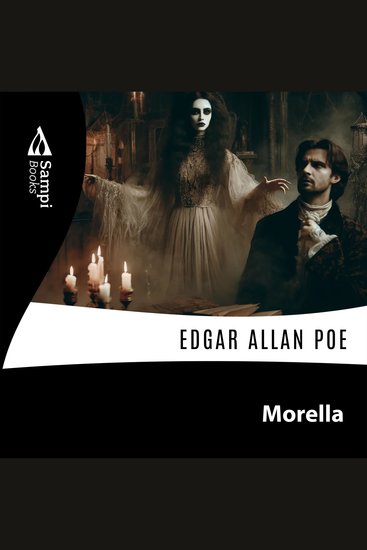
  • Morella - cover

    Morella

    Sampi Books, Edgar Allan Poe

    • 0
    • 0
    • 0
    "Morella", by Edgar Allan Poe, shows the relationship between a man and his wife, whose fixation with the supernatural makes her almost a ghost. After she dies, her daughter, also called Morella, appears to be her reincarnation, continuing a frightening cycle of life, death and rebirth.
    Show book
  • Kashtanka - cover

    Kashtanka

    Anton Chekhov

    • 0
    • 0
    • 0
    "Kashtanka" — Anton Chekov's short story about a dog with two masters — is a fable about the conundrum of the creative life.
    The dog Kashtanka belongs to a drunken carpenter who takes her out one day, but on the way home loses her in the confusion of a military parade. The story is told by an omniscient narrator who privileges Kashtanka's point of view, so we follow the dog's subsequent adventures largely from her eyes.
    Show book
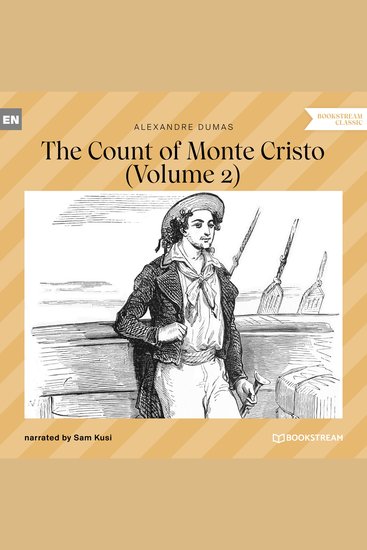
  • Count of Monte Cristo The - Volume 2 (Unabridged) - cover

    Count of Monte Cristo The -...

    Alexandre Dumas

    • 0
    • 0
    • 0
    Thrown in prison for a crime he has not committed, Edmond Dantes is confined to the grim fortress of If. There he learns of a great hoard of treasure hidden on the Isle of Monte Cristo and he becomes determined not only to escape, but also to unearth the treasure and use it to plot the destruction of the three men responsible for his incarceration. Dumas' epic tale of suffering and retribution, inspired by a real-life case of wrongful imprisonment, was a huge popular success when it was first serialized in the 1840s.
    VOLUME 2: The day after that in which the scene we have just described had taken place on the road between Bellegarde and Beaucaire, a man of about thirty or two-and-thirty, dressed in a bright blue frock coat, nankeen trousers, and a white waistcoat, having the appearance and accent of an Englishman, presented himself before the mayor of Marseilles.
    Show book
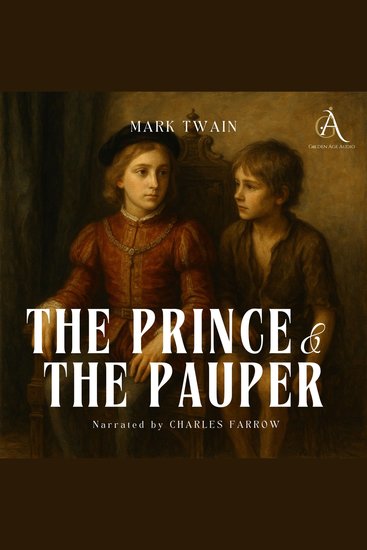
  • Prince and the Pauper The - Audiobook - cover

    Prince and the Pauper The -...

    Mark Twain, Classic Audiobooks,...

    • 0
    • 0
    • 0
    Set in 16th-century England, The Prince and the Pauper tells the story of two boys who are identical in appearance but born into very different worlds. Tom Canty, a poor boy from a destitute London family, and Prince Edward, heir to the English throne, meet by chance and decide to switch clothes as a joke. But when fate traps them in each other's roles, they must navigate the harsh realities of their new lives.As the prince experiences life among the poor and Tom is thrown into the rigid world of royalty, both boys gain empathy, wisdom, and a deeper understanding of justice. Twain blends adventure, satire, and social commentary to craft a timeless tale about identity, inequality, and the human spirit.
    Show book
  • Little Dorrit - cover

    Little Dorrit

    Charles Dickens

    • 0
    • 0
    • 0
    Little Dorrit is a novel by Charles Dickens, originally published in serial form between 1855 and 1857. The story features Amy Dorrit, youngest child of her family, born and raised in the Marshalsea prison for debtors in London. Arthur Clennam encounters her after returning home from a 20-year absence, ready to begin his life anew.
    The novel satirises some shortcomings of both government and society, including the institution of debtors' prisons, where debtors were imprisoned, unable to work and yet incarcerated until they had repaid their debts. The prison in this case is the Marshalsea, where Dickens's own father had been imprisoned. Dickens is also critical of the impotent bureaucracy of the British government, in this novel in the form of the fictional Circumlocution Office. Dickens satirises the stratification of society that results from the British class system, too.
    Show book