Join us on a literary world trip!
Add this book to bookshelf
Grey
Write a new comment Default profile 50px
Grey
Subscribe to read the full book or read the first pages for free!
All characters reduced
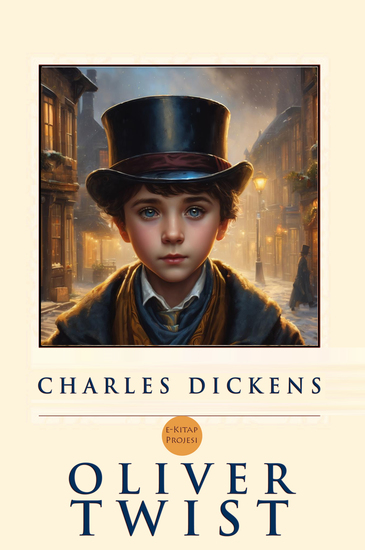
Oliver Twist - cover

Oliver Twist

Charles Dickens

Publisher: E-Kitap Projesi & Cheapest Books

  • 0
  • 0
  • 0

Summary

Charles Dickens was born on 1812, in Portsea, England. His parents were middle-class, but they suffered financially as a result of living beyond their means. When Dickens was twelve years old, his family's dire straits forced him to quit school and work in a blacking factory, a place where shoe polish is made. Within weeks, his father was put in debtor's prison, where Dickens's mother and siblings eventually joined him. At this point, Dickens lived on his own and continued to work at the factory for several months. The horrific conditions in the factory haunted him for the rest of his life, as did the experience of temporary orphanhood. Apparently, Dickens never forgot the day when a more senior boy in the warehouse took it upon himself to instruct Dickens in how to do his work more efficiently. For Dickens, that instruction may have represented the first step toward his full integration into the misery and tedium of working-class life. The more senior boy's name was Bob Fagin. Dickens's residual resentment of him reached a fevered pitch in the characterization of the villain Fagin in Oliver Twist.

After inheriting some money, Dickens's father got out of prison and Charles returned to school. As a young adult, he worked as a law clerk and later as a journalist. His experience as a journalist kept him in close contact with the darker social conditions of the Industrial Revolution, and he grew disillusioned with the attempts of lawmakers to alleviate those conditions. A collection of semi-fictional sketches entitled Sketches by Boz earned him recognition as a writer. Dickens became famous and began to make money from his writing when he published his first novel, The Pickwick Papers, which was serialized in 1836 and published in book form the following year.

In 1837, the first installment of Oliver Twist appeared in the magazine Bentley's Miscellany, which Dickens was then editing. It was accompanied by illustrations by George Cruikshank, which still accompany many editions of the novel today. Even at this early date, some critics accused Dickens of writing too quickly and too prolifically, since he was paid by the word for his serialized novels. Yet the passion behind Oliver Twist, animated in part by Dickens's own childhood experiences and in part by his outrage at the living conditions of the poor that he had witnessed as a journalist, touched his contemporary readers. Greatly successful, the novel was a thinly veiled protest against the Poor Law of 1834.

In 1836, Dickens married Catherine Hogarth, but after twenty years of marriage and ten children, he fell in love with Ellen Ternan, an actress many years his junior. Soon after, Dickens and his wife separated, ending a long series of marital difficulties. Dickens remained a prolific writer to the end of his life, and his novels—among them Great Expectations, A Tale of Two Cities, A Christmas Carol, David Copperfield, and Bleak House—continued to earn critical and popular acclaim. He died of a stroke in 1870, at the age of 58, leaving The Mystery of Edwin Drood unfinished.

Oliver Twist opens with a bitter invective directed at the nineteenth-century English Poor Laws. These laws were a distorted manifestation of the Victorian middle class's emphasis on the virtues of hard work. England in the 1830s was rapidly undergoing a transformation from an agricultural, rural economy to an urban, industrial nation. The growing middle class had achieved an economic influence equal to, if not greater than, that of the British aristocracy.

In the 1830s, the middle class clamored for a share of political power with the landed gentry, bringing about a restructuring of the voting system. Parliament passed the Reform Act, which granted the right to vote to previously disenfranchised middle-class citizens. This desire gave rise to the Evangelical religious movement and inspired sweeping economic and political change.
Available since: 01/25/2024.
Print length: 600 pages.

Other books that might interest you

  • Margaret's Patient - cover

    Margaret's Patient

    Lucy Maud Montgomery

    • 0
    • 0
    • 0
    Lucy Maud Montgomery (November 30, 1874 – April 24, 1942), published as L. M. Montgomery, was a Canadian author best known for a series of novels beginning in 1908 with Anne of Green Gables. The book was an immediate success. The title character, orphan Anne Shirley, made Montgomery famous in her lifetime and gave her an international following.
    Margaret's Patient: Margaret paused a moment at the gate and looked back at the quaint old house under its snowy firs with a thrill of proprietary affection. It was her home; for the first time in her life she had a real home, and the long, weary years of poorly paid drudgery were all behind her.
    Show book
  • Siddhartha - cover

    Siddhartha

    Hermann Hesse

    • 0
    • 0
    • 0
    Step into the serene journey of self-discovery with "Siddhartha" – an enriching audiobook experience that transcends time and culture. Narrated with captivating eloquence, this timeless masterpiece by Hermann Hesse invites listeners to explore the depths of the human spirit. 
    Embark on the spiritual odyssey of Siddhartha, a young Brahmin who forsakes the comforts of his home to seek enlightenment. Follow his quest for meaning as he encounters various facets of existence – from the asceticism of the Samanas to the opulence of the material world. Through Siddhartha's encounters with the ferryman Vasudeva, the courtesan Kamala, and ultimately, with the enlightened Buddha himself, listeners are drawn into a profound exploration of wisdom, love, and the interconnectedness of all things. 
    Hesse's lyrical prose, brought to life through immersive narration, evokes a sense of tranquility and introspection. Each word resonates with profound truths, inviting listeners to reflect on their own journey towards fulfillment and understanding. 
    Perfect for those seeking solace in the chaos of modern life or anyone yearning for spiritual enlightenment, "Siddhartha" offers a timeless message of hope and awakening. Whether you're a seasoned seeker or a newcomer to spiritual literature, this audiobook promises to inspire, uplift, and illuminate the path to self-discovery. 
    Rediscover the beauty of Hesse's masterpiece anew with the "Siddhartha" audiobook – an essential addition to your library for its timeless wisdom and universal insights. Immerse yourself in this profound narrative, and let its teachings resonate with your soul as you journey towards enlightenment.
    Show book
  • The Island of Doctor Moreau - cover

    The Island of Doctor Moreau

    H. G. Wells

    • 0
    • 0
    • 0
    "The Island of Doctor Moreau" is a science fiction novel by H.G. Wells, first published in 1896. The story revolves around Edward Prendick, a shipwreck survivor who finds himself on a remote island controlled by the mysterious Doctor Moreau. Moreau, a disgraced vivisectionist, is conducting horrifying experiments, transforming animals into human-like creatures. As Prendick explores the island, he grapples with themes of identity, morality, and the ethical limits of scientific exploration.
    Show book
  • The Seven Who Were Hanged - cover

    The Seven Who Were Hanged

    Anonymous

    • 0
    • 0
    • 0
    The story of seven people tried for murder and sentenced to death by hanging. As they await their execution in prison and contemplate what it means to die, they struggle with fear and horror, each in their own way.  
    Praise for The Seven Who Were Hanged:  
    ⭐️⭐️⭐️⭐️⭐️	Trial, verdict, awaiting an execution: Leonid Andreyev paints vivid and livid psychological portraits of those sentenced to death – both idealists and dreamers; and also mean and calloused criminals. The story is profound, precise and frightful. 
    ⭐️⭐️⭐️⭐️⭐️ 	Perfect craft in this story on the cruelty of execution. I don't know a better story in the world. 
    ⭐️⭐️⭐️⭐️⭐️	Every time I read this I come away feeling even more positively about this as a completely transcendent and astonishing piece of literature. By now I'm pretty convinced it's the best book I've ever read and maybe ever will read.  
    ⭐️⭐️⭐️⭐️⭐️ 	The book questions the humanity of the death penalty as a response to violent crime, and does so in a way that is subtle rather than heavy handed or moralistic. But what is most impressive is how Andreyev manages to convey the state of mind of people who are confronted with imminent death.
    Show book
  • A Pair of Silk Stockings - From their pens to your ears genius in every story - cover

    A Pair of Silk Stockings - From...

    Kate Chopin

    • 0
    • 0
    • 0
    Katherine O'Flaherty was born on the 8th February 1850 in St Louis, Missouri to parents of French and Irish descent. 
    At age 5, she was sent to the Sacred Heart Academy and, apart from a 2 year period at home when her father died, remained there until graduating in 1868.  Whilst there she began writing and became an avid reader of almost anything that crossed her path.   
    Kate married Oscar Chopin in 1870 and the couple moved to New Orleans, and later to the rural setting of Cloutierville, Louisiana to raise their 6 children.  
    In 1882 her husband died leaving her in a deep trench of debt.  Despite her best efforts to turn the businesses around they were sold, and she moved the family back to St Louis and the financial help of her mother.  Sadly, her mother died within the year.  Kate, now struggling with depression, pushed herself to write and gained a local reputation as a writer of short stories that captured the local color and vibrancy of her surroundings. 
    By the early 1890’s her short stories were published nationally.  With this widespread audience also came negative reviews, controversy, and cries of immorality as themes such as interracial relationships, the rights of women and other burning issues of the day were written about. 
    Despite the criticism, which unnerved her, she continued to write though in the main her works, around 100 short stories and two novels, were not attributed with any literary worth. 
    Kate Chopin died from a brain haemorrhage in St Louis Missouri on the 22nd of August 1904.  She was 54. 
    For much of the 20th Century her work was forgotten and out of print.  It was only in early 1970’s, with the rise of feminism and the call for a more just society that she was given the status her works had long described and shone a literary light at.  She is now safely revered as one of America’s great authors.
    Show book
  • Saved (Unabridged) - cover

    Saved (Unabridged)

    William Clark Russell

    • 0
    • 0
    • 0
    William Clark Russell (24 February 1844 - 8 November 1911) was an English writer best known for his nautical novels. At the age of 13 Russell joined the United Kingdom's Merchant Navy, serving for eight years. The hardships of life at sea damaged his health permanently, but provided him with material for a career as a writer. He wrote short stories, press articles, historical essays, biographies and a book of verse, but was known best for his novels, most of which were about life at sea. He maintained a simultaneous career as a journalist, principally as a columnist on nautical subjects for The Daily Telegraph.
    SAVED: We had never yet had the leisure to inspect the stores with which the mutineers had furnished the quarter-boat, and we now found, in spite of their having shifted a lot of provisions out of her into the long-boat before starting in pursuit of us.
    Show book