Join us on a literary world trip!
Add this book to bookshelf
Grey
Write a new comment Default profile 50px
Grey
Subscribe to read the full book or read the first pages for free!
All characters reduced
Miscellaneous Papers - cover

Miscellaneous Papers

Charles Dickens

Publisher: DigiCat

  • 0
  • 0
  • 0

Summary

In "Miscellaneous Papers," Charles Dickens presents a rich anthology that encapsulates the breadth of his literary prowess and social commentary. This collection spans a range of genres, from essays and sketches to travel writing and short stories, each embedded with Dickens' signature wit and acute observation of 19th-century British society. The prose is characterized by intricate character development and vibrant descriptions that showcase Dickens' ability to blend humor with poignant moments, reflecting upon themes such as class disparity, urban life, and human resilience in the face of adversity. These papers, previously unpublished or overlooked, serve as a fascinating companion to his more renowned works, illuminating the evolution of his style and thought. Charles Dickens, one of the most influential literary figures of the Victorian era, was shaped by a tumultuous upbringing characterized by poverty and hardship. His early experiences in a workhouse and his keen perception of social injustices profoundly influenced his writing career, leading him to become a fervent advocate for social reform. The diverse topics encompassed in "Miscellaneous Papers" highlight Dickens' mission to bring attention to pressing societal issues, showcasing the breadth of his interests and the depth of his human empathy. I wholeheartedly recommend "Miscellaneous Papers" to readers who wish to delve deeper into Dickens' multifaceted genius. This collection not only enriches the understanding of his oeuvre but also resonates with contemporary readers grappling with similar social questions. It is a testament to Dickens' enduring relevance and a must-read for anyone interested in the interplay of literature and social justice.
Available since: 09/16/2022.
Print length: 60 pages.

Other books that might interest you

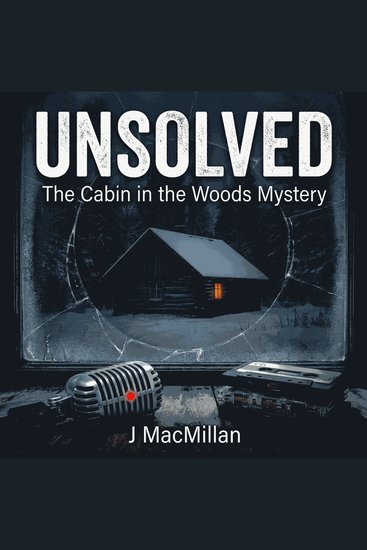
  • Unsolved: The Cabin in the Woods Mystery - cover

    Unsolved: The Cabin in the Woods...

    J MacMillan

    • 0
    • 0
    • 0
    A stranded journalist records his descent into psychological horror within a frozen cabin where the past refuses to die.
     
    Elias arrives in the wilderness seeking a career-defining story, but the absolute isolation of the woods quickly turns his research into a fight for sanity. This claustrophobic thriller captures the chilling mood of being trapped by a blizzard, making it an intense listen for those brave enough to endure a stormy night alone.
     
    The discovery of a rusted lockbox shatters his composure. Inside are audio cassettes from 1994, documenting the final days of a stranger who occupied this exact space. As Elias plays the tapes, the specific terrors described—the metallic smells, the scuff of movement, the biting cold—begin to manifest around him, dissolving the boundary between history and immediate danger.
     
    What you will encounter in this immersive audio experience:
    
    Found Footage Structure: A narrative unfolding entirely through time-stamped recordings for real-time suspense.
    Unreliable Perception: The terrifying collapse of a rational mind facing extreme paranoia.
    Atmospheric Dread: A setting where the silence of the snow is as threatening as the noise in the walls.
    
     
    Rationality offers no protection against the dark. Hiding beneath the floorboards, the narrator whispers his final entry, leaving you to determine if the encroaching threat is a supernatural force or the product of a fractured psyche.
    Show book
  • RD Burman - The Man The Music Winner of the National Award for Best Book on Cinema 2011 - cover

    RD Burman - The Man The Music...

    Balaji Vittal, Nimisha Sirohi,...

    • 0
    • 0
    • 0
    Winner of the National Award for Best Book on Cinema in 2011 
    To a nation fed on classical music, the advent of Rahul Dev Burman with his repertoire of Western beats was a godsend. RD revolutionized Hindi film music in the 1970s, and with his emphasis on rhythm and beats, this Pied Piper of Hindi film music had young India swinging to his tunes. At the same time, this genius proved his many detractors who criticized him for corrupting popular taste wrong by composing some of the most influential raga-based songs in Hindi cinema and showing an immense comfort with all kinds of music, including Indian folk. RD: The Man, The Music looks at the phenomenon called R.D. Burman and how he changed the way Indians perceived Hindi film music. Through anecdotes and trivia that went into the making of Pancham's music - the many innovations he introduced, like mixed rhythm patterns, piquant chords and sound mixing - and through interactions with the musicians who were part of RD's team, the authors create a fascinating portrait of a man who, through his music, continues to thrive, even fifteen years after his death.
    Show book
  • The Ankardyne Pew - From their pens to your ears genius in every story - cover

    The Ankardyne Pew - From their...

    W F Harvey

    • 0
    • 0
    • 0
    William Fryer Harvey AM was born on 14th April 1885 into a wealthy Quaker family in Leeds, West Yorkshire. 
    He was educated at the Quaker Bootham School in Yorkshire and Leighton Park School in Reading before university at Balliol College, Oxford.  
    His health was fragile and he poured his energies into writing short stories and in 1910 published his first collection ‘Midnight House’. 
    In the Great War he was with the Friends' Ambulance Unit and then served as a surgeon-lieutenant in the Royal Navy.  There he received the Albert Medal for Lifesaving but lung damage received at that time troubled him for the rest of his life. 
    He continued to write short stories, and even a memoir, but by 1925 ill health had forced his retirement to any outside work.  Three years later he published his second collection which contained his macabre classic ‘The Beast with Five fingers’, only one more collection would come from his pen in his lifetime. 
    For many years of his life he now lived in Switzerland with his wife but a yearning to be home saw them come back to England in 1935. 
    W F Harvey died in Letchworth on the 4th June 1937. He was 52.
    Show book
  • The Autobiography of Goethe Volume 1 - cover

    The Autobiography of Goethe...

    Johann Wolfgang von Goethe

    • 0
    • 0
    • 0
    This Autobiography of Goethe has a lengthy introduction and short biography of Goethe's life by Thomas Carlyle (1795-1881) and was translated by John Oxenford (1812-1877) in 1848, which was a year of revolutions in Europe. Johann Goethe was a literary celebrity by the age of 25 and was ennobled by the Duke of Saxe-Weimar, Carl August in 1782 after first taking up residence there in November of 1775 following the success of his first novel, The Sorrows of Young Werther (available on Librivox). He lived in Germany from 1749-1832. This period corresponds to the same time as the Seven Years' War, and the French and American Revolutions (1754-1815). Goethe was a member of the Sturm und Drang literary movement. This group of writers believed that literature should shock the audience in order to produce extreme emotions as a counterbalance to the rationalist movement which promoted detachment in the sciences. This is the first part of his autobiography, which he called Truth and Fiction or Truth and Poetry depending on the translator. Goethe wrote poems, such as, The Sorcerer's Apprentice, as well as plays, novels and some scientific works. He wrote the play Faust which is also available on Librivox. He was an Anti-Enlightenment writer. Margaret Fuller (1810-1850) assisted with the 1839 English translation of Johann Peter Eckermann's Conversations with Goethe in the Last Years of his Life.One reader, Barbara, submitted the following after reading a little of the book. "The publisher, J. H. Moore, seems to have cobbled his book together from sources which are not properly acknowledged if at all. For instance, the "Introduction" merely pinches an essay by Thomas Carlyle which was published in 1828. Google gives the publication date of "The Autobiography of Goethe" as "1901?" (Summary by Wikipedia and Craig Campbell)
    Show book
  • Edgar Allan Poe - Six of the Best - Their legacy in 6 classic stories - cover

    Edgar Allan Poe - Six of the...

    Edgar Allan Poe

    • 0
    • 0
    • 0
    Six has always been a number we group things around – Six of the best, six of one half a dozen of another, six feet under, six pack, six degrees of separation and a sixth sense are but a few of the ways we use this number. 
     
    Such is its popularity that we thought it is also a very good way of challenging and investigating an author’s work to give width, brevity, humour and depth across six of their very best. 
     
    In this series we gather together authors whose short stories both rivet the attention and inspire the imagination to visit their gems in a series of six, to roam across an author’s legacy in a few short hours and gain a greater understanding of their writing and, of course, to be lavishly entertained by their ideas, their narrative and their way with words. 
     
    These stories can be surprising and sometimes at a tangent to what we expected, but each is fully formed and a marvellous adventure into the world and words of a literary master. 
     
     1 - Six of the Best - Edgar Allan Poe - An Introduction 
    2 - Edgar Allan Poe - An Introduction 
    3 - The Fall of the House of Usher - Part 1 by Edgar Allan Poe 
    4 - The Fall of the House of Usher - Part 2 by Edgar Allan Poe 
    5 - The Pit and the Pendulum by Edgar Allan Poe 
    6 - The Tell Tale Heart by Edgar Allan Poe 
    7 - The Premature Burial by Edgar Allan Poe 
    8 - The Masque of the Red Death by Edgar Allan Poe 
    9 - The Murders in the Rue Morgue - Part 1 by Edgar Allan Poe 
    10 - The Murders in the Rue Morgue - Part 2 by Edgar Allan Poe
    Show book
  • The Apprentice of Buchenwald - The True Story of the Teenage Boy Who Sabotaged Hitler’s War Machine - cover

    The Apprentice of Buchenwald -...

    Oren Schneider

    • 0
    • 0
    • 0
    Alexander Rosenberg was a smart and curious teenager who spoke many languages, collected stamps, played the violin, and lived a pampered life with his affluent parents in a tranquil Czechoslovakian town. The rise of fascism and Nazi Germany causes his protected existence to collapse, alongside the illusion of secular Jewish assimilation in 1930s Europe. 


    Using their last reserves of wealth and influence to escape extermination, the Rosenbergs go underground to avoid the Gestapo. Eventually exposed, captured, and taken to Buchenwald, the largest concentration camp in Germany, Alexander and his father collaborate to survive one day at a time. A chaotic chain of events puts young Alexander at the heart of a massive armament sabotage scheme. When his father is gravely injured and disappears after an air bombing, it is up to industrious Alexander to create leverage and use wartime machinations and raw talent to save his father's life. 


    This universal, true story of inner strength, resourcefulness and optimism was documented and written by Alexander's grandson, Oren Schneider. It is dedicated to brave people everywhere who choose not to give up.
    Show book