Join us on a literary world trip!
Add this book to bookshelf
Grey
Write a new comment Default profile 50px
Grey
Subscribe to read the full book or read the first pages for free!
All characters reduced
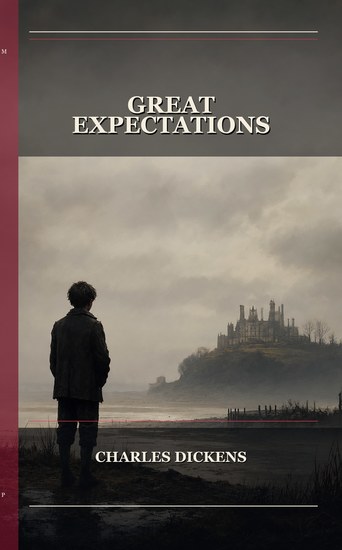
Great Expectations - cover

Great Expectations

Charles Dickens

Publisher: Morlune Press

  • 0
  • 0
  • 0

Summary

Charles Dickens was a British author, journalist, and editor whose work brought attention to the struggles of Victorian England's lower classes. His writings provided a candid portrait of the era's poor and served as inspiration for social change. Great Expectations , Dickens' thirteenth novel, was first published in serial form between 1860 and 1861 and is widely praised as the author's greatest literary accomplishment. The novel follows the life, relationships, and moral development of an orphan boy named Pip. The novel begins when Pip encounters an escaped convict whom he helps and fears in equal measure. Pip's actions that day set off a sequence of events and interactions that shape Pip's character as he matures into adulthood. The vivid characters, engaging narrative style, and universal themes of Great Expectations establish this novel as a timeless literary classic, and an engaging portrait of Victorian life. Charles Dickens (died 1870) was one of the most distinguished authors of the Victorian age. Their work has endured across generations and continues to be read and studied worldwide. As a work of classic literary fiction, Great Expectations exemplifies the narrative craft and social insight that defined great storytelling of its era. Literary fiction of this period was characterized by careful attention to character psychology, social milieu, and the moral questions that animated public discourse.
Available since: 05/19/2026.
Print length: 617 pages.

Other books that might interest you

  • Bookshop Memories - From their pens to your ears genius in every story - cover

    Bookshop Memories - From their...

    George Orwell

    • 0
    • 0
    • 0
    Eric Arthur Blair was born on 25th June 1903 in Motihari, Bihar, in what was then British India. When Eric was one his mother took him to England and they settled at Henley-on-Thames in Oxfordshire.  
    His education was at the nearby convent school before moving on to St Cyprian's School at Eastbourne and finally Eton where his academic studies were sidelined in favour of work on college publications. 
    University could not be achieved without a scholarship, which depended on good grades, and so it was decided that Eric should join the Imperial Police. Now 19 he chose a posting in Burma, then a province of British India. He was appointed an Assistant District Superintendent in November 1922. In Burma, he was an outsider. However, he acquired a moustache and some local tattoos—small badly drawn blue circles on his knuckles. 
    In 1927 he contracted dengue fever and returned to England to convalesce. At home he reappraised his life and resigned his job to become a writer. His police experiences were later used for ‘Burmese Days’.  
    By 1932 he had a literary agent who secured him an offer to publish a non-fiction work ‘Down and Out in London and Paris’ for a £40 advance, through the radical and socialist Victor Gollancz publishing house.  It was published in January 1933 as ‘by George Orwell’, it was modestly successful. 
    ‘Burmese Days’ (1934) and ‘A Clergyman's Daughter’ (1935) were published whilst Orwell kept on with writing ‘Keep the Aspidistra Flying’.  In January 1936, he set out by public transport to research life for the ordinary man and woman in Wigan. From these experiences emerged ‘The Road to Wigan Pier’. He also caught the eye of Special Branch who kept him under surveillance until the year before the release of ‘Nineteen Eighty-Four’. 
    Later in December 1936 Orwell set out to fight in the Spanish Civil War. Initially stationed at Alcubierre 1,500 feet above sea level, in the depth of winter on the Aragon Front. Military action was scant as was the lack of munitions, food and firewood. In April, Orwell returned to Barcelona and was caught up in the Barcelona May Days and its factional in-fighting. Returning to the Aragon Front he was almost immediately hit by a sniper's bullet through the throat. The bullet barely missed the artery but he survived.  His experiences were expressed in ‘Homage to Catalonia’ (1938) but, out of fashion with its times, it was a commercial failure.  
    When World War Two started Orwell was declared ‘unfit for any kind of military service’ but finally obtained ‘war work’ with the BBC's Eastern Service.  In September 1943, after two years Orwell left the BBC to concentrate on a new idea: ‘Animal Farm’.  
    By April 1944 ‘Animal Farm’ was ready for publication. It was a huge and resounding success.   
    Orwell left London for the island of Jura in April 1947 to work on ‘Nineteen Eighty-Four’. Once more health became an issue and in December a chest specialist was summoned from Glasgow who diagnosed tuberculosis.  By the end of July Orwell was able to return to Jura to finish ‘Nineteen Eighty-Four’. It was published the following June to immediate critical and popular acclaim. 
    By Christmas Orwell's health had again begun to decline. Early on the morning of 21st January, an artery burst in Orwell's lungs. It was fatal. He was dead at 46.
    Show book
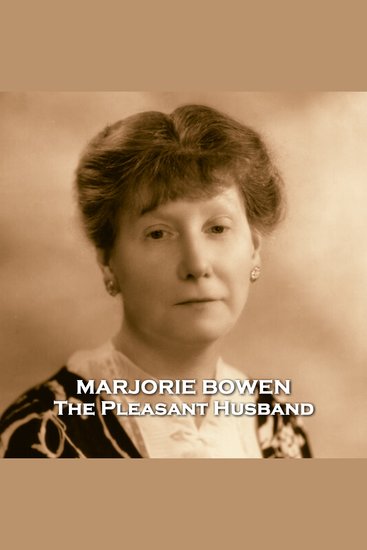
  • The Pleasant Husband - From their pens to your ears genius in every story - cover

    The Pleasant Husband - From...

    Marjorie Bowen

    • 0
    • 0
    • 0
    Margaret Gabrielle Vere Campbell was born on the 1st November 1885 on Hayling Island in Hampshire.  
    Her childhood was fraught with problems, her alcoholic father left early in her life and was later found dead on a London Street.  Life thereafter was poverty with an uncaring mother. 
    However, her talents took her to the Slade School of Fine Art and later to study in Paris.  
    Her first fiction, written at a mere 16, was a violent medieval historical novel, ‘The Viper of Milan’.  Initially rejected by several publishers it went on to become a best-seller  
    After this her prolific writings were the main financial support for the family.  Her literary output numbered over 150 volumes, mainly under the pseudonym of Marjorie Bowen but she also used the names Joseph Shearing, George R Preedy, John Winch, Robert Paye and Margaret Campbell.  Within this output she assigned the pseudonyms to the various genres she worked across, from Historical fiction to supernatural short stories.  
    Perhaps her best known work is the 1909 book ‘Black Magic’, a Gothic horror novel about a medieval witch. 
    Several of her works were also adapted into films.   
    She was married twice.  The first to Zefferino Emilio Constanza (they had two children), who died of tuberculosis, and then to Arthur L Long (and another two children). 
    Marjorie Bowen died on the 23rd December 1952 at St Charles Hospital in North Kensington, London after suffering a serious concussion from a fall in her bedroom.  She was 67.
    Show book
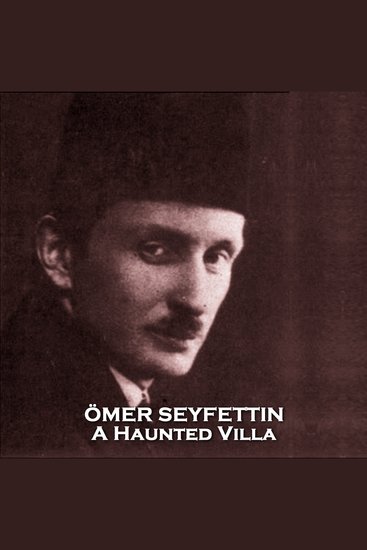
  • A Haunted Villa - From their pens to your ears genius in every story - cover

    A Haunted Villa - From their...

    Ömer Seyfettin

    • 0
    • 0
    • 0
    The bookshelves of World literature are incredible collections that have gathered together centuries of very talented authors.  From their countries and continents their fame spread and whilst among their number many are now forgotten or neglected their talents endure.  Among them is Ömer Seyfettin.
    Show book
  • A Victorian Christmas Tale - Christmas at Thompson Hall - cover

    A Victorian Christmas Tale -...

    Anthony Trollope

    • 0
    • 0
    • 0
    Introducing the enchanting digital audiobook version of "Christmas at Thompson Hall" by Anthony Trollope  
     
    Step into the heartwarming world of Victorian England and embrace the holiday spirit with this timeless classic! "Christmas at Thompson Hall" transports listeners to a festive setting filled with charming characters, familial joy, and the magic of Christmas. 
     
    Narrated with warmth and rich detail, this digital audiobook version brings to life Trollope's delightful storytelling, painting a vivid picture of the season's traditions, love, and the true meaning of family. Experience the laughter, the surprises, and the touching moments woven intricately into the fabric of this holiday tale.
    Show book
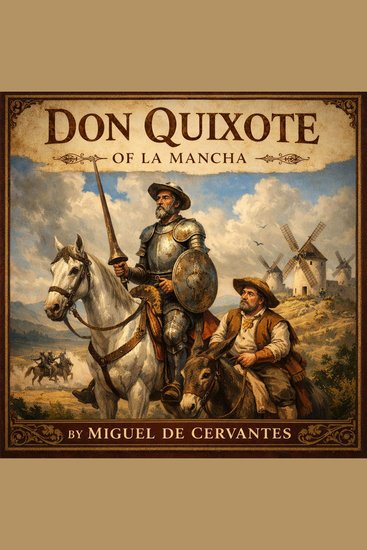
  • Don Quixote of La Mancha - cover

    Don Quixote of La Mancha

    Miguel de Cervantes

    • 0
    • 0
    • 0
    Don Quixote of La Mancha tells the story of Alonso Quixano, a middle-aged man from Spain who becomes so obsessed with tales of chivalry that he loses his sanity and decides to become a knight-errant. Renaming himself Don Quixote, he sets out on a quest to revive honor, defend the helpless, and live according to the ideals of heroic knights. 
    Accompanied by his loyal but practical squire, Sancho Panza, Don Quixote embarks on a series of misadventures where imagination and reality constantly clash. He famously mistakes windmills for giants, inns for castles, and ordinary people for characters in grand epics. While his actions often lead to comedic and sometimes tragic consequences, his unwavering belief in his mission gives the story a deeper emotional resonance. 
    Through humor, satire, and rich storytelling, Cervantes explores themes of illusion versus reality, the power of dreams, and the complexity of human nature. Don Quixote is widely regarded as one of the greatest works of literature ever written and a cornerstone of modern fiction.
    Show book
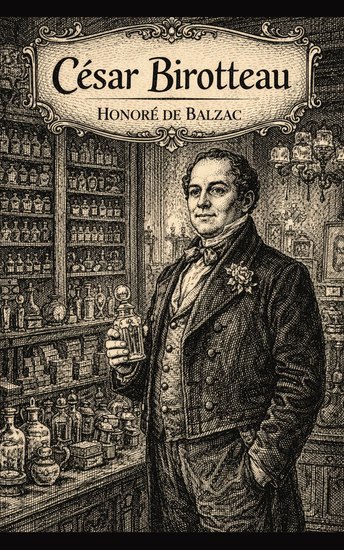
  • César Birotteau - cover

    César Birotteau

    Honoré de Balzac

    • 0
    • 0
    • 0
    César Birotteau is one of Honoré de Balzac's most powerful and psychologically intricate novels, offering a profound exploration of ambition, pride, financial speculation, and moral redemption in post-Napoleonic France. As part of Balzac's monumental series La Comédie Humaine, this novel stands as a vivid portrait of Parisian society and the fragile nature of success in a rapidly modernizing world.
    
    The story follows César Birotteau, a modest and honest perfume merchant in Paris who has risen from humble beginnings to respectable prosperity. A devoted husband, loyal royalist, and proud shopkeeper, Birotteau embodies middle-class virtue and unwavering belief in hard work and social advancement. His business thrives, his reputation is solid, and he dreams of securing an even grander future for himself and his family. But beneath his optimism lies a dangerous naiveté.
    
    Encouraged by flattery and seduced by the promise of rapid wealth, Birotteau embarks on ambitious financial ventures — including risky real estate speculation and lavish social events meant to elevate his social standing. In a society driven by appearances, ambition, and fierce competition, he becomes entangled in schemes far beyond his understanding. Manipulated by more cunning and calculating figures, Birotteau's fortunes begin to unravel with devastating speed.
    
    Balzac masterfully captures the mechanics of financial speculation, the ruthless nature of Parisian commerce, and the intricate web of social hierarchies that define the era. The novel provides an almost forensic look at bankruptcy — not just as a financial event, but as a moral and social catastrophe. As Birotteau's empire collapses, he faces humiliation, betrayal, and public disgrace. Yet, even in ruin, he clings to his principles of honor and integrity.
    
    At its heart, César Birotteau is not merely a story of financial downfall but a deeply human tale about dignity, perseverance, and redemption. Unlike many of Balzac's more cynical portrayals of society, this novel offers a moving study of a fundamentally decent man crushed by forces he scarcely comprehends. Birotteau's determination to repay his debts and restore his honor becomes a testament to moral resilience in a world increasingly ruled by greed and speculation.
    
    Balzac's richly detailed narrative brings 19th-century Paris to life — from bustling shops and glittering salons to legal offices and shadowy backrooms where fortunes are made and destroyed. Through sharp social observation and psychological depth, the author exposes both the aspirations and the vulnerabilities of the rising bourgeois class.
    
    Poignant, ironic, and deeply realistic, César Birotteau remains strikingly relevant today. It speaks to the timeless dangers of overreaching ambition, the volatility of financial markets, and the enduring value of personal integrity. Balzac transforms the fall of one small businessman into a universal meditation on success, failure, and the true cost of dreams.
    
    For readers interested in classic literature, economic drama, or penetrating social commentary, César Birotteau offers an unforgettable journey into the heart of human ambition and the fragile architecture of fortune.
    Show book