Join us on a literary world trip!
Add this book to bookshelf
Grey
Write a new comment Default profile 50px
Grey
Subscribe to read the full book or read the first pages for free!
All characters reduced
Great Expectations - cover

Great Expectations

Charles Dickens

Publisher: E-Kitap Projesi & Cheapest Books

  • 0
  • 0
  • 0

Summary

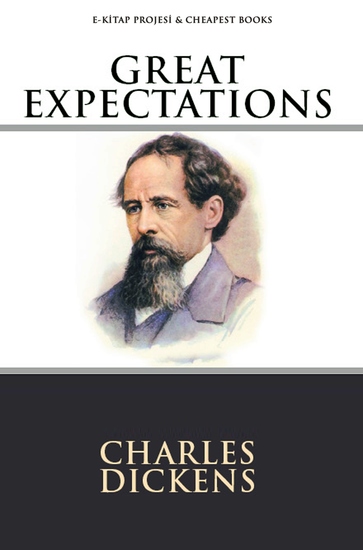
Great Expectations is Charles Dickens's thirteenth novel. It is his second novel, after David Copperfield, to be fully narrated in the first person. Great Expectations is abildungsroman, or a coming-of-age novel, and it is a classic work of Victorian literature. It depicts the growth and personal development of an orphan named Pip. The novel was first published in serial form in Dickens' weekly periodical All the Year Round, from 1 December 1860 to August 1861. In October 1861, Chapman and Hall published the novel in three volumes.Great Expectations was to be twice as long, but constraints imposed by the management of All the Year Round limited the novel's length. Collected and dense, with a conciseness unusual for Dickens, the novel represents Dickens' peak and maturity as an author. According to G. K. Chesterton, Dickens penned Great Expectations in "the afternoon of [his] life and fame." It was the penultimate novel Dickens completed, preceding Our Mutual Friend.It is set among the marshes of Kent and in London in the early to mid-1800s. From the outset, the reader is "treated" by the terrifying encounter between Pip, the protagonist, and the escaped convict, Abel Magwitch. Great Expectations is a graphic book, full of extreme imagery, poverty, prison ships, "the hulks," barriers and chains, and fights to the death. It therefore combines intrigue and unexpected twists of autobiographical detail in different tones. Regardless of its narrative technique, the novel reflects the events of the time, Dickens' concerns, and the relationship between society and man.The novel has received mixed reviews from critics: Thomas Carlyle speaks of "All that Pip's nonsense," while George Bernard Shaw praised the novel as "All of one piece and Consistently truthfull." Dickens felt Great Expectations was his best work, calling it "a very fine idea," and was very sensitive to compliments from his friends: "Bulwer, who has been, as I think you know, extraordinarily taken by the book."
Available since: 01/19/2024.
Print length: 600 pages.
Other books that might interest you

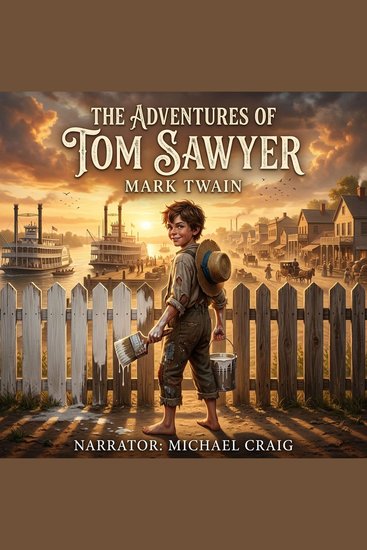
  • The Adventures of Tom Sawyer - Experience the ultimate tale of boyhood rebellion and midnight danger in this thrilling piece of Classic Literature Dive into the world of Tom Huck and a deadly graveyard secret - cover

    The Adventures of Tom Sawyer -...

    Mark Twain

    • 0
    • 0
    • 0
    Before there were rules to follow, there was a boy who broke them all. 
    In the sleepy, sun-baked town of St. Petersburg, Missouri, Tom Sawyer is far more interested in playing hooky, hunting for buried treasure, and swearing blood oaths than memorizing Sunday school verses. But what begins as a barefoot summer of innocent mischief—whitewashing fences and courting the lovely Becky Thatcher—takes a chilling turn under the cover of darkness. When Tom and the outcast Huckleberry Finn sneak into the local graveyard at midnight, they accidentally witness a brutal murder. Suddenly, their idyllic childhood is shattered. With a ruthless killer on the loose and an innocent man framed for the crime, Tom is thrust into a terrifying high-stakes game of survival. Dare he break his terrifying blood-oath of silence to save a life? 
    Why you will love this: As a cornerstone of American Classic Literature, this gripping masterpiece seamlessly blends laugh-out-loud humor with pulse-pounding mystery. Whether you are a long-time fan of historical fiction or discovering the nostalgic charm of Mark Twain's legendary characters for the first time, this immersive audiobook delivers an unforgettable coming-of-age adventure that captures the untamed spirit of youth. 
    About the Author: Mark Twain (Samuel Clemens) is widely celebrated as the "father of American literature." A former riverboat pilot and brilliant satirist, Twain revolutionized storytelling with his razor-sharp wit, masterful dialect, and deeply human characters, leaving an unparalleled legacy that continues to define the global literary landscape.
    Show book
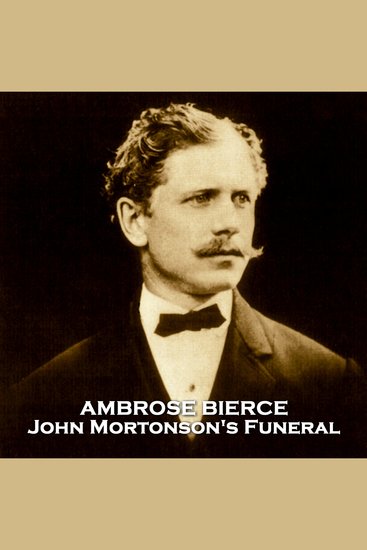
  • John Mortonson's Funeral by Ambrose Bierce - From their pens to your ears genius in every story - cover

    John Mortonson's Funeral by...

    Ambrose Bierce

    • 0
    • 0
    • 0
    Ambrose Gwinnett Bierce was born on 24th June 1842 at Horse Cave Creek in Meigs County, Ohio. His parents were poor but they introduced him to literature at an early age, instilling in him a deep appreciation of books, the written word and the elegance of language.  
    Growing up in Koscuisko County, Indiana poverty and religion were defining features of his childhood, and he would later describe his parents as “unwashed savages” and fanatically religious, showing him little affection but always quick to punish. He came to resent religion, and his introduction to literature appears to be their only positive effect. 
    At age 15 Bierce left home to become a printer’s devil, mixing ink and fetching type at The Northern Indian, a small Ohio paper. Falsely accused of theft he returned to his farm and spent time sending out work in the hopes of being published. 
    His Uncle Lucius advised he be sent to the Kentucky Military Institute. A year later he was commissioned as an Officer.  As the Civil War started Bierce enlisted in the 9th Indiana Infantry Regiment.  
    In April 1862 Bierce fought at the Battle of Shiloh, an experience which, though terrifying, became the source of several short stories. Two years later he sustained a serious head wound and was off duty for several months. He was discharged in early 1865.  
    A later expedition to inspect military outposts across the Great Plains took him all the way to San Francisco. He remained there to become involved with publishing and editing and to marry, Mary Ellen on Christmas Day 1871.  They had a child, Day, the following year.  
    In 1872 the family moved to England for 3 years where he wrote for Fun magazine. His son, Leigh, was born, and first book, ‘The Fiend’s Delight’, was published.  
    They returned to San Francisco and to work for a number of papers where he gained admiration for his crime reporting. In 1887 he began a column at the William Randolph Hearst’s San Francisco Examiner.  
    Bierce’s marriage fell apart when he discovered compromising letters to his wife from a secret admirer. The following year, 1889 his son Day committed suicide, depressed by romantic rejection. 
    In 1891 Bierce wrote and published the collection of 26 short stories which included ‘An Occurrence at Owl Creek Bridge’.  Success and further works including poetry followed.  
    Bierce with Hearst’s resources helped uncover a financial plot by a railroad to turn 130 million dollars of loans into a handout. Confronted by the railroad and asked to name his price Bierce answered “my price is $130 million dollars. If, when you are ready to pay, I happen to be out of town, you may hand it over to my friend, the Treasurer of the United States”.  
    He now began his first foray as a fabulist, publishing ‘Fantastic Fables’ in 1899.  But tragedy again struck two years later when his second son Leigh died of pneumonia relating to his alcoholism.  
    He continued to write short stories and poetry and also published ‘The Devil’s Dictionary’.  
    At the age of 71, in 1913 Bierce departed from Washington, D.C., for a tour of the battlefields where he had fought during the civil war. At the city of Chihuahua he wrote his last known communication, a letter to a friend. It’s closing words were “as to me, I leave here tomorrow for an unknown destination,” Ambrose Bierce then vanished without trace.
    Show book
  • The Pilgrim's Progress from this world to that which is to come - One Man’s Journey from Earthly Struggle to Eternal Glory - cover

    The Pilgrim's Progress from this...

    John Bunyan

    • 0
    • 0
    • 0
    "The Pilgrim's Progress from This World to That Which Is to Come," written by John Bunyan in the late 17th century, is an allegorical novel that follows the journey of a character named Christian, who represents all of humanity. Christian embarks on a spiritual quest from the "City of Destruction" to the "Celestial City," seeking salvation and enlightenment through various trials and challenges. 
    At the beginning of the story, Christian is depicted as bearing a heavy burden and grappling with existential despair. After reading a troubling book that reveals his doomed state, he becomes increasingly distressed, ultimately crying out for salvation. His path soon intersects with the character Evangelist, who directs him to the wicket gate as a way to escape his dire fate. 
    Throughout his journey, Christian faces the temptation to succumb to worldly advice and the folly of straying from his divine purpose. This underscores themes of faith, redemption, and the challenges encountered on the path to spiritual truth.
    Show book
  • The Life and Adventures of Robinson Crusoe - cover

    The Life and Adventures of...

    Daniel Defoe

    • 0
    • 0
    • 0
    The Life and Adventures of Robinson Crusoe is a novel by Daniel Defoe, first published on 25 April 1719. The first edition credited the work's protagonist Robinson Crusoe as its author, leading many readers to believe he was a real person and the book a travelogue of true incidents.
    Crusoe set sail from Kingston upon Hull on a sea voyage in August 1651, against the wishes of his parents, who wanted him to pursue a career in law. After a tumultuous journey where his ship is wrecked in a storm, his lust for the sea remains so strong that he sets out to sea again. This journey, too, ends in disaster, as the ship is taken over by Salé pirates (the Salé Rovers) and Crusoe is enslaved by a Moor. Two years later, he escapes in a boat with a boy named Xury; a captain of a Portuguese ship off the west coast of Africa rescues him. The ship is en route to Brazil. Crusoe sells Xury to the captain. With the captain's help, Crusoe procures a plantation.
    Show book
  • Nyarlathotep - cover

    Nyarlathotep

    H. P. Lovecraft

    • 0
    • 0
    • 0
    Title: Nyarlathotep 
    Author: H. P. Lovecraft 
    Narrator: Jonathan Dunne 
    Original Publication: 1920 
    Public Domain: Yes 
    Series Placement: Number 38 in the Timeless Terrors series 
    Description: 
    Nyarlathotep by H. P. Lovecraft is a feverish descent into chaos — a prose-poem that bridges the human world and the cosmic unknown. Written at the height of Lovecraft’s early visionary period, the story introduces one of his most enduring figures: the Crawling Chaos, a messenger of the outer gods who walks the earth in human guise. 
    Told through the eyes of a world collapsing into madness, Lovecraft’s narrative unfolds like a dream corrupted — scientific wonder dissolves into nightmare, civilization crumbles, and the stars themselves seem to whisper of doom. Both prophetic and apocalyptic, Nyarlathotep captures the essence of Lovecraft’s cosmic horror: the revelation that knowledge itself can destroy the mind that seeks it. 
    Narrated by Amazon bestselling horror author Jonathan Dunne, this performance channels the story’s hypnotic rhythm and creeping dread, evoking a world where reason fails and the universe itself laughs in the dark. While the text is in the public domain, this narration is an original performance and copyright © 2025 Jonathan Dunne. 
    Part of Timeless Terrors, a series devoted to resurrecting the masters of the macabre, Nyarlathotep stands as a haunting invocation of Lovecraft’s mythos — a vision of revelation and ruin that still chills across the centuries.
    Show book
  • Conscience - A Judith Lee Detective Story - cover

    Conscience - A Judith Lee...

    Richard Marsh

    • 0
    • 0
    • 0
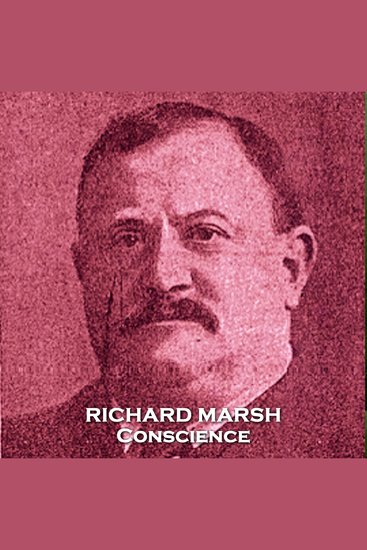
    Richard Bernard Heldmann was born on 12th October 1857, in St Johns Wood, North London.  
     
    By his early 20’s Heldmann began publishing fiction for the myriad magazine publications that had sprung up and were eager for good well-written content.  
     
    In October 1882, Heldmann was promoted to co-editor of Union Jack, a popular magazine, but his association with the publication ended suddenly in June 1883.  It appears Heldman was prone to issuing forged cheques to finance his lifestyle.  In April 1884 he was sentenced to 18 months hard labour. 
      
    In order to be well away from the scandal and the damage that this had caused to his reputation Heldmann adopted a pseudonym on his release from jail.  Shortly thereafter the name ‘Richard Marsh’ began to appear in the literary periodicals.  The use of his mother’s maiden name as part of it seems both a release and a lifeline. 
     
    A stroke of very good fortune arrived with his novel ‘The Beetle’ published in 1897.  This would turn out to be his greatest commercial success and added some much-needed gravitas to his literary reputation.   
     
    Marsh was a prolific writer and wrote almost 80 volumes of fiction as well as many short stories, across many genres from horror and crime to romance and humour.   His unusual characters, plotting devices and other literary developments have identified his legacy as one of the best British writers of his time.   
     
    Richard Marsh died from heart disease in Haywards Heath in Sussex on 9th August 1915.  He was 57.
    Show book