Join us on a literary world trip!
Add this book to bookshelf
Grey
Write a new comment Default profile 50px
Grey
Subscribe to read the full book or read the first pages for free!
All characters reduced
David Copperfield - cover

David Copperfield

Charles Dickens

Publisher: Morlune Press

  • 0
  • 0
  • 0

Summary

Like many of Dickens' works, David Copperfield was published serially, then as a complete novel for the first time in 1850. Dickens himself thought of it as his favorite novel, writing in the preface that of all his works Copperfield was his favorite child. This isn't surprising, considering that many of the events in the novel are semi-autobiographical accounts from Dickens' own life. In David Copperfield we follow the life of the titular character as he makes a life for himself in England. He finds himself in the care of a cold stepfather who sends him to boarding school, and from there embarks on a journey filled with characters and events that can only be called "Dickensian" in their colorful and just-barely-probable portrayals. Charles Dickens (died 1870) was one of the most distinguished authors of the Victorian age. Their work has endured across generations and continues to be read and studied worldwide. As a work of classic literary fiction, David Copperfield exemplifies the narrative craft and social insight that defined great storytelling of its era. Literary fiction of this period was characterized by careful attention to character psychology, social milieu, and the moral questions that animated public discourse.
Available since: 05/19/2026.
Print length: 1169 pages.

Other books that might interest you

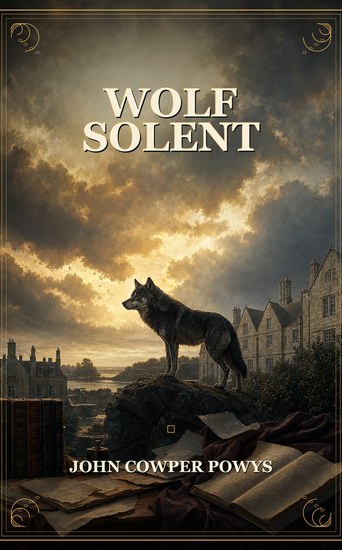
  • Wolf Solent - cover

    Wolf Solent

    John Cowper Powys

    • 0
    • 0
    • 0
    We rely on your support to help us keep producing beautiful, free, and unrestricted editions of literature for the digital age. Will you support our efforts with a donation ? Wolf Solent is the first of four Wessex novels by John Cowper Powys , based on a fictionalized southwest England in the pattern of Thomas Hardy . The titular character, after having a mental breakdown, loses his job and travels to the small town of Ramsgard to do literary work for a local squire. There he becomes involved with two women: Gerda who is simple and in tune with nature, and Christie, who is more complex and intellectual. The novel is very introspective. We watch Wolf's inner thoughts as he tries to make sense of his secret "mythology" or "life-illusion," based on his idea of an internal battle of good versus evil. As various buried secrets emerge, some involving his own family, Wolf tries to navigate his relationships and questions his own impulses, feeling that the survival of his "life-illusion" is at stake. The novel was very well received on publication, and is considered a literary masterpiece despite its curious lack of renown. Author Simon Heffer called Wolf Solent "the finest novel by an Englishman in the 20th century." John Cowper Powys (died 1963) was a significant literary figure of the 20th century. Their work has endured across generations and continues to be read and studied worldwide. As a work of classic literary fiction, Wolf Solent exemplifies the narrative craft and social insight that defined great storytelling of its era. Literary fiction of this period was characterized by careful attention to character psychology, social milieu, and the moral questions that animated public discourse.
    Show book
  • Jules Verne Collection - The Definitive Audiobook Collection with the Classic Adventures of Jules Verne: Twenty Thousand Leagues Under the Sea Around the World in Eighty Days Journey to the Center of the Earth and The Mysterious Island - cover

    Jules Verne Collection - The...

    Jules Verne

    • 0
    • 0
    • 0
    Embark on an unforgettable journey with this captivating audiobook collection featuring four of Jules Verne's most beloved novels: "20000 Leagues Under the Sea," "Around the World in Eighty Days," "Journey to the Center of the Earth," and "The Mysterious Island." Known as the father of science fiction, Jules Verne's timeless tales transport listeners to extraordinary worlds filled with adventure, discovery, and the boundless possibilities of human imagination.From Chapter 2 - "Around the World in Eighty Days": Follow the eccentric Englishman Phileas Fogg and his loyal servant Passepartout on a race against time. In a wager that takes them across continents and oceans, this thrilling tale captures the excitement of global travel and the ingenuity required to overcome the unforeseen challenges along the way.  From Chapter 40 - "20000 Under the Sea": Dive deep into the ocean aboard the Nautilus, a futuristic submarine commanded by the enigmatic Captain Nemo. This underwater adventure takes listeners through the mysteries of the deep, revealing the wonders and dangers lurking beneath the sea. From Chapter 88 - "Journey to the Center of the Earth": Join Professor Lidenbrock, his nephew Axel, and their guide Hans as they embark on a daring expedition to the Earth's core. Through subterranean caverns, prehistoric landscapes, and unforeseen perils, this story is a thrilling blend of adventure and scientific wonder. From Chapter 133 - "The Mysterious Island": A gripping tale of survival and ingenuity, this novel follows a group of castaways stranded on an uncharted island in the Pacific. As they harness their resourcefulness to survive and uncover the island's secrets, listeners are drawn into a story of exploration, mystery, and the triumph of human spirit.
    Show book
  • The Egyptian Book of the Dead - The Theban Recension with Commentary - cover

    The Egyptian Book of the Dead -...

    Anonymous

    • 0
    • 0
    • 0
    The hymns, the negative confession, the weighing of the heart and the spells for coming forth by day, in the translation of the keeper of the British Museum's Egyptian antiquities. Le Page Renouf published it in parts between 1892 and 1897 and did not live to finish it; Édouard Naville completed the last chapters. It is the Theban funerary book as the papyri of the New Kingdom preserve it, with a commentary on every chapter that is still worth reading for its arguments about single words. Forty-one plates of painting, from Wilkie to Moreau, carry the Egyptian and allegorical themes of the papyri, including Oedipus and the Sphinx and Pasture, Egypt.
    Show book
  • New Treasure Seekers - cover

    New Treasure Seekers

    Edith Nesbit

    • 0
    • 0
    • 0
    In "New Treasure Seekers" by Edith Nesbit, the Bastable siblings embark on fresh adventures fueled by their imaginative quests for treasure. Their endearing escapades blend humor and heart as they navigate challenges, demonstrating the enduring spirit of childhood resilience and creativity. Nesbit's storytelling captures the essence of youthful optimism, friendship, and the timeless pursuit of magical moments in this engaging continuation of the Treasure Seekers series.
    Show book
  • Idiot The - Audiolbook - cover

    Idiot The - Audiolbook

    Fyodor Dostoevsky, Classic...

    • 0
    • 0
    • 0
    The Idiot is one of Fyodor Dostoevsky's most profound and philosophical novels, exploring the nature of goodness in a world driven by selfishness and ambition. The story follows Prince Lev Myshkin, a man of extraordinary kindness and sincerity, who returns to Russia after years of medical treatment abroad. His innocence and honesty set him apart from the manipulative society he encounters, where people view his goodness as either weakness or foolishness.As Myshkin navigates the complexities of high society, he becomes entangled in a web of relationships, each testing his ideals and moral strength. Dostoevsky uses his protagonist to pose fundamental questions about human nature, love, and the struggle between purity and corruption. The Idiot is a moving and thought-provoking novel that challenges readers to consider whether true goodness can survive in a world filled with deception and cruelty.
    Show book
  • The Master Mind of Mars - A Surgeon Who Transplants Brains on Barsoom - cover

    The Master Mind of Mars - A...

    Edgar Rice Burroughs

    • 0
    • 0
    • 0
    A surgeon on Mars perfects the transplanting of brains and sells the bodies of the young to the rich and old; Ulysses Paxton, dying in a shell-hole in France, wakes up on Barsoom in time to object. Burroughs published the sixth Barsoom book in 1927 and made it the strangest: the horror is medical, and the love story involves a girl in the wrong body. Fifty-eight plates of dream and vision by painters including Odilon Redon and Frits Van den Berghe, from 1815 to 1929, give the surgery and the stars of Barsoom their proper strangeness.
    Show book