Join us on a literary world trip!
Add this book to bookshelf
Grey
Write a new comment Default profile 50px
Grey
Subscribe to read the full book or read the first pages for free!
All characters reduced
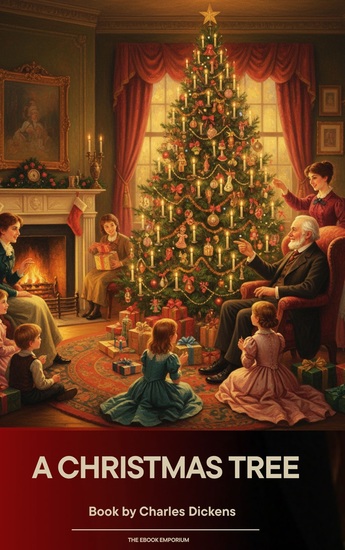
A Christmas Tree - cover

A Christmas Tree

Charles Dickens

Publisher: The Ebook Emporium

  • 0
  • 0
  • 0

Summary

"I have been looking at a real Christmas tree, which stood in the middle of a great round table."

Before the world knew the full breadth of his holiday legacy, Charles Dickens penned this enchanting "meditation" on the centerpiece of the Victorian home. A Christmas Tree is not a traditional narrative, but a brilliant stream-of-consciousness exploration of memory. Looking upon the glittering branches of a tree, Dickens takes the reader on a nostalgic tour of the toys, the stories, and the spectral shadows that define our earliest holiday experiences.

A Toybox of the Imagination: Dickens vividly recreates the wonder of a child's world. He describes the "tumbling" dolls, the magic lanterns, and the leaden soldiers that once sparked his own imagination. Through his prose, we see the tree not just as a decoration, but as a living record of our growth—from the tangible excitement of childhood play to the more reflective, often haunting, memories of adulthood.

Ghosts of Christmas Past: In typical Dickensian fashion, the light of the tree is balanced by the shadows of the fire. The story delves into the "ghost stories" that were once an essential part of the midwinter tradition. Dickens reminds us that the holiday season is a time for remembering those who are no longer at the table, blending warmth with a poignant, Gothic sensibility that is uniquely his own.

Experience the heart of the holidays through the eyes of a master. Purchase "A Christmas Tree" today and rediscover the timeless magic of the season.
Available since: 01/05/2026.
Print length: 25 pages.

Other books that might interest you

  • Barry Lyndon - The Lost Manuscript - cover

    Barry Lyndon - The Lost Manuscript

    William Makepeace Thackeray

    • 0
    • 0
    • 0
    Barry Lyndon is a picaresque novel by William Makepeace Thackeray, first published as a serial in Fraser's Magazine in 1844, about a member of the Irish gentry trying to become a member of the English aristocracy. Thackeray, who based the novel on the life and exploits of the Anglo-Irish rake and fortune-hunter Andrew Robinson Stoney, later reissued it under the title The Memoirs of Barry Lyndon, Esq. The novel is narrated by Lyndon himself, who functions as a quintessentially unreliable narrator. The novel was adapted by Stanley Kubrick into his 1975 film Barry Lyndon.
    Show book
  • Adventures of Sherlock Holmes The - Audiobook - cover

    Adventures of Sherlock Holmes...

    Arthur Conan Doyle, Classic...

    • 0
    • 0
    • 0
    The Adventures of Sherlock Holmes is the third book in Sir Arthur Conan Doyle's legendary series about the brilliant detective Sherlock Holmes. This classic collection of twelve thrilling detective stories showcases Holmes's unparalleled skills in observation and deduction, alongside his loyal companion, Dr. John Watson. Set in Victorian England, each tale unravels a new, intricate mystery, ranging from theft to murder, while exploring the complexities of human nature and justice.This volume includes iconic adventures like "A Scandal in Bohemia," where Holmes meets the clever Irene Adler, and "The Speckled Band," one of the most suspenseful and chilling cases. The Adventures of Sherlock Holmes is a timeless masterpiece and an essential part of any mystery lover's library.Table of Contents:1. A Scandal in Bohemia2. The Red-Headed League3. A Case of Identity4. The Boscombe Valley Mystery5. The Five Orange Pips6. The Man with the Twisted Lip7. The Adventure of the Blue Carbuncle8. The Adventure of the Speckled Band9. The Adventure of the Engineer's Thumb10. The Adventure of the Noble Bachelor11. The Adventure of the Beryl Coronet12. The Adventure of the Copper Beeches
    Show book
  • The Haunted Hotel - A Mystery of Modern Venice - cover

    The Haunted Hotel - A Mystery of...

    Wilkie Collins

    • 0
    • 0
    • 0
    When the Countess Narona meets Agnes Lockwood, the woman jilted by her fiancé, she feels a great sense of foreboding. After Countess Narona’s marriage, she moves with her husband, Lord Montbarry, to Venice. There, disowned by his family, the lord apparently becomes a recluse and falls fatally ill. As much as Agnes tries to forget the episode of her broken engagement, her fate and that of the countess seem to be inextricably woven. Both are relentlessly drawn to the Palace Hotel in Venice for a final and dramatic encounter in the room where more than past emotions resurface to haunt them. 
    Loosely based on a case from the annals of French crime, the scene, scenery, players, conflicts, and especially the horror of this mystery come through the invention of one of our classic novelists.
    Show book
  • Love’s Labor’s Lost - cover

    Love’s Labor’s Lost

    Pierre Arthur Laure, Tom...

    • 0
    • 0
    • 0
    A play replete with puns and double-entendres, this is one of Shakespeare’s earliest and most lighthearted. 
    The young king of Navarre and three of his courtiers have vowed to lock themselves away for three years of study and fasting, and to forswear the company of women for this period. No sooner is their vow made than it is tested, however, as the princess of France and three of her ladies arrive in Navarre on a diplomatic mission. The young men fall instantly and hopelessly in love, and the tension between their vow and their passion forms the subject of this charming and sparkling early comedy. 
    Berowne is played by Alex Jennings and Rosaline by Emma Fielding. Samantha Bond is the princess, and Greg Wise the king of Navarre. Alan Howard plays Don Armado.
    Show book
  • The Landlady - A rare benevolent ghost sighting in this story of a couple moving into a new home - cover

    The Landlady - A rare benevolent...

    Elinor Mordaunt

    • 0
    • 0
    • 0
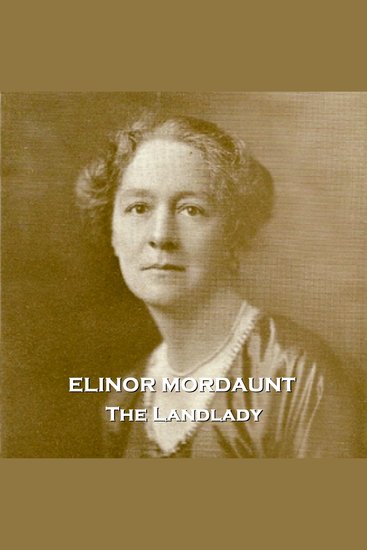
    Evelyn May Clowes was born on 7th May 1872 in Cotgrave, Nottinghamshire.  
     
    Growing up in genteel circumstances, her early childhood was spent at Charlton Down House near Cheltenham, Gloucestershire, and her teenage years near Heythrop in the Cotswolds.  
     
    She was educated at home by governesses, excelling at German, Latin, Greek, shorthand, landscape painting, and fabric and wallpaper design. 
     
    In 1897 she went to Mauritius as companion to her cousin Caroline and in 1898 married Maurice Wilhemn Wiehe, the owner of a sugar plantation. She gave birth to two stillborn children. After a few years of marriage, she found life difficult and returned to England. Shortly afterwards she went by herself to Australia, arriving in June 1902 and gave birth to a son a few months later.   
     
    She lived in Melbourne for about eight years.  To earn a living she took on a wide and varied range of jobs; she edited a woman's fashion paper, wrote short stories and articles, made blouses, designed embroideries, tilled gardens, acted as a housekeeper, and did other artistic work. Her health was not strong, but she undertook any kind of work which would provide a living for herself and her infant son. This gained her an experience of life which was readily put to use in her literary works. 
     
    Her first book, ‘The Garden of Contentment’, was published in 1902 under her pen-name Elinor Mordaunt. It was the first of many works that covered fiction, short stories, travel and autobiography. 
     
    She changed her name by deed poll to Evelyn May Mordaunt on 1st July 1915 and gained a further reputation as a writer of short stories for magazines which display both her humour and sense of tragedy. Travel was always high on her priority and the experiences used not only for pleasure but in her writings and, as travel books, ideas in themselves.  
     
    On 27th January 1933 at Tenerife, in the Canary Islands, she married a retired barrister from Gloucestershire. In her own words, the marriage ‘ended in tragedy.’ 
     
    Elinor Mordaunt died on 25th June 1942 at the Radcliffe Infirmary, Oxford. She was 70.
    Show book
  • The Outrage - From their pens to your ears genius in every story - cover

    The Outrage - From their pens to...

    Alexander Kuprin

    • 0
    • 0
    • 0
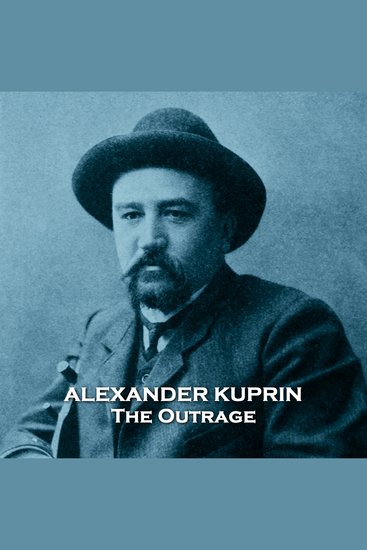
    Alexander Kuprin was born in Narovchat, Penza in Russia on 7th September 1870. 
    At 3 his Father died and he and mother moved to Moscow. By 10 he was enrolled at the Second Moscow Military High School and there his interest in literature began. The Alexander Military Academy followed and two years later he was a sub-lieutenant and posted to an Infantry Regiment for a further four years. 
    Despite his duties he was a now a keen writer and published his first short story at this time. His military duties also garnered him experiences for his breakthrough work ‘The Duel’.  Leaving the military he left for Kiev to work for local newspapers.  He continued to publish both stories and novels and by 1901 he was in St Petersburg becoming part of a group that included Chekhov, Ivan Bunin, Maxim Gorky and Leonid Andreyev.  
    In the years that followed further controversial works and acclaim followed.  His comments on the regime meant he was also put under secret police surveillance.   
    As World War I erupted, Kuprin opened a military hospital but was then given command of an infantry company in Finland. He was soon discharged on grounds of ill health.  
    The October Revolution saw him praise Lenin, but he warned that the Bolsheviks threatened Russian culture and might cause further widespread suffering to the peasants.  As Civil War raged he took his family to Helsinki and then on to Paris. 
    Exile saw his talents decline further and his succumbing to alcoholism. He became lonely and withdrawn. The family's poverty increased his malaise.   
    In May 1937, the Kuprin’s returned to Moscow.  He now saw his work published but wrote almost nothing new.  In 1938 his health rapidly deteriorated.  Already suffering from a kidney problems and sclerosis, he had now developed cancer of the oesophagus.  
    Alexander Kuprin died on 25th August 1938.
    Show book