Join us on a literary world trip!
Add this book to bookshelf
Grey
Write a new comment Default profile 50px
Grey
Subscribe to read the full book or read the first pages for free!
All characters reduced
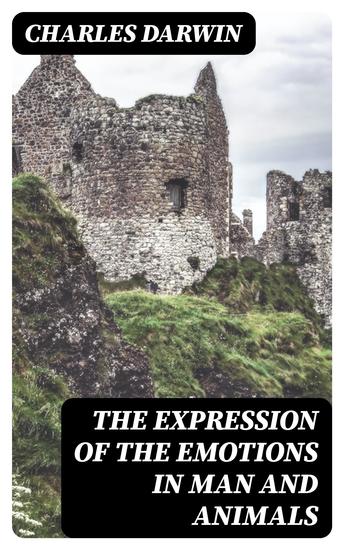
The Expression of the Emotions in Man and Animals - Enriched edition - cover

The Expression of the Emotions in Man and Animals - Enriched edition

Charles Darwin

Publisher: DigiCat

  • 0
  • 0
  • 0

Summary

In "The Expression of the Emotions in Man and Animals," Charles Darwin delves into the profound interplay between physiology and emotion, offering a groundbreaking exploration of how feelings manifest outwardly across species. Employing meticulous observation and comparative analysis, Darwin meticulously catalogues various signs of emotion, ranging from facial expressions to bodily gestures, bridging the gap between human emotions and those of other animals. His literary style is characterized by careful rigor, accessible language, and a deep empathy for the subjects of his study, situating the work within the wider context of Victorian scientific thought and the burgeoning field of psychology. Charles Darwin, renowned for his seminal theory of evolution, rooted his studies in a profound curiosity about the natural world and the shared ancestry of all life. His scientific journey, shaped by his travels on the HMS Beagle and keen observations of diverse species, laid the groundwork for this interdisciplinary exploration of emotion. Through "The Expression of the Emotions in Man and Animals," Darwin seeks to illuminate the instinctual aspects of emotional expression, revealing insights into both human and animal behavior. This book is a must-read for anyone interested in the origins of emotional expression and the connections between species. Darwin's innovative approach not only enhances our understanding of emotions but also invites readers to consider the evolutionary continuity of psychological experiences. Dive into this compelling work, which remains influential in psychology, ethology, and the study of nonverbal communication.

In this enriched edition, we have carefully created added value for your reading experience:
- A succinct Introduction situates the work's timeless appeal and themes.
- The Synopsis outlines the central plot, highlighting key developments without spoiling critical twists.
- A detailed Historical Context immerses you in the era's events and influences that shaped the writing.
- An Author Biography reveals milestones in the author's life, illuminating the personal insights behind the text.
- A thorough Analysis dissects symbols, motifs, and character arcs to unearth underlying meanings.
- Reflection questions prompt you to engage personally with the work's messages, connecting them to modern life.
- Hand‐picked Memorable Quotes shine a spotlight on moments of literary brilliance.
- Interactive footnotes clarify unusual references, historical allusions, and archaic phrases for an effortless, more informed read.
Available since: 10/11/2022.
Print length: 258 pages.
Other books that might interest you

  • The DBT Workbook for Narcissistic Abuse and Gaslighting - Dialectical Behavior Therapy Skills to Stay Emotionally Centered Overcome Self-Doubt and Reclaim Your Self-Worth - cover

    The DBT Workbook for...

    LCSW Katelyn Baxter-Musser, PsyD...

    • 0
    • 0
    • 0
    Are you caught in an emotionally abusive relationship with a narcissist, or attempting to recover from one? Are you being gaslit by an intimate partner, family member, or coworker? Narcissistic abuse and gaslighting can have devastating impacts on mental health and wellbeing. You may experience feelings of shame, guilt, humiliation, and a sense that something is wrong with you. Even if you've managed to escape the abusive dynamic, the emotional, physical, and psychological impact can carry on long after the relationship ends. So, how can you start healing? 


    Using this workbook, you'll learn practical skills grounded in proven-effective dialectical behavior therapy (DBT) to help you heal and move forward after narcissistic abuse. You'll find targeted exercises for specific trauma symptoms to help you rebuild your shattered self-esteem and confidence, learn how to trust again, and make certain you can recognize red flags in the future. You'll also discover essential and easy-to-apply mindfulness skills for developing self-compassion, setting healthy boundaries, and managing negative thoughts. 


    If you're ready to start healing your emotional wounds so you can finally move on, this gentle guide can help you replace the guilt, self-doubt, and shame of abuse with self-esteem, unshakable confidence, and trust.
    Show book
  • Christian Relics and the Arma Christi: The History of the Medieval Search for Relics Related to the Passion of Christ - cover

    Christian Relics and the Arma...

    Editors Charles River

    • 0
    • 0
    • 0
    Holy relics can be found in many different religions, whether Christian, pagan, Hindu, or Buddhist. A relic is defined as something directly associated with a revered saint, teacher, ancestor, or some miraculous manifestation of deity in the material world. A relic and a reliquary are two types of sacramental tools. A reliquary is a container or box for a relic, allowing it to be displayed to the public and thus transfer its powers to magical and liturgical works. There is another definition of a relic: anything that would be a miraculous manifestation of a deity in the material world. In Christianity, there are countless numbers of relics, most of them being associated with Jesus Christ. 
    In the early years of Christianity, it was forbidden to move and share the remains of saints and martyrs, and they were protected so that their final resting places, such as catacombs and cemeteries, remained intact. The earliest recorded Christian relics, specifically the bones and ashes of martyrs, date from the 2nd century. 200 years later, St. Ambrose and others set out to dig up the corpses and honor them. At that time, it was considered that every holy body could be dismembered and divided among the faithful to worship it. The remains of corpses sometimes came into someone else's hands as a gift, and sometimes they were stolen. At one point, the demand for holy bodies was such that bodyguards were assigned to dying saints to prevent their bodies from being dismembered after death. 
    The veneration of the relics of saints was so common among the faithful because they believed saints in Heaven interceded for believers on Earth. As a result, numerous healings and miracles were attributed to the relics, and many stories and myths about miracles arose from these beliefs. By word of mouth, the stories spread among the faithful, and finally, they were recorded in books.
    Show book
  • Francis of Assisi: A short biography - 5 Minutes: Short on time – long on info! - cover

    Francis of Assisi: A short...

    5 Minutes, 5 Minute Biographies,...

    • 0
    • 0
    • 0
    Francis of Assisi, saint, friend of animals, and founder of the Franciscan order: Life and work in a short biography! Everything you need to know, brief and concise. Infotainment, education and entertainment at its best!
    Show book
  • Village Labourer 1760-1832 The: A Study in the Government of England before the Reform Bill - cover

    Village Labourer 1760-1832 The:...

    James L Hammond, Barbara...

    • 0
    • 0
    • 0
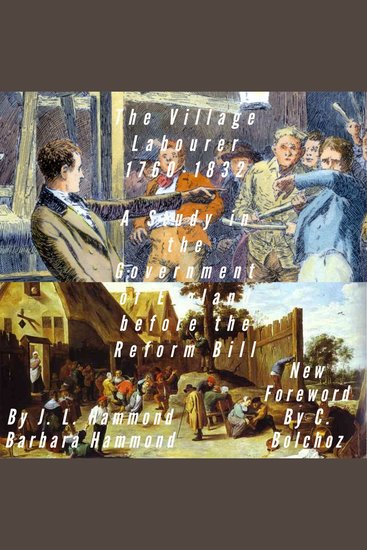
    Many histories have been written of the governing class that ruled England with such absolute power during the last century of the old régime. Those histories have shown how that class conducted war, how it governed its colonies, how it behaved to the continental Powers, how it managed the first critical chapters of our relations with India, how it treated Ireland, how it developed the Parliamentary system, how it saved Europe from Napoleon. One history has only been sketched in outline: it is the history of the way in which this class governed England. The writers of this book have here attempted to describe the life of the poor during this period. It is their object to show what was in fact happening to the working classes under a government in which they had no share. They found, on searching through the material for such a study, that the subject was too large for a single book; they have accordingly confined themselves in this volume to the treatment of the village poor, leaving the town worker for separate treatment. It is necessary to mention this, for it helps to explain certain omissions that may strike the reader.The growth and direction of economic opinion, for example, are an important part of any examination of this question, but the writers have been obliged to reserve the consideration of that subject for their later volume, to which it seems more appropriate. The writers have also found it necessary to leave entirely on one side for the present the movement for Parliamentary Reform which was alive throughout this period, and very active, of course, during its later stages.Two subjects are discussed fully in this volume, they believe, for the first time. One is the actual method and procedure of Parliamentary Enclosure; the other the labourers’ rising of 1830. Nowhere can the student find a full analysis of the procedure and stages by which the old village age was destroyed. The rising of 1830 is covered as well.
    Show book
  • Shrink the City - The 15-Minute Urban Experiment and the Cities of the Future - cover

    Shrink the City - The 15-Minute...

    Natalie Whittle

    • 0
    • 0
    • 0
    Cities define the lives of all those who call them home: where we go, how we get there, how we spend our time. But what if we rethink the ways we plan, live in, and move around our cities? What if we didn't need a car to reach the grocery store? What if we could get back the time we would have spent commuting and put it to other uses? 


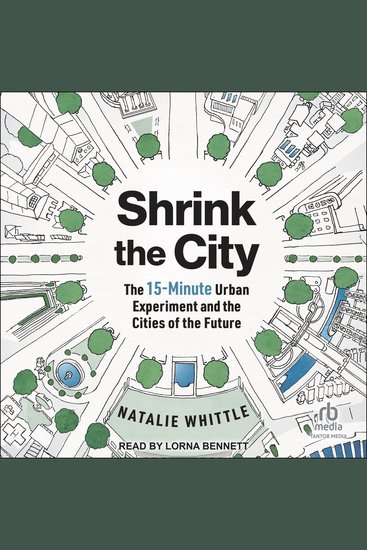
    In this fascinating, carefully researched and reported book, longtime Financial Times journalist Natalie Whittle investigates the 15-minute city idea—its pros, cons, and its potential to revolutionize modern living. 


    From Paris, Melbourne, and Rotterdam to Charlotte, North Carolina, and Tempe, Arizona, cities worldwide are being guided by the 15-minute city's ideals—with varying results. By looking at these examples, Whittle considers: 


    ● what really happens when a city expands bike lanes and pedestrian areas—and disincentivizes long commutes 


    ● which approaches to building affordable housing are actually effective 


    ● how neighborhoods of varying wealth are affected by 15-minute city policies 


    This timely book serves as a call to reflect on our cities and neighborhoods—and it outfits us with insights on how to make them more sustainable, safe, and welcoming.
    Show book
  • Cognitive Behavioural Therapy - A Very Short Introduction - cover

    Cognitive Behavioural Therapy -...

    Freda McManus

    • 0
    • 0
    • 0
    Cognitive behaviour therapy (CBT) is a form of psychological therapy. It is not a unitary approach, but instead has evolved through a range of approaches that share a common underpinning model of cognition and behaviour being important in understanding and alleviating psychological distress. While the earliest approaches focused on modifying observable behaviour, later versions emphasized cognitive processes. The third wave approaches in CBT have moved the focus away from the content of an individual's thoughts to their relationship with their thoughts, and the processes underlying thinking. 


    This Very Short Introduction gives an overview of what CBT is, where it came from, what it does, and when it can be used. It explores how one of the driving forces behind CBT's success and continued adaptation has been its basis in empiricism, and analyses how it must continue to evolve to meet future challenges. Freda McManus also discusses how the scale of mental health problems and relative costs of traditional therapy formats have prompted investigations into alternative formats of CBT that have the potential to reach broader audiences, globally. She also considers the challenges of scale in training the workforce required to roll out such interventions, as well as those of determining the best ways of monitoring their competence and effectiveness.
    Show book