¡Acompáñanos a viajar por el mundo de los libros!
Añadir este libro a la estantería
Grey
Escribe un nuevo comentario Default profile 50px
Grey
Suscríbete para leer el libro completo o lee las primeras páginas gratis.
All characters reduced
The world's navies in the Boxer rebellion (China 1900) - cover

The world's navies in the Boxer rebellion (China 1900)

Charles Cabry Dix

Editorial: Librorium Editions

  • 0
  • 0
  • 0

Sinopsis

I do not propose to do more than touch lightly on the causes which led up to the great Boxer outbreak in June 1900 a.d., but some misapprehension may be removed, and the reader of this volume may be led to more easily understand the state of affairs which obtained immediately before hostilities broke out, if a short explanation be given.
One hears many different opinions as to the reason of the Boxer outbreak, which every one will admit was the most important “casus belli” between the European Powers and China, and which eventually plunged the north of China into a sanguinary war which was waged on both sides with great fierceness.
The missionaries, the Dynasty, and the universal hatred of the “foreign debbel” have all come under notice as the possible causes of the trouble, but there is no room to doubt that the last is the real one, and in fact the only one at all supportable.
Everything seems to point to the fact that the Empress had long since desired to see the back of the troublesome foreigner, and although she sent her troops for the apparent reason of putting down the Boxers, there can be no doubt that she saw in the new movement a splendid opportunity for “ousting” all Europeans, thereby gaining a new place in the affections of her people, and a new lease of life for the Manchu Dynasty.
If this supposition be correct, she played her hand with marvellous cunning.
Imperial troops were sent against the rebellious(?) people, and in the middle of the fight that ensued, half of them would change sides, while the other half would amuse themselves by firing heavily into the mob with blank cartridges.
Disponible desde: 01/05/2023.

Otros libros que te pueden interesar

  • Inner Child Integration Meditation Reinvent yourself Audio Meditation Course - from separation to union soul fragments neglect abandonment self-healing tools calm your triggers free inner cage - cover

    Inner Child Integration...

    Shining Mind

    • 0
    • 0
    • 0
    Do you feel weighed down by unresolved childhood trauma, and unable to move forward in your personal development? The lingering effects of past experiences can create a sense of stagnation, preventing you from living your life to its fullest potential. This emotional burden can manifest as repeated patterns of negative behavior, emotional distress, and an overall sense of being stuck, making it difficult to achieve personal growth and inner peace. 
    The persistent influence of unhealed inner child wounds can lead to feelings of frustration and helplessness, impacting your relationships, career, and overall well-being. If you are tired of being held back by these emotional scars and long for a profound transformation, our "Inner Child Integration Meditation Reinvent Yourself Audio Meditation Course" can guide you. 
    In this audiobook, we will:Be your coach, providing guidance and support tailored to your emotional needsHelp you raise your self-esteem, allowing you to break free from past patterns and cyclesFacilitate a profound emotional transformation, empowering you to reinvent yourselfEquip you with powerful meditative techniques to integrate your inner child and elevate your sense of self-worth 
    Embark on a transformative journey towards emotional freedom and self-discovery with our "Inner Child Integration Meditation Reinvent Yourself Audio Meditation Course." Discover the power within you to heal past wounds and embrace a new reality filled with peace, clarity, and personal growth. It's time to let go of the past and step into a future where you can thrive, feeling liberated, empowered, and aligned with your true self.
    Ver libro
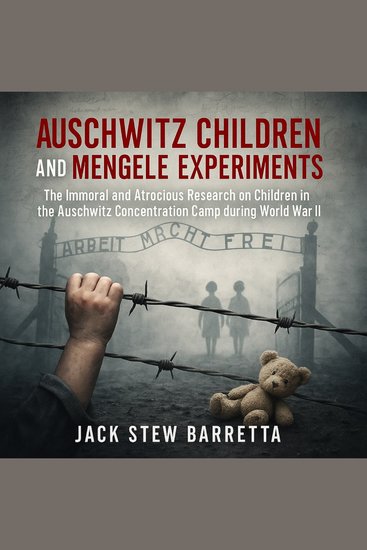
  • Auschwitz Children And Mengele Experiments - The Immoral and Atrocious Research on Children in the Auschwitz Concentration Camp during World War II - cover

    Auschwitz Children And Mengele...

    Jack Stew Barretta

    • 0
    • 0
    • 0
    This audiobook is narrated by an AI Voice.   
    Many doctors in Germany were convinced that they were the chosen people to create a healthy, racially pure Volkskörper (body of people) and by doing so, establish a racial utopia. As strong supporters of National Socialism, they welcomed the founding of the Third Reich. After Hitler acceded to power, German physicians joined the SS in particular. During the twelve years of the Nazi era, seven percent of German doctors became members of the SS. The average membership of the population was only 0.6 percent. Moreover, doctors were also overrepresented as a profession, with teachers consisting of less than half a percent and musicians only three percent. Only lawyers had a larger share in the SS than doctors. 
    The average income of German doctors increased extremely after 1933, even exceeding the income of lawyers. The Nazi doctors of the human experiments also joined the SS in large numbers. German doctors were far more reluctant to join the NSDAP than the SS. Before 1933, only seven percent of all German doctors joined the NSDAP (Nazi party). They joined the party when it seemed opportune to do so, in 1933, and particularly in 1937. In 1933, physicians made up almost a quarter of all academic professionals in the NSDAP. Most doctors joined the NSDAP in 1937, with a membership rate of 43 percent of the total profession. German physicians sat on the fence during the first years of the Nazi era, insecure about the effects of the new regime on their profession. By 1937, the Third Reich had won the trust of several reasons. The NSDAP had solved the economic crisis and had reorganized the medical profession. Moreover, the regime had solved “the Jewish question” in the medical sector.
    Ver libro
  • One Flew Over the Crow’s Nest - cover

    One Flew Over the Crow’s Nest

    Ken Casper

    • 0
    • 0
    • 0
    Someone's murdered Brayton Spites! 
    Nobody's sorry he's dead--with one exception. A ruthless, unscrupulous businessman, notorious womanizer, and heartless father, he turned his back on his only legitimate son after the boy's grandfather abused him. So when Spites's body is found in a dark alley in Coyote Springs, the question is not who killed him, but what took so long? 
    Jason Crow, rancher, vintner, and double amputee, is invited to help find his biological father's murderer. He has no idea just how personal the quest is about to become. The list of suspects includes his half-brothers, Harden Spites and Kelvin Dodge, as well as Brayton's alcoholic widow, Dolly Dodge. Then there's Neldona Chance, a prostitute with a heart of gold, who shared a complex relationship with Brayton, Harden, and Kelvin. 
    Bodies pile up. Family tensions rise. Tempers reach the breaking point when the sheriff comes to arrest Jason's grieving and emotionally fragile mother for the murder of the profligate man she never stopped loving.
    Ver libro
  • Amos - The World English Bible Book 30 (Unabridged) - cover

    Amos - The World English Bible...

    Various Authors

    • 0
    • 0
    • 0
    Amos was one of the Twelve Minor Prophets. An older contemporary of Hosea and Isaiah, Amos was active c. 760-755 BCE during the rule of kings Jeroboam II of Israel and Uzziah of Judah. He was from the southern Kingdom of Judah but preached in the northern Kingdom of Israel. Amos wrote at a time of relative peace and prosperity but also of neglect of God's laws. He spoke against an increased disparity between the very wealthy and the very poor. His major themes of justice, God's omnipotence, and divine judgment became staples of prophecy. The Book of Amos is attributed to him.
    Ver libro
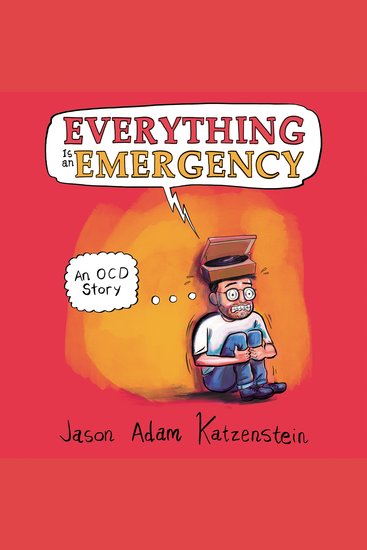
  • Everything is an Emergency - An OCD Story - cover

    Everything is an Emergency - An...

    Jason Adam Katzenstein

    • 0
    • 0
    • 0
    “This book undid me in all the best ways. Everything is an Emergency is a brilliant, honest, necessary book that exposes the intricacies of the human brain while showing us the way creativity and friendship can anchor us. This is a must-read for anyone who has ever wondered if they see the world a little differently.” –Ada Limón 
    A New Yorker cartoonist illustrates his lifelong struggle with OCD 
    Jason Adam Katzenstein is just trying to live his life, but he keeps getting sidetracked by his over-active, anxious brain. Mundane events like shaking hands or sharing a drink snowball into absolute catastrophes. Jason has Obsessive Compulsive Disorder, a mental illness that compels him to perform rituals in order to protect himself from dangers that don’t really exist. He checks, washes, over-thinks, rinse, repeat.  
    He does his best to hide his embarrassing compulsions, and sometimes this even works. He grows up, worries about his first kiss, falls in love with making cartoons, moves to New York City — which is magical and gross, etc. All the while, half his energy goes into living his life, while the other half is devoted to the increasingly ridiculous rituals he’s decided to maintain to keep himself from fully short-circuiting,  
    Then, he fully short-circuits.  
    At his absolute lowest, Jason finally decides to do the things he’s always been told to do to get better: exposure therapy and medication. These are the things that have always freaked him out, and they continue to freak him out. Also, they help him recover.  
    Everything is an Emergency is about all the self-destructive stories someone tells himself, over and over, until they start to seem true. In images surreal, witty, and confessional, Jason shows us that OCD can be funny, even when it feels like it’s ruining your life.
    Ver libro
  • Genealogy - A Guide to Genealogical Research and Finding Your Ancestors - cover

    Genealogy - A Guide to...

    Sophie Henner

    • 0
    • 0
    • 0
    Genealogy delves into the complex web of family relationships and historical contexts that shape individual and collective identities. It often begins with an inquiry into one's own family background, such as understanding the origins and branches of one’s family tree. Researchers use various resources, including birth, marriage, and death records, census data, military records, and immigration documents, to trace the lineage and connections of family members across generations. 
      
    The process typically starts with gathering information from living relatives and personal family records. This foundational knowledge helps in identifying potential research paths. Genealogists then use historical records and archives to fill in gaps, verifying information and uncovering new details about ancestors' lives, including their social, economic, and geographical contexts. 
      
    Genealogy also involves examining historical events, migrations, and cultural influences that impacted family histories. By integrating historical data with personal records, genealogists create a richer understanding of how family histories intertwine with broader historical narratives.
    Ver libro