Junte-se a nós em uma viagem ao mundo dos livros!
Adicionar este livro à prateleira
Grey
Deixe um novo comentário Default profile 50px
Grey
Assine para ler o livro completo ou leia as primeiras páginas de graça!
All characters reduced
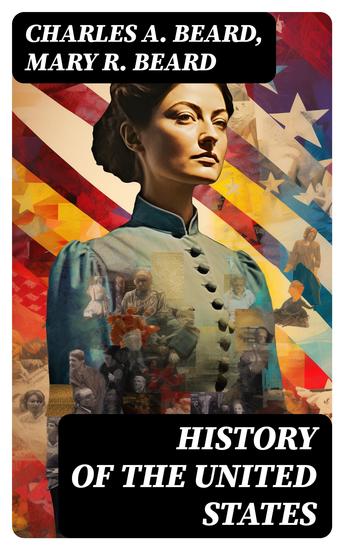
History of the United States - Enriched edition - cover
LER

History of the United States - Enriched edition

Charles A. Beard

Editora: DigiCat

  • 0
  • 0
  • 0

Sinopse

In "History of the United States," Charles A. Beard presents a sweeping narrative that challenges traditional historiography by emphasizing the economic factors that shaped American history. With a keen analytical lens, Beard explores pivotal events from colonial times through the 19th century, employing a persuasive prose style that intertwines narrative history with critical analysis. His approach situates the political development of the United States within the broader framework of class conflict and economic interests, providing a provocative perspective on events such as the American Revolution and the Civil War. This book serves both as a comprehensive account and a call to reconsider the underlying forces that have driven the nation's evolution. Charles A. Beard, an influential American historian and political scientist, is widely known for his progressive views which diverged from the prevailing patriotic narratives of his time. His deep engagement with economic theory and commitment to social reform illuminated his interpretations, reflecting his belief that understanding the past is essential for addressing contemporary socio-political issues. Beard's scholarship invites readers to question established narratives and consider the implications of historical understanding on current affairs. Readers interested in a nuanced exploration of American history will find "History of the United States" to be an essential text. Beard's innovative approach provides a rich, contextually grounded perspective that not only satisfies historical curiosity but also encourages critical thought regarding the origins of modern American identity. This book is particularly recommended for students and scholars looking to deepen their understanding of the complex interplay between economics and politics in the shaping of the United States.

In this enriched edition, we have carefully created added value for your reading experience:
- A succinct Introduction situates the work's timeless appeal and themes.
- The Synopsis outlines the central plot, highlighting key developments without spoiling critical twists.
- A detailed Historical Context immerses you in the era's events and influences that shaped the writing.
- A thorough Analysis dissects symbols, motifs, and character arcs to unearth underlying meanings.
- Reflection questions prompt you to engage personally with the work's messages, connecting them to modern life.
- Hand‐picked Memorable Quotes shine a spotlight on moments of literary brilliance.
- Interactive footnotes clarify unusual references, historical allusions, and archaic phrases for an effortless, more informed read.
Disponível desde: 28/05/2022.
Comprimento de impressão: 526 páginas.

Outros livros que poderiam interessá-lo

  • Influence - The Science of Persuasion and Its Impact on Decision Making - cover

    Influence - The Science of...

    Wesley Felt

    • 0
    • 0
    • 0
    This book contains two titles. Here are some snippets of what you can find in there: 
    Book 1 - In today’s world, our perception fundamentally shapes our reality. This explains why two people can have entirely different interpretations of the same event. The meaning we assign to events stems from our beliefs and emotions. So, can altering our perception actually change our world? If so, how can this be achieved? And if it's possible, how can we mold our reality to create a better one? 
    What we see defines what we believe, and what we believe dictates what we consider true. Our sense of truth then becomes our reality. Thus, our perception molds our reality. Although we share the same world, we each focus on our own perceived truths. Even though everyone has eyes, each person views the world in a unique way. It’s easy to find what we’re looking for, but harder to notice what we’re not searching for. For example, one person might see a glass as half-full while another sees it as half-empty. 
    Book 2 - Gender does influence persuasion, largely due to the emotional and intellectual differences between men and women. It is often believed that the direct, straightforward approach typically associated with men is more effective in persuasion than the emotionally nuanced methods often attributed to women. 
    One of the key differences between men and women is that men are primarily visually stimulated. This trait, while sometimes criticized as shallow, is rooted in our DNA and evolution. Historically, men were driven to seek healthy partners for reproduction, as visual cues were the primary way to assess health before the advent of modern medicine. In the days of early human society, a woman of child-bearing age who appeared healthy was naturally attractive to men, as it signaled good prospects for offspring.
    Ver livro
  • Twilight of the Gods - A Swedish Volunteer in the 11th SS Panzergrenadier Division "Nordland" on the Eastern Front - cover

    Twilight of the Gods - A Swedish...

    Thorolf Hillblad

    • 0
    • 0
    • 0
    A rare account of a non-German, Erik Wallin, who fought in the Nazi Party’s Waffen-SS during World War II—a no-holds-barred narrative of the Eastern Front.   This is the exciting true story of Erik Wallin, a Swedish soldier who volunteered for the Waffen-SS during World War II. Wallin served in the Panzer Reconnaissance Battalion of the 11th SS Panzergrenadier Division “Nordland,” a unit composed largely of men from Denmark, Norway, and Sweden. Sent to the Eastern Front, the 11th SS fought in the Courland Pocket in late 1944 and then battled the Red Army along the Oder River and in Berlin, where the Soviets destroyed the division.   Few memoirs of non-Germans in the Waffen-SS exist, and Twilight of the Gods ranks among the very best.  “Provides an insight into how a Waffen-SS soldier reflects on the recent past . . . [and] how the SS myth was created . . . direct and raw.” —Samuel de Korte, Traces of War
    Ver livro
  • The Lost Art of Dying - Reviving Forgotten Wisdom - cover

    The Lost Art of Dying - Reviving...

    Anônimo

    • 0
    • 0
    • 0
    A Columbia University physician inspires us to rethink death and offers insights on how we can learn to embrace the art of dying well in this wise, clear-eyed book that is as compelling and soulful as Being Mortal, When Breath Becomes Air, and Smoke Gets in Your Eyes. 
     
    As a specialist in both medical ethics and the treatment of older patients, Dr. Lydia Dugdale knows a great deal about the end of life. Far too many of us die poorly, she argues. Our culture has overly medicalized death: dying is often institutional and sterile, prolonged by unnecessary resuscitations and other intrusive interventions. We are not going gently into that good night—our reliance on modern medicine can actually prolong suffering and strip us of our dignity. Yet our lives do not have to end this way. 
    Centuries ago, in the wake of the Black Plague, a text was published offering advice to help the living prepare for a good death. Written during the late Middle Ages, Ars moriendi—The Art of Dying—made clear that to die well, one first had to live well. When Dugdale discovered this Medieval book, it was a revelation. Inspired by its holistic approach to the final stage we must all one day face, she draws from this forgotten work, combining its wisdom with the knowledge she has gleaned from her long medical career. The Lost Art of Dying is filled with much-needed insight and thoughtful guidance that will change our perceptions. Dr. Dugdale offers a hopeful perspective on death and dying as she shows us how to adapt the wisdom from the past to our lives today.  
    Part of living well means preparing for the end, Dr. Dugdale reminds us. By recovering our sense of finitude, confronting our fears, accepting how our bodies age, developing meaningful rituals, and involving our communities in end-of-life care, we can discover what it means to both live and die well.  
    The Lost Art of Dying is a vital, affecting book that reconsiders death, death culture, and how we can transform how we live each day, including our last. 
    Supplemental enhancement PDF accompanies the audiobook.
    Ver livro
  • The Power of the Dao - Seven Essential Habits for Living in Flow Fulfilment and Resilience - cover

    The Power of the Dao - Seven...

    Max Landsberg

    • 0
    • 0
    • 0
    Being in flow is when you are “in the zone,” “on your game,” or even “on fire.” It is both a mental state and a physical one. You have a feeling of complete focus, full involvement, and deep enjoyment in whatever you are doing. You feel the activity takes no energy from you—indeed you feel that it is giving you energy. You barely notice the passage of time. You feel calm but almost ecstatic. Most of us have glimpsed being in this state. But what if you could be in your zone not just for a moment of flow, nor merely for a day, but always and forever? This book shows you how to achieve that state, based on the enduring ancient Chinese wisdom of Daoist principles and practice. Millions of people have lived a better, happier, and more productive life by following all or some of these Daoist principles. This book provides the seven core principles of Daoism to help you live your life in productive yet relaxed flow for extended periods—or all the time.
    Ver livro
  • STOP ANXIETY - Solutions for Coping with Avoiding and Overcoming Depression and Anxiety How to Improve Your Quality of Life by Reducing Stress and Panic Attacks (2022 Guide for Beginners) - cover

    STOP ANXIETY - Solutions for...

    Joy Ruell

    • 0
    • 0
    • 0
    Are you progressively becoming a nervous wreck?  
    Do you spend an unusual amount of time worrying about minor and major issues?  
    Do you avoid people and social activities because you believe something about yourself is flawed? 
      
    You might be an anxious person! But you are not alone... 
    Millions of other individuals are in a similar predicament to you.  
    Mental health research is still in its early stages, and the exact origins of numerous mental health problems have yet to be discovered.  
    However, researchers have made significant advances in identifying the risk factors that contribute to mental health problems.  
    Among the topics covered in this guide are: 
     Anxiety's Root CausesHow to Deal with Negative EmotionsCBT strategies for anxiety treatmentTips for Strengthening the Mind-Body-Spirit ConnectionBringing Positivity Into Your Life Work on Your Confidence And Self-Esteem Causes Of Mental Clutter Exercise Tips 
    And Much More!.... 
      
    Your mental health has a significant impact on the quality of your life.  
    By reading this guide, you will equip yourself with information on how to improve your mental health. 
      
    Even though anxiety seems impossible, you may overcome it and live the life you've always desired. 
      
    So, what are you holding out for?  
      
    Get this guide right now! 
     
    Ver livro
  • The Roman Empire and Byzantine Empire - The History and Legacy of Europe’s Most Important Empire and Its Successor - cover

    The Roman Empire and Byzantine...

    Charles River Editors

    • 0
    • 0
    • 0
    For the people of the ancient Mediterranean and beyond, the city of Rome had been a symbol of power for centuries, and entering the early 5th century CE, the Eternal City hadn’t been taken by an enemy force since the Gauls had done it about 800 years earlier, an unheard of period of tranquility in a world wracked with almost constant warfare. 
    Thus, when the Visigoths, whom the Romans considered uncultured and inferior, took the city of Rome and sacked it in 410, the world was stunned. It made theologians of the newly Christianized empire question God’s plan on Earth, and it encouraged many leading Romans to look east to Constantinople for their future. Indeed, the Western Roman Empire would completely collapse in the late 5th century, less than 70 years after the Visigoths sacked Rome, and just how it went from being a superpower to a poorly led, weak, and vulnerable shadow of its former self has preoccupied historians for centuries. 
    To this day, it remains difficult to trace just when the decline began, but it’s fair to say that the sack of Rome was the result of a number of factors that had been coalescing for many years. In the end, the fall of the Roman Empire was not a tale of cataclysmic events that shattered the sprawling power, but the culmination of centuries of internal dissent and decay, combined with growing external threats that led to gradual decline and eventually to the empire’s final destruction.  
    In terms of geopolitics, perhaps the most seminal event of the Middle Ages was the successful Ottoman siege of Constantinople in 1453. The city had been an imperial capital as far back as the 4th century, when Constantine the Great shifted the power center of the Roman Empire there, effectively establishing two almost equally powerful halves of antiquity’s greatest empire. Constantinople would continue to serve as the capital of the Byzantine Empire even after the Western half of the Roman Empire collapsed.
    Ver livro