Join us on a literary world trip!
Add this book to bookshelf
Grey
Write a new comment Default profile 50px
Grey
Subscribe to read the full book or read the first pages for free!
All characters reduced
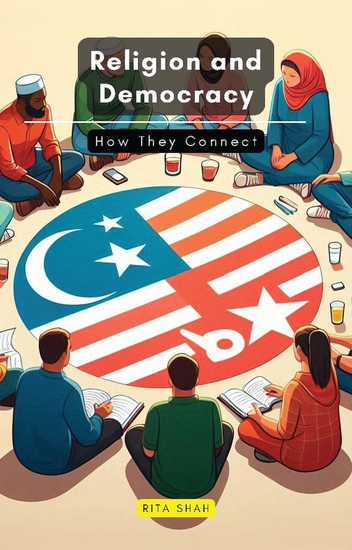
Religion and Democracy - How They Connect - cover

Religion and Democracy - How They Connect

Chandra Chaturvedi

Publisher: Educohack Press

  • 0
  • 0
  • 0

Summary

"Religion and Democracy: How They Connect" delves into the intricate relationship between religion and democracy. We explore how human evolution, primarily in the brain, led to the formation of groups united by common myths, eventually evolving into religions. These religious institutions helped create a sense of unity and shared beliefs.
The concept of democracy, which allows people to elect their representatives, has undergone significant evolution. Our book discusses historical revolts that shifted from authoritarian rule to people's democracy. Despite the rise of democracy, religion continues to influence societal thought processes, contributing to ideas such as liberty and national identity.
We also cover parallel concepts like civic friendship and racial tolerance, which have played crucial roles in organizing societies. In the post-modern era, we examine how religion influences the dynamics of the state and civil society within a democratic framework. This final chapter showcases the evolution of religious thought in a contemporary context.
Available since: 01/03/2025.
Print length: 233 pages.

Other books that might interest you

  • Sengoku - Warring States and the Path to Unification - cover

    Sengoku - Warring States and the...

    Rolf Hedger

    • 0
    • 0
    • 0
    The Sengoku period, meaning “Warring States,” was one of the most turbulent and transformative eras in Japanese history. Lasting from the mid-15th century to the early 17th century, it was marked by ceaseless conflict, shifting alliances, and the gradual disintegration of centralized authority. The roots of this period can be traced back to the decline of the Ashikaga Shogunate, the Ōnin War, and the rise of regional warlords known as daimyo, each vying for control over Japan’s fractured political landscape. 
    The Ashikaga Shogunate, which had ruled Japan since the early 14th century, gradually lost its grip on the country due to internal corruption, weak leadership, and an inability to maintain order. By the mid-15th century, the shogunate had become largely symbolic, with real power resting in the hands of feudal lords. These tensions erupted into full-scale conflict with the outbreak of the Ōnin War (1467–1477), a devastating civil war primarily fought in and around Kyoto. What began as a succession dispute within the shogunate spiraled into a nationwide conflict, leading to the destruction of Kyoto and the collapse of central authority. 
    With the Ashikaga Shogunate rendered powerless, Japan entered a chaotic era where military might determined control. Local daimyo, originally appointed as provincial governors, seized the opportunity to establish autonomous domains. These warlords fortified their territories, raised armies, and engaged in relentless battles to expand their influence. The traditional system of hereditary rule began to erode as capable military leaders, often of humble origins, overthrew established families. This period saw the rise of powerful daimyo such as the Takeda, Uesugi, and Hojo clans, each striving to dominate the fractured nation.
    Show book
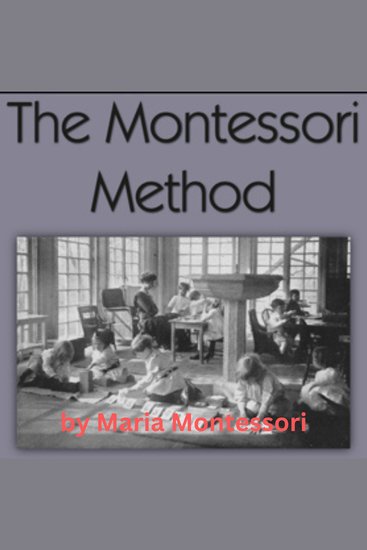
  • The Montessori Method - cover

    The Montessori Method

    Maria Montessori

    • 0
    • 0
    • 0
     In the early 1900's Dr. Maria Montessori began to reform educational methods with her work the 'Case dei Bambini' in Rome, Italy. Montessori began her work by developing methods to educate mentally retarded children, the method she developed was used with several children who at age eight took the state examinations in reading and writing, the children passed with above average scores. Because of this success (which is known as the 'first Montessori Miracle') Dr. Montessori was asked to open a school for children in Rome which she did. It was called the Case dei Bambini or “Children's House”. Now 101 years after the opening of the first Children's House we have recorded the first English translation of "The Montessori Method" by Maria Montessori. This book explains the Montessori Method of Education which supports “spontaneous self-development” of children and is used in the Case dei Bambini as well as many many Montessori Schools through out the world.
    Show book
  • Islands - Searching for truth on the shoreline - cover

    Islands - Searching for truth on...

    Mark Aston

    • 0
    • 0
    • 0
    "A spellbinding serial voyage in which encounters with islands across time are gathered, displayed and reburnished. Memoir becomes morality, as the oldest human myths challenge present neglect and political malfunction." – Iain Sinclair
    "Illuminating, incisive and beautifully written." – Kirsty Young
    "From ancient Crete to modern Canvey, this is a fascinating voyage around island identity, exploring isolation and imagination through a wealth of stories from around the world." – Martha Kearney
    "A timely and original exploration of the liminalities of islands and the waters that envelop them: by turns beguiling, enchanting and ultimately affirming." – Sir Anthony Seldon
    "This is a huge theme which Mark Easton pursues with vigorous and beautifully clear prose. His archipelagic fascination is contagious. Read this and the maps in your mind will never be quite the same again." – Peter Hennessy
    ***
    No man is an island, wrote John Donne. BBC Home Editor Mark Easton argues the opposite: that we are all islands, and it is upon the contradictory shoreline where isolation meets connectedness, where 'us' meets 'them', that we find out who we truly are.
    Suggesting that a continental bias has blinded us, Easton chronicles a sweep of 250 million years of island history: from Pangaea (the supercontinent mother of all islands) to the first intrepid islanders pointing their canoes over the horizon, from exploration to occupation, exploitation to liberation, a hopeful journey to paradise and a chastening reminder of our planet's fragility.
    But that is only half of this mesmerising book: aided by the muse he names Pangaea, Easton also interweaves reflections on what he calls 'the psychological islands that form the great archipelago of humankind'. Taking readers on an enchanting adventure, he illustrates how understanding islands and island syndrome might help humanity get closer to the truth about itself.
    Brave, intelligent and haunting, Islands is a deep dive into geography, myth, literature, politics and philosophy that reveals nothing less than a map of the human heart.
    Show book
  • Ghosts of the Queen Mary - cover

    Ghosts of the Queen Mary

    Brian Clune, Bob Davis

    • 0
    • 0
    • 0
    Learn the stories behind this luxurious—and haunted—ocean liner . . . 


    For thirty-one years, the RMS Queen Mary sailed the North Atlantic. It helped defeat Hitler and was the ship of choice for the world's rich and famous. Now in retirement in the Port of Long Beach, the "Stateliest Ship Afloat" plays host to tourists, travelers—and more than six hundred spirits that roam her halls and passageways. 


    These choice decks remain the floating home of a few regulars, including the oft-glimpsed White Lady, as well as Little Jackie, John Henry, and, of course, Grumpy. Join paranormal investigators Brian Clune and Bob Davis as they take you to the hot spots of activity from port to starboard and relate tales from the dockside about the spirits that haunt the grandest liner ever built.
    Show book
  • Earth The Improbable Utopia - cover

    Earth The Improbable Utopia

    R. J. Fidalgo

    • 0
    • 0
    • 0
    Imagine a world where Heaven on Earth isn’t just a lofty ideal or a cosmic joke, but a tangible reality—one within our grasp. 
    Earth, The Improbable Utopia dares to explore this possibility, challenging the notion that our future is destined to be as bleak as our present. 
    Written from a spiritual perspective grounded in human experience rather than doctrine, the book approaches humanity’s crisis not only as a social or political failure, but as a deeper disconnect—from meaning, from purpose, and from ourselves. 
    In a world where humanity seems trapped in a relentless cycle of destruction and despair, author R. J. Fidalgo argues that we are the architects of our reality. Yet, despite overwhelming odds, a utopian future is not just a distant mirage—it’s a genuine possibility when inner transformation is given the same importance as external change. 
    This thought-provoking book delves into the heart of our collective existence, examining cultures, religions, traditions, and governments from across the globe. Through a blend of critical analysis and spiritual reflection, it confronts the flaws in our societies while illuminating timeless ideas and practices that point toward a more conscious and compassionate way of living. 
    Unlike exhaustive treatises or academic analyses, Earth, The Improbable Utopia is a book that sparks reflection and inspires action. Rather than dictating solutions, it invites readers into a contemplative dialogue—encouraging personal responsibility, awareness, and participation in shaping a better future. 
    A utopia can only emerge through shared effort and an awakened sense of responsibility. This is a book that seeks not to lecture, but to inspire—challenging you to imagine, reflect, and contribute to the extraordinary journey toward a better world, one rooted not only in systems and structures, but in spirit itself.
    Show book
  • Lessons from a Fledgling Democracy - cover

    Lessons from a Fledgling Democracy

    M.D. Mamphela Ramphele

    • 0
    • 0
    • 0
    How are the successes and failures of the fledgling South African democracy relevant to all democratic nations? Why a nation cannot truly thrive without full socio-economic equity. Why true freedom must also include freedom from an imprisoned mind. What is the importance of teaching a full, robust history of a nation?
    Show book