


Masked
Cay Fletcher
Publisher: Fox Fern Books, LLC
Summary
You can't grow out of your powers. Or ignore them into non-existence.

A queer superhero short story about coming to terms with who you are.
Available since: 06/27/2023.

Publisher: Fox Fern Books, LLC
You can't grow out of your powers. Or ignore them into non-existence. A queer superhero short story about coming to terms with who you are.
They received a letter. They dismissed it as a prank, but as they soon will learn, you never...ever ignore a chain letter. Chain Letter is a spine-chilling horror-novella from international best-selling author Willow Rose.Show book
Leo Tolstoy was born in 1828 in the Russian province of Tula to a wealthy noble family. As a child, he had private tutors but he showed little interest in any formal education. When he went to the University of Kazan in 1843 to study oriental languages and law, he left without completing his courses.  Life now was relaxed and idle but with some writing also taking place.  Gambling debts forced an abrupt change of path and he joined the army to fight in the Crimean War.  He was commended for his bravery and promoted but was appalled at the brutality and loss of life.  He recorded these and other earlier experiences in his diaries which formed the basis of several of his works.
In 1852 ‘Childhood’ was published to immediate success and was followed by ‘Boyhood’ and ‘Youth’.
His experience in the army and the horrors he witnessed resulted in ‘The Cossacks’ in 1862 and the trilogy ‘Sevastopol Tales’. After the war he travelled around Europe, visiting London and Paris and meeting such luminaries as Victor Hugo and Charles Darwin.
It was now that Tolstoy began his masterpiece, ‘War and Peace’. Published in 1869 it was an epic work that changed literature. He quickly followed this with ‘Anna Karenina’.
These successes made Tolstoy rich and helped him accomplish many of his dreams but also brought problems as he grappled with his faith and the lot of the oppressed poor. These revolutionary views became so popular that the authorities now kept him under surveillance.
He led a life of asceticism and vegetarianism and put his socialist ideals into practice by establishing numerous schools for the poor and food programmes. He also believed in giving away his wealth, which caused much discord with his wife.
His writing continued to bring forth classics such as ‘The Death of Ivan Ilyich’ and many brilliant and incisive short stories such as ‘How Much Land Does A Man Need’.
In 1901 Tolstoy was excommunicated from the Church and controversially deselected for the Nobel Prize for Literature.
Whilst undertaking a pilgrimage by train in October 1910 with his daughter Aleksandra he caught pneumonia in the nearby town of Astapovo.  Leo Tolstoy died on November 9th, 1910, he was 82.
Show book

The boundaries between realist and fabulist, literary and speculative, are shattered in this remarkable debut collection for readers of Carmen Maria Machado, André Alexis, and Angélique Lalonde

A girl born in a small, unnamed pueblo is blessed—or cursed—with the ability to produce valuable gems from her bodily fluids. A tired wife and mother escapes the confines of her oppressive life and body by shapeshifting into a cloud. A girl reckons with the death of her father and her changing familial dynamics while slowly, mysteriously losing her physical senses.

Infused with keen insight and presented in startling prose, the stories in this dark, magnetic collection by newcomer Rebecca Hirsch Garcia invite the reader into an uncanny world out of step with reality while exploring the personal and interpersonal in a way that is undeniably, distinctly human.
Show book
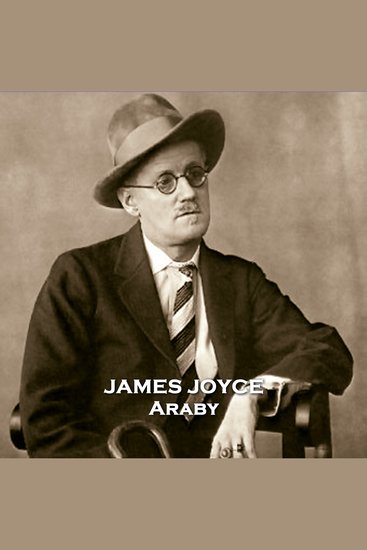
James Augustine Aloysius Joyce was born on the 2nd February 1882 in Dublin into a middle-class family, and the eldest of ten surviving siblings
Admired as a brilliant student he briefly attended the Christian Brothers-run O'Connell School before excelling at the Jesuit schools of Clongowes and Belvedere.  From there he went on to attend University College Dublin from 1898, studying English, French and Italian
In 1902, Joyce was now in his early twenties, and went to Paris to study Medicine but soon abandoned his teachings.  Back in Dublin to attend to his dying Mother he met Nora Barnacle. They bonded immediately into a life-long match. Together they decided to emigrate to Europe.  The couple lived in Trieste, Rome, Paris, and finally Zürich where Joyce pursued a variety of jobs and ventures to supplement his literary pursuits but none of these paid off.
After publishing a poetry volume, ‘Chamber Music’, in 1907, his short story collection ‘The Dubliners’, in 1914, helped establish his talent in the rapidly changing world.
Although far from home Joyce’s literary heart and works were set in his recollections of Dublin.  Characters are close resemblances of family and friends and indeed enemies.  His landmark work ‘Ulysses’, published in 1922, is set in the streets and alleyways of the city as it parallels Homer’s Odyssey in a variety of styles including its famed stream of consciousness.
His pen continued to produce classics of the order of ‘A Portrait of the Artist as A Young Man’ and ‘Finnegan’s Wake’ together with several volumes of poetry and a play ‘The Exiles, in 1918.
On the 11th January 1941, Joyce underwent surgery in Zürich for a perforated duodenal ulcer. The next day he fell into a coma. On the 13th after a brief period of lucidity in which he called for his wife and son he passed.  He was 58.
Show book

Sunrise is a collection of interconnected stories continuing Erika Kobayashi's examination of the effects of nuclear power on generations of women. Connecting changes to everyday life to the development of the atomic bomb, Sunrise shows us how the discovery of radioactive power has shaped our history and continues to shape our future.


In the opening, eponymous story "Sunrise," Yoko, born exactly two years and one day after Nagasaki was decimated, mirrors her life to the development of nuclear power in Japan. In "Precious Stones," four daughters take their elderly mother to the restorative waters of a radium spring, exchanging tales of immortality. In "Hello My Baby, Hello My Honey," a woman goes into labor during the final days of WWII. And finally, "The Forest of Wild Birds" shows Erika visiting the site of the Fukushima Dai-ichi Nuclear Power Plant disaster, touring grounds that were once covered in green.


Translator Brian Bergstrom returns in this collection, bringing to life Kobayashi's unsettling, lasting, and striking prose. The stories in Sunrise force a reckoning with the lasting effects of known and unknown histories and asks how much of modern life is influenced by forces outside of our control.
Show book
Fiction Short Story: Bethany seeks escape from her intense relationship by kayaking solo around Salt Spring Island and royally scares herself.Show book





