Join us on a literary world trip!
Add this book to bookshelf
Grey
Write a new comment Default profile 50px
Grey
Subscribe to read the full book or read the first pages for free!
All characters reduced
A Century of Negro Migration - cover

A Century of Negro Migration

Carter Godwin Woodson

Publisher: Passerino

  • 0
  • 0
  • 0

Summary

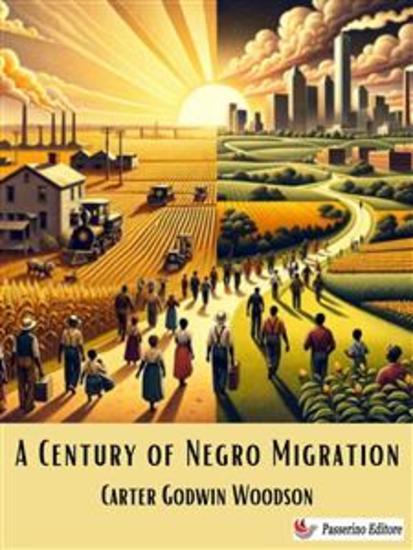
The Great Migration, sometimes known as the Great Northward Migration or the Black Migration, was the movement of six million African Americans out of the rural Southern United States to the urban Northeast, Midwest, and West between 1910 and 1970.
It was substantially caused by poor economic and social conditions due to prevalent racial segregation and discrimination in the Southern states where Jim Crow laws were upheld.
In particular, continued lynchings motivated a portion of the migrants, as African Americans searched for social reprieve. The historic change brought by the migration was amplified because the migrants, for the most part, moved to the then-largest cities in the United States (New York City, Chicago, Detroit, Los Angeles, Philadelphia, Cleveland, and Washington, D.C.) at a time when those cities had a central cultural, social, political, and economic influence over the United States; there, African-Americans established culturally influential communities of their own.

Carter Godwin Woodson (December 19, 1875 – April 3, 1950) was an American historian, author, journalist, and the founder of the Association for the Study of African American Life and History (ASALH). He was one of the first scholars to study the history of the African diaspora, including African-American history.
A founder of The Journal of Negro History in 1916, Woodson has been called the "father of black history." In February 1926, he launched the celebration of "Negro History Week", the precursor of Black History Month. Woodson was an important figure to the movement of Afrocentrism, due to his perspective of placing people of African descent at the center of the study of history and the human experience.
Available since: 03/06/2024.
Other books that might interest you

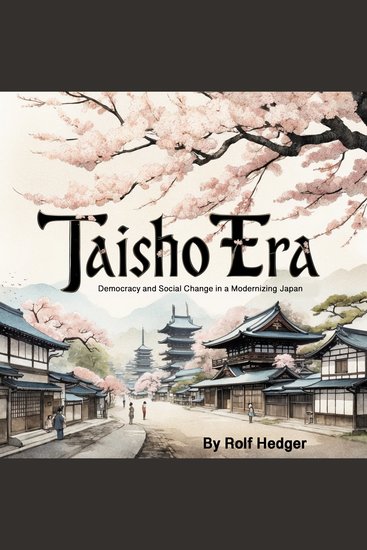
  • Taisho Era - Democracy and Social Change in a Modernizing Japan - cover

    Taisho Era - Democracy and...

    Rolf Hedger

    • 0
    • 0
    • 0
    The Taisho Era (1912–1926) marked a period of transition in Japan, bridging the highly centralized and authoritarian rule of the Meiji period with the growing democratic movements that characterized the early 20th century. Emperor Taisho ascended to the throne following the death of Emperor Meiji in 1912. Unlike his predecessor, who had been a strong and active ruler, Emperor Taisho was frail and suffered from chronic illness, which significantly limited his ability to govern. As a result, political power gradually shifted away from the emperor and toward elected officials and political parties, paving the way for what would become known as "Taisho Democracy." 
    At the dawn of the Taisho Era, Japan stood at a crossroads between tradition and modernization. The country had rapidly industrialized during the Meiji period, transforming from a feudal society into a modern industrial state. However, with this modernization came social and political unrest. As Japan’s economy expanded, so too did the urban population, leading to the rise of a new middle class that demanded greater political participation and social change. The oligarchic rule of the genrō—elder statesmen who had dominated Meiji politics—faced increasing pressure from political parties, intellectuals, and the general public. 
    The political landscape of early Taisho Japan saw significant changes, including the growing influence of elected politicians. The 1912–1913 Taisho Political Crisis was a defining moment in this shift. When Prime Minister Saionji Kinmochi refused to increase military funding, the army resigned in protest, forcing him to step down. This led to widespread public outrage and a movement advocating for the power of elected officials over military and oligarchic influence. In 1913, the Katsura Tarō government collapsed due to public demonstrations, highlighting the rising political consciousness of the people.
    Show book
  • The Search for Reagan - The Appealing Intellectual Conservatism of Ronald Reagan - cover

    The Search for Reagan - The...

    Craig Shirley

    • 0
    • 0
    • 0
    Never before has anyone explored the mind, soul, and heart of Ronald Reagan. The Search for Reagan explores the challenges and controversies in Reagan's life and how he successfully dealt with each, depicting a man who was never as conservative as some conservatives wanted him to be, but rather as conservative as he was comfortable being—a man who wanted to win on his own terms and integrity. 


    Ronald Reagan was a singularly unique man and conservative who championed a wildly successful revolution—leading to more freedom and less government for the American people and to the fall of communism, while boosting American morale. He was the first president in many years who believed optimism from the Oval Office had a direct bearing on the affairs of the nation. As a consequence, he left office more popular than when he entered, with a whopping 73 percent approval. He understood that American conservatism was based upon the individual and not the group. In his presidency, he solved the mystery of high inflation that had bedeviled his predecessor, high interest rates, and high gas prices. He created over twenty million new jobs, and the number of American millionaires grew from 4,414 to 34,944. He is considered by most historians to be one of our four greatest presidents, along with George Washington, Abraham Lincoln, and Franklin Roosevelt.
    Show book
  • Empowerment Secrets: Raw Truths of Love and Desire - "Unlock love and desire with captivating audio lessons tailored for profound personal growth and empowerment" - cover

    Empowerment Secrets: Raw Truths...

    Archer Raventhorn

    • 0
    • 0
    • 0
    Empowerment Secrets: Raw Truths of Love and Desire  
    ⭐⭐ Simplified Guide & Explanations Included ⭐⭐   
    Are you eager to enhance your personal growth and deepen your understanding of love and desire?   
    In search of a thorough guide that encompasses all the essential elements for true empowerment in your journey?   
    Your quest ends here!   
    This audiobook serves as your ultimate companion for exploring resilience through authentic storytelling, honing your skills, and engaging in impactful exercises. With it, you're poised for success.   
    Updated for 2025.   
    Key features of this enriched guide: 
    - Profound insights into authenticity and personal growth   
    - Detailed exploration of love and desire   
    - Effective strategies for personal empowerment and navigating relationships   
    Our guide stands out through its comprehensive coverage, which is crucial for your journey toward empowerment. Concepts are not merely brushed over; they are examined with depth and clarity.   
    Please note that this guide operates independently and is not affiliated with any official entity related to personal growth.   
    Designed with a clear structure and accessible language, our Empowerment Secrets audiobook guarantees smooth transitions between topics. Say goodbye to complicated terminology and embrace clear, concise, and technically precise content.   
    So, why wait? Click the BUY NOW button, secure your audiobook, and embark on your journey to empowerment today!
    Show book
  • From The Britons to the Battle Of Hastings - prehistory to 1066 - cover

    From The Britons to the Battle...

    Gilbert Abbott A'Beckett

    • 0
    • 0
    • 0
    A captivating, uproarious and informative journey through the beginnings of British history.  
    Gilbert Abbott à Beckett was one of the great journalists of his time, being a descendant of Thomas Becket who edited Figaro, was a founder member of Punch, and wrote for The Times, The Morning Herald, and The Illustrated London News.  
    He also wrote around fifty plays, as well as two operas, and is best known for this history of England. 
    This volume covers: 
    The Britons—The Romans—Invasion By Julius Cæsar 
    Invasion By The Romans Under Claudius—Caractacus—Boadicea—Agricola—-Galgacus—Severus—Vortigern Calls In The Saxons. 
    The Saxons—The Heptarchy. 
    The Union Of The Heptarchy Under Egbert. 
    The Danes—Alfred. 
    From King Edward The Elder To The Norman Conquest. 
    Edmund Ironsides—Canute—Harold Harefoot—Hardicanute—Edward The Confessor—Harold—The Battle Of Hastings.
    Show book
  • Lost Fort Worth - cover

    Lost Fort Worth

    Mike Nichols

    • 0
    • 0
    • 0
    From the humble beginnings of a frontier army camp, Fort Worth transformed into a city as cattle drives, railroads, oil, and national defense drove its economy. During the tremendous growth, the landscape and cultural imprint of the city changed drastically, and much of Cowtown was lost to history. Witness the birth of western swing music and the death of a cloud dancer. See mansions of the well-heeled and saloons of the well-armed. Meet two gunfighters, one flamboyant preacher, one serial killer and one very short subway carrying passengers back in time to discover more of Fort Worth. Author Mike Nichols presents a colorful history tour from the North Side to the South Side's Battle of Buttermilk Junction.
    Show book
  • The Mythology of the Slavs - Folk Tales and Legends from Eastern Europe - cover

    The Mythology of the Slavs -...

    Odessa Nightshade

    • 0
    • 0
    • 0
    Slavic mythology is a rich and complex tradition that has been shaped by centuries of oral storytelling, cultural exchanges, and historical transformations. Rooted in the beliefs of ancient Slavic tribes, this mythology reflects a deep connection to nature, a reverence for powerful deities, and a world teeming with spirits, gods, and legendary heroes. Unlike the more widely documented mythologies of the Greeks and Romans, Slavic myths were primarily passed down through oral tradition, making them fluid and ever-evolving. As a result, variations exist across different Slavic nations, yet common themes and figures remain central to the mythology as a whole.  
    The natural world played a crucial role in shaping Slavic beliefs. The Slavs were deeply tied to the cycles of the seasons, the power of the sun, and the mysteries of the forests and rivers. Deities like Perun, the god of thunder, and Veles, the god of the underworld, represented the dual forces of order and chaos, life and death. Forest spirits like the Leshy guarded the woods, while the Rusalka, eerie water nymphs, were believed to lure unsuspecting travelers to a watery grave. These myths not only explained the forces of nature but also provided a spiritual framework for daily life.  
    Storytelling was the primary means of preserving these myths. Legends were shared around fires, during village gatherings, and at seasonal festivals. Oral tradition allowed for constant reinterpretation, with each storyteller adding new details to fit the cultural and historical context of their time. Folklore heroes, such as Ilya Muromets and Dobrynya Nikitich, emerged as symbols of courage and perseverance, their tales reinforcing the values of strength, loyalty, and wisdom. These stories also carried moral lessons, cautioning against greed, deceit, and disrespect for the natural and supernatural world. 
    Show book