Join us on a literary world trip!
Add this book to bookshelf
Grey
Write a new comment Default profile 50px
Grey
Subscribe to read the full book or read the first pages for free!
All characters reduced
The Lapland - Lachesis Lapponica - cover

The Lapland - Lachesis Lapponica

Carl von Linné

Translator James Edward Smith

Publisher: DigiCat

  • 0
  • 0
  • 0

Summary

In "The Lapland," Carl von Linné presents a meticulous exploration of the natural history and cultural fabric of this northern region, showcasing his pioneering approach to taxonomy and observation. Written in a blend of scientific rigor and lyrical prose, the book captures both the physical landscape and the indigenous life forms. Linné's detailed descriptions serve not only as an early scientific account but also reflect the Enlightenment's broader aspirations to categorize and understand the natural world, positioning the work in a rich literary context that melds literature, science, and exploration. Carl von Linné, often regarded as the father of modern taxonomy, sought to systematize knowledge through classification, which is evident in his keen observations of flora and fauna in Lapland. His experiences as a botanist, coupled with his travels through Scandinavia, deeply influenced his writing, allowing him to weave personally observed details into a greater narrative of scientific inquiry. Linné's passion for nature and education inspired him to bridge the gap between science and poetic expression, paving the way for future natural historians and botanists. "The Lapland" is a must-read for anyone interested in natural history, botany, or the early scientific methods of the Enlightenment. By immersing oneself in Linné's text, readers gain not only an understanding of the diverse ecosystems he cataloged but also an appreciation for the interplay between artful writing and scientific exploration. This book invites a deeper contemplation of nature, encouraging a lasting appreciation for the world around us.
Available since: 05/17/2022.
Print length: 266 pages.

Other books that might interest you

  • Data Security and Privacy for Beginners - A Beginner's Guide to Safeguarding Your Data and Preserving Privacy in the Digital Age - cover

    Data Security and Privacy for...

    Saimon Carrie

    • 0
    • 0
    • 0
    In today's digital world, the security and privacy of our data are more important than ever. With the rise of cyber threats, data breaches, and privacy concerns, understanding the fundamentals of data security and privacy is essential for everyone, regardless of technical expertise. 
    "Data Security and Privacy for Beginners" is your comprehensive guide to navigating the complex landscape of data protection. Whether you're an individual looking to protect your personal information or an organization seeking to safeguard sensitive data, this beginner-friendly book has you covered. 
    From understanding the basics of data security and privacy to implementing best practices and tools, this book provides clear explanations, practical tips, and actionable strategies to help you protect your data and preserve privacy in the digital age. 
    Inside, you'll learn:The importance of data security and privacy in today's interconnected world.Common cybersecurity threats and privacy risks, and how to mitigate them.Key principles and concepts of data protection, including encryption, access controls, and privacy by design.Best practices for securing data in transit and at rest, and tools and technologies to help you do so.Compliance requirements and regulations governing data security and privacy, and how to ensure compliance.Practical steps you can take to enhance your data security posture and protect your privacy. 
    "Data Security and Privacy for Beginners" will empower you with the knowledge and skills needed to safeguard your data and privacy with confidence. Start protecting what matters most today!
    Show book
  • The New Digital Revolution For Beginners - Practical uses of Metaverse Web 30 Blockchain Cryptocurrencies NFTs DeFi Virtual and Augmented Reality - cover

    The New Digital Revolution For...

    Comprehensive Technological...

    • 0
    • 0
    • 0
    Have you ever wondered what the metaverse, the blockchain, cryptocurrencies, NFTs, DeFi, and virtual reality are? Do these words even mean anything to you? Are they likely to ever impact your life? Well, this is what this book sets out to explore. 
    If you’ve heard these words before but they intimidate you, you’ve come to the right place: THE NEW DIGITAL REVOLUTION FOR BEGINNERS 
    This book is a full guide of the new digital revolution that will forever change the way we experience the internet, from participating in digital live events to decentralized finance that allows users to invest freely without the intervention of middlemen. 
    Imagine a new internet in which you can participate fully immersed in new business models and types of investment, including investing in works of art that are fully online. 
    So, what is this book about? Some of the topics include:The digital realms of the Metaverse with their considerations and technologiesThe evolution of the internet, from Web 1.0 to Web 4.0, and how that affects youThe blockchain and its futureCryptocurrencies and the role they play in the metaverseNFTs and how they affect the way you can make investmentsDecentralized finance (DeFi) and its advantagesHow virtual and augmented reality play a key role in the metaverse 
    … and A LOT MORE! 
    If you have always wanted to learn how the latest technologies work but were afraid to get started because of the sheer scope of this field, this book will clarify it all for you!
    Show book
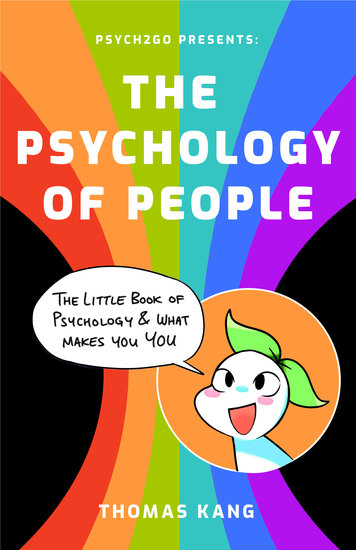
  • The Psychology of People - The Little Book of Psychology & What Makes You You - cover

    The Psychology of People - The...

    Thomas King

    • 0
    • 1
    • 0
    Easy-to-Understand Human Psychology with Psych2Go!#1 New Release in Medical Experimental Psychology, Humanist Philosophy. and Popular Experimental PsychologyFinally understand why you do things differently from the rest! Psych2go created this guide to connect the history of human psychology with practical mental health therapy tools to help you thrive in your everyday life.Discover things about yourself! With The Psychology of People, learn about the history of  human psychology—and apply it to your own life. Understand your innate need to conform, the roots of your social anxiety, how to heal and grow emotionally—and so much more!An empath’s survival guide to psychology. Written by the creators of the popular youtube channel, blog, and website called Psych2go, The Psychology of People is one of the best mental wellness books that gives practical and applicable methods! From the ethics of experimental psychology to therapy techniques, The Psychology of People helps you develop empathy for yourself and others. Inside, you’ll find:Your very own, therapist on the go, packed with practical methods and experimentsHow to understand and rewire your brain by discovering psychological-based patterns in yourself and othersOne of the best books about psychology, the history of psychology, and the ethics of experimental science If you're looking for psychology books to read, mental wellness books, or books on human psychology, then grab your copy today! If you liked Collective Illusions, Read People Like a Book, or You Can Do All Things, you’ll definitely love The Psychology of People.
    Show book
  • Neonatology - Care of the Newborn - cover

    Neonatology - Care of the Newborn

    Ava Westwood

    • 0
    • 0
    • 0
    Neonatology is a specialized branch of medicine that focuses on the care of newborn infants, particularly those who are ill or premature. It plays a crucial role in ensuring the survival and well-being of newborns, especially in the first few days and weeks of life, which are critical for the infant’s long-term health. The field encompasses a wide range of conditions, from common newborn illnesses to complex and rare congenital disorders, and involves the expertise of neonatologists, nurses, respiratory therapists, and other medical professionals working collaboratively in neonatal intensive care units (NICUs). 
    At birth, the infant undergoes a series of physiological changes, transitioning from the maternal environment to the external world. This period of adaptation is a defining feature of neonatology, where the neonatologist’s role is to manage any challenges that arise during this transition. This includes monitoring the newborn’s heart rate, breathing, and temperature regulation, as well as ensuring the baby is receiving adequate nutrition and support. 
    Neonatology has advanced significantly over the past few decades, with improvements in neonatal care reducing mortality rates for preterm infants and those with congenital conditions. Innovations such as advanced respiratory support systems, better understanding of neonatal pharmacology, and the development of sophisticated monitoring techniques have drastically improved the chances of survival for critically ill newborns. These advancements have also contributed to a deeper understanding of the long-term effects of prematurity, low birth weight, and other neonatal complications on development.
    Show book
  • Origin of Species The - Charles Darwin - cover

    Origin of Species The - Charles...

    Charles Darwin

    • 0
    • 0
    • 0
    On the Origin of Species is a work of scientific literature by Charles Darwin that is considered to be the foundation of evolutionary biology. Darwin's book introduced the scientific theory that populations evolve over the course of generations through a process of natural selection. The book presented a body of evidence that the diversity of life arose by common descent through a branching pattern of evolution. Darwin included evidence that he had collected on the Beagle expedition in the 1830s and his subsequent findings from research, correspondence, and experimentation. 
    Various evolutionary ideas had already been proposed to explain new findings in biology. There was growing support for such ideas among dissident anatomists and the general public, but during the first half of the 19th century the English scientific establishment was closely tied to the Church of England, while science was part of natural theology. Ideas about the transmutation of species were controversial as they conflicted with the beliefs that species were unchanging parts of a designed hierarchy and that humans were unique, unrelated to other animals. The political and theological implications were intensely debated, but transmutation was not accepted by the scientific mainstream.
    Show book
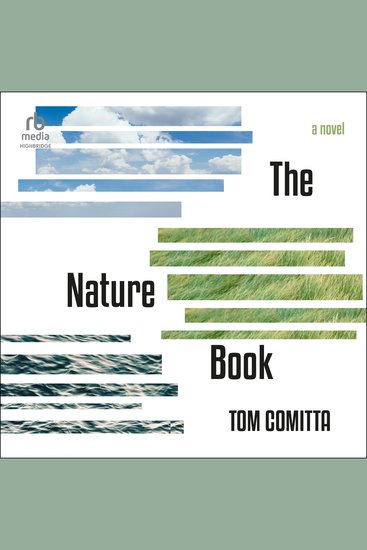
  • The Nature Book - cover

    The Nature Book

    Tom Comitta

    • 0
    • 0
    • 0
    Part sweeping evocation of Earth's rhythms, part literary archive, part post-human novel, The Nature Book collages descriptions of the natural world into a singular symphonic paean to the planet. 


    What does our nature writing say about us, and more urgently, what would it say without us? Tom Comitta investigates these questions and more in The Nature Book, a "literary supercut" that arranges writing about the natural world from three hundred works of fiction into a provocative re-envisioning of the novel. With fiction's traditional background of flora and fauna brought to the fore, people and their structures disappear, giving center stage to animals, landforms, and weather patterns—honored in their own right rather than for their ambient role in human drama. The Nature Book challenges the confines of anthropocentrism with sublime artistic vision, traversing mountains, forests, oceans, and space to shift our attention toward the magnificently complex and interconnected world around us.
    Show book