Join us on a literary world trip!
Add this book to bookshelf
Grey
Write a new comment Default profile 50px
Grey
Subscribe to read the full book or read the first pages for free!
All characters reduced
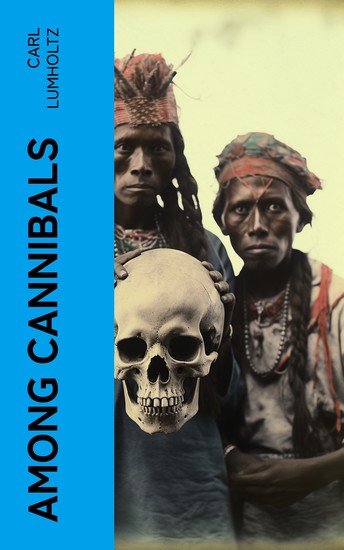
Among Cannibals - An Account of Four Years' Travels in Australia and of Camp Life With the Aborigines of Queensland - cover

Among Cannibals - An Account of Four Years' Travels in Australia and of Camp Life With the Aborigines of Queensland

Carl Lumholtz

Translator Rasmus Björn Anderson

Publisher: e-artnow

  • 0
  • 0
  • 0

Summary

This travelogue is about Australia; in particular Queensland and the native Aboriginals. The author travelled by ship first to Adelaide, then via Melbourne, Sydney, Brisbane and Rockhampton to the interior of Queensland. His account of his journey and his decision to live with the natives is detailed and factual as he describes what he sees and hears.
Available since: 12/10/2023.
Print length: 402 pages.

Other books that might interest you

  • HOW TO TRAVEL AROUND THE WORLD ON A BUDGET - The Ultimate Guide to Traveling the World on a Shoestring Budget (2023 Crash Course for Beginners) - cover

    HOW TO TRAVEL AROUND THE WORLD...

    Whitney Barlow

    • 0
    • 0
    • 0
    In this comprehensive guidebook, readers will learn everything they need to know about traveling the world on a budget. Whether you're a student, a backpacker, or simply someone who wants to see the world without breaking the bank, this book will provide you with the essential information, tips, and tricks you need to make your dream trip a reality. 
    Some of the topics covered in the book include:How to plan your itinerary to maximize your time and minimize your expensesTips for finding the cheapest flights, accommodations, and transportation optionsStrategies for saving money on food and drink while still enjoying local cuisineAdvice on how to stay safe and healthy while traveling on a budgetInsights into the best budget-friendly destinations around the worldTips for earning and redeeming travel rewards and frequent flyer milesAdvice on how to travel sustainably and responsibly on a budget 
    And Much More!... 
    Whether you're planning a short-term backpacking trip or a long-term adventure, this book will be your ultimate guide to traveling the world on a shoestring budget. With practical advice and inspiring stories from seasoned budget travelers, you'll learn how to make the most of your trip while keeping your costs low. 
    So, buy this book and get ready to pack your bags and embark on an unforgettable journey without worrying about breaking the bank! 
     
    Show book
  • The Middle Kingdom of Egypt - A Period of Restoration and Growth - cover

    The Middle Kingdom of Egypt - A...

    Omar Khalil

    • 0
    • 0
    • 0
    The Middle Kingdom of Egypt marked a transformative period following the turmoil of the First Intermediate Period. This era, spanning roughly from 2050 to 1710 BCE, saw the reunification of Egypt under the leadership of Mentuhotep II, the pharaoh who established stability after years of political fragmentation. As the nation emerged from chaos, the Middle Kingdom laid the foundations for a revitalized state, fostering political, cultural, and economic growth. 
    The collapse of the Old Kingdom had left Egypt divided, with rival factions vying for control. This power vacuum led to the rise of regional rulers known as nomarchs, whose increasing autonomy weakened central authority. The struggle for dominance between these local leaders marked the First Intermediate Period, characterized by instability and fragmented governance. However, the emergence of Mentuhotep II, a ruler from Thebes, marked a turning point. Determined to restore order, he led a series of military campaigns to reunite Upper and Lower Egypt. His victory over the Herakleopolitan kings signified the dawn of a new era. 
    Reunification under Mentuhotep II not only consolidated political power but also reestablished the role of the pharaoh as a central figure of authority. As the unifier of Egypt, Mentuhotep II portrayed himself as the restorer of ma'at—harmony and justice. His reign marked the beginning of the 11th Dynasty and set a precedent for strong, centralized rule. The restoration of internal stability allowed for significant cultural and artistic developments, reflecting a renewed sense of national identity.
    Show book
  • Mountain Guru - The Life of Doug Scott - cover

    Mountain Guru - The Life of Doug...

    Catherine Moorehead

    • 0
    • 0
    • 0
    Winner of the Kekoo Naoroji Award
    Doug Scott was a legend among mountaineers. His expeditions, undertaken over a period of five decades, are unparalleled achievements. This book describes the extraordinary drama of them all, from the Himalaya to New Zealand, Patagonia, Yosemite and Alaska. It includes his famous 'epic' on The Ogre, one of the hardest peaks in the world to climb, his ascent of Kangchenjunga without supplementary oxygen and his ascent, with Dougal Haston, of Everest in 1975.
    Catherine Moorehead also uncovers the elusive man behind the obsessive mountaineer. From his rumbustious youth in Nottingham through two tempestuous marriages to a secure third marriage, she shows how Scott matured in thought and action as his formidable global reputation increased. In doing so she reveals him to be a clash of opposites, an infuriating monomaniac who took extraordinary risks yet who developed a deep interest in Buddhism and inspired widespread affection.
    Scott spent almost as long as his climbing career in founding and developing Community Action Nepal, providing schools and health posts in remote parts of Nepal, where he is still much revered. Doug Scott died in 2020.
    Show book
  • Wheels and Wilderness - The Ultimate RV Guide to National Park Adventures - cover

    Wheels and Wilderness - The...

    Mark Thompson

    • 0
    • 0
    • 0
    Are you prepared to set out on this once-in-a-lifetime adventure? "Wheels and Wilderness: The Ultimate RV Guide to National Park Adventures" is your pass to an amazing and unique tour of some of the most magnificent natural sites in the United States. 
    This all-inclusive guide is your reliable travel companion in the RV world, providing a plethora of information and insights to assist you in organizing, getting ready, and experiencing the outdoors. Regardless of your experience level, this book offers everything you need for a smooth and enjoyable travel. 
    Dive into the diverse world of RVs, including Class A, B, C, trailers, and beyond. Uncover how to select the perfect RV that matches your style and budget, and delve into financing options to make your dream journey a reality. Navigate the realm of national parks with in-depth research tips and travel itineraries that guide you to renowned destinations. 
    Get ready for your journey with thorough checklists, packing lists, and recommendations for essential camping equipment. Put safety first when traveling with the necessary gear and professional guidance on resolving typical RV issues. 
    You'll be able to access exceptional natural beauty, breathtaking scenery, and the freedom that comes along with traveling alone if you use "Wheels and Wilderness" as your guide. Prepare to embark on the ultimate RV adventure through America's national parks and make lifelong memories.
    Show book
  • The Cultural Revolution - China's Radical Change - cover

    The Cultural Revolution -...

    Nova Ashford

    • 0
    • 0
    • 0
    The Cultural Revolution, which took place in China from 1966 to 1976, was one of the most tumultuous and transformative periods in the country’s history. Initiated by Mao Zedong, the founding father of the People’s Republic of China, the movement sought to preserve Chinese communism by removing capitalist, traditional, and cultural elements from Chinese society. At its core, the Cultural Revolution aimed to enforce Maoist ideology, reaffirm his leadership, and transform the cultural, social, and political fabric of China. It was a radical attempt to reshape Chinese society by addressing perceived corruption and ideological impurity within the Communist Party and broader society. 
    Mao’s motivations for launching the Cultural Revolution were multifaceted. After the failure of the Great Leap Forward (1958-1962), which had resulted in widespread famine and economic chaos, Mao’s position within the Communist Party had been weakened. The Cultural Revolution provided Mao with an opportunity to reassert his control over the party and eliminate rivals, many of whom were seen as too moderate or resistant to his vision of a truly communist society. It also reflected Mao’s concern that China was veering away from the revolutionary ideals that had initially driven the Communist Party. 
    The movement was largely propelled by the Red Guards, a youth-based movement that encouraged the younger generation to challenge authority and remove perceived counter-revolutionary influences. Under the banner of Maoism, the Red Guards sought to destroy the "Four Olds"—old customs, old culture, old habits, and old ideas. This led to widespread destruction of cultural heritage, including temples, books, and artworks. Intellectuals, teachers, and perceived enemies of the revolution were subjected to violent persecution, public humiliation, and forced labor, with many being sent to the countryside for "re-education."
    Show book

  • Ancient Egyptian Law and Governance - Systems of Order and Justice - cover

    Ancient Egyptian Law and...

    Omar Khalil

    • 0
    • 0
    • 0
    Ancient Egyptian law was deeply rooted in the concept of Ma’at, the divine order that governed the universe and ensured balance, truth, and justice. This principle was not just a philosophical ideal but a practical guide for governance and social conduct. The legal system in Egypt was designed to maintain harmony within society, regulate disputes, and uphold the authority of the ruling elite. Unlike modern legal frameworks based on written statutes, Egyptian law was a combination of tradition, royal decrees, and religious doctrines. It was adaptable, relying on the wisdom of judges and officials rather than rigid legal codes. 
    The origins of legal traditions in ancient Egypt can be traced back to the early dynastic period when the first centralized state emerged. As society became more complex, a structured system of governance was necessary to manage resources, trade, and interpersonal conflicts. The earliest evidence of legal practice comes from administrative records, tomb inscriptions, and temple documents, which indicate that law was an integral part of daily life. While no single codified legal text has survived, references to decrees issued by pharaohs suggest that laws were issued and enforced at the highest levels of authority. 
    At the heart of Egyptian governance was the role of Ma’at, which extended beyond ethical conduct to legal proceedings. Ma’at represented a cosmic balance that rulers were duty-bound to uphold. The pharaoh, as the earthly representative of the gods, was seen as the ultimate source of justice. His decrees and judgments set legal precedents, shaping the administration of law across the kingdom. This divine connection made Egyptian law unique, as it blended religious principles with practical governance, ensuring that justice was not only a human responsibility but also a sacred duty.
    Show book