
Join us on a literary world trip!
Add this book to bookshelf
Grey
Write a new comment Default profile 50px
Grey
Subscribe to read the full book or read the first pages for free!
All characters reduced
Czerny - The Little Pianist op823 - 72 Easy and Progressive Pieces for Early Beginners Including All Major and Minor Scales - cover

Czerny - The Little Pianist op823 - 72 Easy and Progressive Pieces for Early Beginners Including All Major and Minor Scales

Carl Czerny

Publisher: Fortepiano Publishing

  • 0
  • 0
  • 0

Summary

In the annals of piano education, Carl Czerny's contributions hold a place of distinction. His "The Little Pianist, Op. 823," is a testament to his enduring legacy as a composer and educator. This collection is not merely a set of exercises but a gateway into the world of piano music for the young and aspiring pianist.

Op. 823 is tailored for beginners, yet it is imbued with the pedagogical thoroughness and musicality characteristic of Czerny. Each piece is designed to introduce fundamental piano techniques while nurturing an early love and understanding of music. The progressive nature of these compositions allows students to develop their skills methodically, with each piece presenting new challenges and learning opportunities.

What makes "The Little Pianist" especially valuable is its focus on musicality from the outset. Czerny understood that technical proficiency and musical expression are not mutually exclusive; rather, they complement each other. This collection encourages students to develop a sensitive touch, a keen ear for melody and harmony, and an appreciation for the expressive possibilities of the piano.

As a direct line to the teachings of Beethoven, Czerny's methodical approach is evident in these pieces. They are not only exercises in finger dexterity but also in musical thought. Students are guided to think about phrasing, dynamics, and the emotional content of music, laying a foundation for a lifetime of musical enjoyment and expression.

This edition of "The Little Pianist" is meant to continue Czerny's mission of fostering musical talent and passion in the younger generation. It is a collection that speaks to the joy of piano playing, inviting students to embark on a musical journey that is as rewarding as it is instructive.
 
Available since: 01/11/2024.
Other books that might interest you

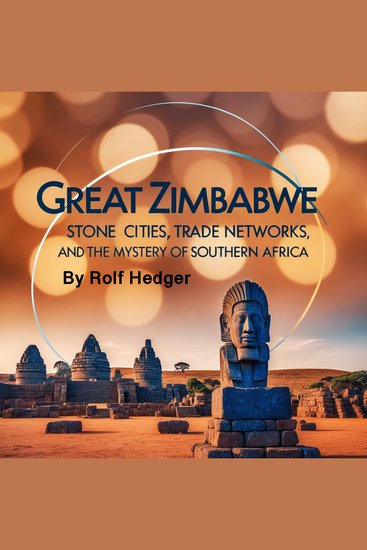
  • Great Zimbabwe - Stone Cities Trade Networks and the Mystery of Southern Africa - cover

    Great Zimbabwe - Stone Cities...

    Rolf Hedger

    • 0
    • 0
    • 0
    The rise of Great Zimbabwe was shaped by geography, economic opportunities, and social organization, allowing it to become one of Africa’s most influential civilizations. Emerging around the 9th century, the settlement developed into a thriving political and economic center by the 11th century, reaching its peak between the 13th and 15th centuries. Its growth was fueled by abundant natural resources, a strategic location, and participation in regional and international trade. 
    The Zimbabwean plateau, with its fertile soil and favorable climate, provided ideal conditions for agriculture. The Shona people, who founded Great Zimbabwe, cultivated sorghum and millet, which sustained the growing population. In addition to farming, cattle herding played a crucial role in the economy. Cattle were a measure of wealth and social status, serving as currency in trade and marriage negotiations. The presence of large herds further reinforced the power of the elite, who controlled access to grazing lands and water sources. 
    Beyond agriculture, Great Zimbabwe’s location made it a key player in long-distance trade. The city was situated between the goldfields of southern Africa and the coastal trade hubs of the Swahili city-states. Gold mining became a major economic activity, with miners extracting the metal from riverbeds and underground deposits. This gold was traded with merchants from Kilwa, Sofala, and other Swahili ports, where it was exchanged for luxury goods such as Persian ceramics, Chinese porcelain, and Indian textiles. The wealth generated from trade allowed Great Zimbabwe to expand, attracting artisans, traders, and skilled laborers.
    Show book
  • Captain America For Dummies - cover

    Captain America For Dummies

    Stuart Moore

    • 0
    • 0
    • 0
    With roots dating back to World War II, Captain America reigns as one of the most iconic heroes in the Marvel Comics universe. Captain America For Dummies is your guide to getting to know this popular and enduring super hero. Produced in partnership with Marvel Comics, this fun and friendly guide helps you understand how Captain America gained his powers and evolved over the years, including the range of characters who have wielded the shield. Discover what inspired the creation of the character, explore Captain America's friends and foes, and dig into the teams that Captain America has fought alongside. You'll learn the major storylines that turned Cap into one of the most well-known and popular super heroes of all time!Get to know Captain America, his creators, and origin storyMeet Captain America's allies and enemiesLearn more about others who have carried Captain America's shieldExplore major storylines and battlesDiscover the teams Captain America has fought alongside 
    Whether you're just starting your adventures or are a faithful fan, Captain America For Dummies is your guide to this star-spangled patriot and his legacy.
    Show book
  • The Price - cover

    The Price

    Arthur Miller

    • 0
    • 0
    • 0
    Arthur Miller's deeply moving drama reunites two long estranged middle-aged brothers. Nostalgia and recrimination erupt as they sell off an attic full of furniture, their last link to a family and a world that no longer exist. This 1968 classic is a wrenching saga of plaintive gestures and missed opportunities. A BBC Co-production. 
     
    An L.A. Theatre Works full-cast performance featuring Richard Dreyfuss, Amy Irving and Harris Yulin.
    Show book
  • Backstage Pass - A Business Book That's Far From Conventional - cover

    Backstage Pass - A Business Book...

    Harvey Lee

    • 0
    • 0
    • 0
    It started with Sex, Drugs and Rock and Roll and finished in a well-cut suit. 
    Ask anyone with a dream: The road to success can be akin to riding shotgun on the Highway to Hell, as Harvey Lee, rebel turned Vice President of Product Marketing will testify... 
    From modest beginnings in Northern England, to the promised land of the USA, Harvey recalls how he was forced to grab life by the horns, and embarked on a 40-year white-knuckle ride through the business world, establishing himself as an MBA-level trained and renowned product marketer. 
    But it wasn't always smooth sailing. Harvey shares how he survived and thrived in the cut-throat music industry before joining the corporate world and launching the original Xbox. 
    Part business book, part personal memoir, Backstage Pass is packed with hilarious tales spanning music, videogame, and technology industries. But behind the humour lay stories of grit and determination that'll leave you invigorated, inspired, and equipped to embark on an adventure of your own making.  
    Regardless of your past, present, or future aspirations, this tale of personal growth, born from a passion for music, will strike a chord with anyone pursuing a dream and leave you shouting, "Encore!"
    Show book
  • The Tenderness of Silent Minds - Benjamin Britten and his War Requiem - cover

    The Tenderness of Silent Minds -...

    Martha C. Nussbaum

    • 0
    • 0
    • 0
    The human body is the primary instrument of war, yet those waging war often confront soldiers' bodies in a detached or merely intellectual way. In The Tenderness of Silent Minds, Martha C. Nussbaum, a leading thinker on emotion, morality, and justice, conducts a pioneering study of Benjamin Britten's musical representations of the tender male body amidst the brutality of war, and their ability to transform consciousness by evoking potent, non-personal emotions. 


    Offering a reading of Britten's views about the value and beauty of the body that situates these in the context of his thirty-nine year partnership with his lover, the singer Peter Pears, and also surveying pacifist themes in works written both before and after War Requiem, Nussbaum presents a compelling framework for critically assessing Britten's oeuvre. Nussbaum engages with a remarkably wide range of Britten's works, examining his treatment of aggression and its roots in his collaborations with the poet W. H. Auden, offering readings of the value placed on the body in early partnerships with Britten's beloved and singer Peter Pears, and surveying pacifist themes in Britten's earlier works. The analysis throughout is enriched with perspectives from Britten's personal letters and thoughtful study of the social and political backdrop of fear and homophobic disgust in mid-twentieth century Britain.
    Show book
  • The Qing Dynasty - The Last Imperial Dynasty - cover

    The Qing Dynasty - The Last...

    Jun Liu

    • 0
    • 0
    • 0
    The Qing Dynasty, the last imperial dynasty of China, was established in 1644 by the Manchu people, an ethnic group from the northeast of China. The rise of the Qing Dynasty was a result of a combination of military conquest, strategic alliances, and a deep understanding of Chinese traditions. The Manchus, initially a small tribe in what is today known as Manchuria, were able to capitalize on the weakening Ming Dynasty and internal strife within China. This chapter will explore how the Manchu rulers successfully expanded their power and established one of the longest and most influential dynasties in Chinese history. 
    The Manchu people, led by the ambitious and skilled leader Nurhaci, had been unified under his banner in the early 17th century. Nurhaci’s military campaigns in Manchuria helped create a strong foundation for what would later become the Qing Dynasty. After his death in 1626, his son, Hong Taiji, continued to build on his father’s legacy, consolidating power and forming alliances with various Chinese factions. Hong Taiji's strategic foresight helped prepare the Manchus for a successful invasion of China. In 1636, he formally declared the establishment of the Qing Dynasty, marking the official beginning of their imperial rule. 
    By the early 1640s, the Ming Dynasty was in a state of disarray. The empire was plagued by corruption, peasant uprisings, and economic instability. The most notable rebellion was the Li Zicheng-led peasant revolt, which culminated in the fall of the Ming capital, Beijing, in 1644. In this moment of vulnerability, the Manchus, under the leadership of Emperor Shunzhi, seized the opportunity to invade China. The Qing forces entered Beijing and effectively replaced the fallen Ming dynasty, marking the beginning of the Qing rule over China.
    Show book